
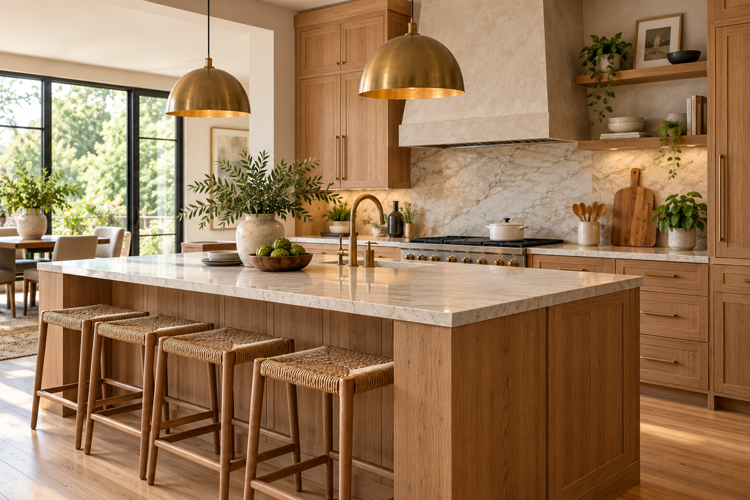
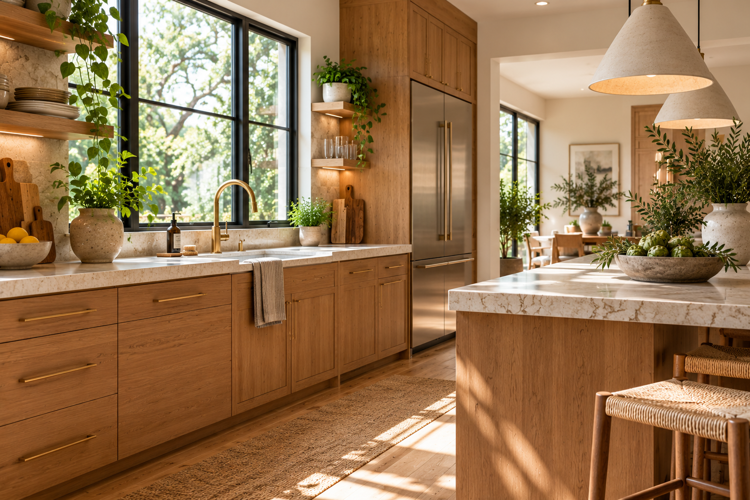

There is a certain kind of kitchen that never seems to go out of style. The cabinetry has character, the countertops feel substantial, and the materials look even better in natural light. Nothing feels excessive, yet everything seems thoughtfully chosen.
Now imagine that same kitchen with another advantage: it was designed to waste less, use resources more responsibly, and remain beautiful for years to come.
That is where the idea of a sustainable kitchen remodel becomes interesting. It is no longer simply about choosing bamboo instead of hardwood or buying an appliance with an energy-efficiency label. It is about creating a space where good design and responsible decisions naturally belong together.
And perhaps the most surprising part? Making a kitchen more sustainable does not always mean spending more money. Sometimes, it means knowing what not to replace.
The Greenest Kitchen Might Be the One You Already Have
Kitchen renovations have a way of escalating. What begins as a plan to update the cabinets can quickly become an entirely new layout, complete with fresh flooring, countertops, appliances, and enough construction debris to fill a dumpster.
Before committing to a complete overhaul, take another look at what is already there.
Those solid wood cabinets that seem outdated might only need refinishing and new hardware. An existing kitchen island could be transformed with a different countertop. Even replacing the backsplash and improving the lighting can dramatically change how a room feels.
The environmental benefit is straightforward: keeping usable materials in place avoids some of the waste and resource consumption associated with manufacturing and installing replacements.
It can also be easier on the renovation budget.
FINE Magazine's look atthe kitchen upgrades that make everyday cooking feel richer explores how thoughtful improvements can elevate the room without requiring an extensive renovation.
Of course, some kitchens genuinely need a new layout or structural improvements. But when the existing foundation works, preserving it is worth considering before demolition begins.
Reclaimed Wood Gives a Kitchen Something New Materials Cannot
Perfectly uniform finishes can look beautiful in a showroom. In a home, however, a little individuality often makes a space more memorable.
This is where reclaimed wood earns its place.
Salvaged timber can bring warmth, history, and natural variation to cabinetry, open shelving, or a kitchen island. Its imperfections become part of the design rather than something to disguise.
Imagine a contemporary kitchen with understated stone countertops, warm lighting, and an island finished in reclaimed oak. The contrast creates a room that feels sophisticated without becoming overly polished.
Reusing suitable wood also reduces the need for newly harvested timber. However, reclaimed materials should be inspected for moisture damage, contamination, and structural suitability before installation.
For homeowners who prefer new cabinetry, responsibly sourced wood is another option. The Forest Stewardship Council provides certification labels that help consumers identify wood products sourced in accordance with its environmental and social standards.
Oak, maple, and other durable hardwoods can provide years of service when properly constructed and maintained.
The important consideration is longevity. A beautifully made cabinet that can be repaired and refinished offers a different kind of value from one designed around a passing trend.
And as natural wood continues to influence kitchen interiors, the appeal of visible grain and authentic texture extends far beyond sustainability.
Can Bamboo and Cork Really Work in a Busy Kitchen?
Bamboo and cork frequently appear in conversations about sustainable flooring, and both deserve consideration. But choosing either simply because it is renewable would overlook some important details.
Bamboo grows relatively quickly compared with many hardwood trees, making it an attractive raw material. Finished bamboo flooring can also offer a clean, contemporary appearance that pairs beautifully with minimalist cabinetry and natural stone.
However, not all bamboo flooring performs equally. Manufacturing methods, adhesives, finish quality, and moisture resistance can vary considerably.
Cork has a different personality. Softer and warmer underfoot, it can make a kitchen more comfortable for homeowners who spend considerable time cooking. Its natural texture also introduces visual warmth without overwhelming the design.
Yet cork requires appropriate sealing and care, particularly around sinks and other areas where moisture is common.
For either material, ask whether the product is rated for kitchen use, what maintenance it requires, and how the manufacturer handles adhesives and finishes.
There is little environmental benefit in selecting a renewable floor that must be replaced prematurely because it cannot handle everyday life.
Countertops Should Be Chosen for More Than Their Looks
Countertops are among the most visible elements in a kitchen, making them an obvious place to introduce sustainable materials.
Recycled glass countertops can be particularly striking. Small pieces of glass incorporated into a finished surface create distinctive patterns, sometimes resembling terrazzo. Depending on the colors and composition, the effect can range from understated elegance to something more expressive.
But the recycled content is only part of the story. The binder used to hold the material together, the manufacturing process, and the countertop's durability also deserve attention.
For a more natural aesthetic, consider salvaged stone or remnants from a stone fabricator. A leftover slab may be suitable for a smaller island, breakfast counter, or preparation area, potentially reducing the need to purchase additional material.
Whatever surface you choose, think about how you actually cook.
A household that frequently entertains may prioritize stain resistance and easy cleaning. Someone who loves preparing elaborate meals might value heat tolerance and generous preparation space.
A countertop should be beautiful, certainly. But a sustainable choice is also one that continues to work well long after its initial appeal has worn off.
A Beautiful Kitchen Should Also Be a Healthier Place to Spend Time
Sustainability is not only about what happens outside the home. The materials used during renovation can influence the environment inside it, too.
Paints, adhesives, sealants, and some manufactured wood products may release volatile organic compounds, commonly called VOCs. Depending on the substance and exposure, these emissions can affect indoor air quality.
The U.S. Environmental Protection Agency recommends considering lower-emitting building materials and providing appropriate ventilation during remodeling.
This makes low-emission paints, cabinet finishes, and adhesives worth discussing with your contractor before work begins.
For cabinets made with composite wood, ask about formaldehyde-emission compliance and product certifications. It is equally important to understand the finishing process, especially if painting, sealing, or adhesive application will take place inside the home.
A low-VOC label is useful, but it should not be mistaken for a guarantee that a product is completely free of potentially harmful emissions.
The best approach combines appropriate material selection, proper installation, and good ventilation.
These details may not appear in the finished kitchen photographs, but they matter every time someone spends an afternoon cooking or gathering around the island.
The Appliances You Choose Matter, but So Does When You Replace Them
A new refrigerator or dishwasher can make a remodeled kitchen feel instantly more sophisticated. Yet upgrading every appliance simply because a renovation is underway is not necessarily the most sustainable decision.
If an existing appliance performs reliably and efficiently, keeping it may be reasonable. If replacement is needed, energy and water consumption should become part of the buying decision alongside appearance and functionality.
According to ENERGY STAR, certified dishwashers incorporate technologies such as soil sensors and improved filtration that help reduce water and energy consumption. Choosing the appropriate capacity also matters. An oversized appliance may consume more resources than a household needs.
Lighting deserves similar attention.
LED fixtures can provide efficient task lighting beneath cabinets, soft illumination inside storage areas, and attractive ambient lighting that makes the kitchen feel welcoming after dark.
Smaller practical improvements can be just as meaningful. Thoughtfully positioned recycling bins, accessible pantry storage, and well-planned preparation areas make daily routines easier and may help reduce household waste.
The goal is not to fill the kitchen with technology. It is to make every feature earn its place.
Where to Spend and Where to Save on a Sustainable Remodel
One reason homeowners hesitate to explore sustainable materials is the assumption that they will automatically increase renovation costs.
Some certainly can. Specialty countertops, custom cabinetry, and certain certified materials may carry higher upfront prices.
But sustainability does not have to become another expensive upgrade category.
Keeping the existing kitchen footprint can avoid unnecessary plumbing and electrical changes. Refinishing sturdy cabinets may cost less than replacing them. Reusing materials or purchasing suitable remnants can create room in the budget for improvements that genuinely matter.
When planning the project, it helps to distinguish between features that deserve a long-term investment and those that can be updated later.
Cabinet construction, flooring quality, ventilation, and functional storage are worth prioritizing because they influence everyday use and can be difficult to change.
Decorative lighting, hardware, and certain finishes offer more flexibility.
Understanding the relationship between cabinets, countertops, and layout can help homeowners make better renovation decisions before the project begins.
A sustainable remodel should be financially sensible as well as environmentally thoughtful.
The Most Sustainable Design Decision Is Choosing Something You Will Still Love
There is one more aspect of sustainability that rarely receives enough attention: the ability of a kitchen to age gracefully.

Trends come and go. Cabinet colors change, countertop preferences evolve, and yesterday's must-have design feature can quickly become tomorrow's renovation project.
That does not mean a sustainable kitchen must be plain or predictable. Quite the opposite.
Natural wood, interesting stone, beautiful tile, and well-made hardware can introduce character without making the room dependent on a particular trend. A restrained foundation also leaves room for personality through artwork, lighting, furniture, and decorative details.
The ideal kitchen should feel personal enough to enjoy today and adaptable enough to appreciate years from now.
A well-designed kitchen also needs to perform beyond its appearance. As explored in FINE Magazine's feature on protecting your investment in a designer kitchen, proper installation, maintenance, and attention to how appliances function can help protect the value of a thoughtfully designed space.
When choosing materials, imagine the room after years of family dinners, holiday gatherings, spilled coffee, and daily cooking. Will the surfaces still be practical? Can the cabinets be repaired? Will the design still feel comfortable and inviting?
Those questions may be more useful than asking which finish is currently fashionable.
The FINE Take
A sustainable kitchen remodel is not about creating the greenest-looking room in the neighborhood. It is about bringing beauty, practicality, and environmental responsibility into the same conversation.
Reclaimed wood can add character. Recycled surfaces can introduce visual interest. Thoughtfully selected flooring, healthier finishes, and efficient appliances can improve how a kitchen performs.
But perhaps the most valuable choice is the simplest one: invest in good materials, preserve what works, and create a space you will not feel compelled to replace in a few years.
Because the real luxury of a beautifully designed kitchen is not how impressive it looks on the day it is finished.
It is how much you continue to love living in it.

(0) comments
We welcome your comments
Log In
Post a comment as Guest
Keep it Clean. Please avoid obscene, vulgar, lewd, racist or sexually-oriented language.
PLEASE TURN OFF YOUR CAPS LOCK.
Don't Threaten. Threats of harming another person will not be tolerated.
Be Truthful. Don't knowingly lie about anyone or anything.
Be Nice. No racism, sexism or any sort of -ism that is degrading to another person.
Be Proactive. Use the 'Report' link on each comment to let us know of abusive posts.
Share with Us. We'd love to hear eyewitness accounts, the history behind an article.