
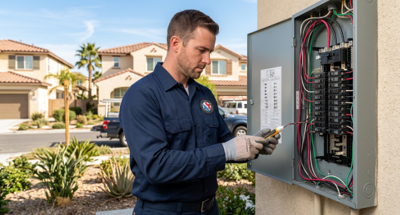

It never fails at 2 p.m. on a mild Tuesday. It fails at 11 p.m. on the coldest Friday of January, or during the three-day heat dome in July when every repair truck in the county is already booked solid. If you own a home long enough, you'll eventually stand in a cold hallway in your socks, staring at a thermostat that reads 54 degrees, wondering whether this is a call-someone-now situation or a wait-until-morning one. Here's how to tell the difference, and how to come out the other side without getting fleeced or frozen.
The Two Failure Seasons Nobody Warns You About
HVAC systems don't fail randomly. They fail at the extremes, and specifically at the first extremes of a season, because that's when equipment that's been idle for months finally gets asked to work hard. The first real cold snap of November — the night it drops from 55 to 28 — is when furnaces that limped through last winter finally give out. The first heat wave of June does the same to air conditioners that have been off since September. Technicians will tell you their two busiest weeks of the year are almost always the first hard freeze and the first 95-degree stretch. If your system is over 12 years old, those are the weeks to be paranoid, not the weeks to assume everything's fine because it worked last year.
Emergency or Can-Wait: A Blunt Triage
Not every no-heat call is a true emergency, and not every emergency looks dramatic. Treat these as call-now, tonight, no exceptions:
- Any smell of gas (rotten eggs), even faint
- A carbon monoxide alarm sounding, or headache/nausea/dizziness that improves when you leave the house
- No heat with temperatures forecast below freezing, especially with elderly residents, infants, or anyone with a respiratory condition in the home
- Water actively leaking from equipment near electrical panels
- Burning smell or visible smoke from the unit
These can usually wait for normal business hours: a system that's merely underperforming, a glitchy thermostat, faint odors that clear on their own, or a no-cool situation in mild weather. The distinction that matters is danger and habitability, not discomfort.
If You Smell Gas: Do This, Not That
Gas leaks are the one scenario where speed and correct sequencing both matter. Get everyone out of the house immediately. Do not flip light switches, do not use your phone inside, do not start your car in an attached garage. Once outside, call your gas utility's emergency line and 911 — both. Only after the utility or fire department clears the house should you call an HVAC company to inspect and repair the actual fault. Never attempt to relight a pilot light yourself if gas odor was present.
Carbon Monoxide: The Quiet One
CO doesn't announce itself with a smell, which is exactly why furnaces are the leading residential source of accidental CO poisoning in winter. A cracked heat exchanger can leak combustion byproducts into your ductwork instead of venting them outside. Symptoms mimic the flu — headache, fatigue, nausea — which is why people miss it. Every home with a gas furnace needs a CO detector on every level, tested twice a year. If an alarm sounds, evacuate first; verify from outside.
Frozen Pipes and a Dead Furnace: A Compounding Problem
A furnace outage becomes a plumbing emergency faster than most homeowners expect. Interior pipes in exterior walls or unheated crawlspaces can start freezing in as little as 6 to 8 hours once indoor temperatures drop into the 30s. If your heat is out and it's genuinely cold, open cabinet doors under sinks on exterior walls, let faucets drip, and use space heaters carefully as a bridge until a technician arrives. This is also when finding a company that actually answers the phone at midnight matters more than finding the cheapest one; when we were compiling contacts for a piece on winter readiness, more than one contractor recommended keeping the number for a crew offering emergency HVAC service in Portland saved in your phone before you need it, not while you're already shivering and googling at 1 a.m.
What Actually Happens When the Truck Shows Up
Emergency techs don't start by replacing parts. They start with diagnostics: confirming the thermostat calls for heat, checking power and gas supply, inspecting the igniter, flame sensor and flue, and running a combustion analysis if carbon monoxide is remotely in question. A surprising number of dead-furnace calls resolve with something unglamorous — a clogged filter that tripped a high-limit switch, a tripped breaker, a frozen condensate line, or a thermostat with dead batteries. A good tech quotes you before doing repair work beyond the diagnostic.
What It's Going to Cost
Numbers vary by region, but rough national ranges hold: an after-hours service call typically runs $150 to $350 to get someone in the driveway, often credited toward the repair. Common fixes — igniter, flame sensor, capacitor, blower motor — land between $200 and $600. A cracked heat exchanger or failed compressor escalates to $1,500–$2,500, and at that point an honest technician will talk through repair versus replacement on an older unit. Get the failure mode explained in plain language before authorizing four-figure work.
The Checklist That Prevents the 2 A.M. Scramble
- Replace or clean filters every 60-90 days (monthly with pets)
- Test CO and smoke detectors in spring and fall
- Keep the outdoor condenser clear of leaves, mulch, and snow
- Know where your gas shutoff valve is
- Save an emergency HVAC number before the first cold snap, not during it
- Ask your annual service tech: is there anything about this unit that makes you think it won't survive another winter?
The homeowners who never end up in a cold hallway at 2 a.m. aren't lucky. They asked that last question a season early and believed the answer.

(0) comments
We welcome your comments
Log In
Post a comment as Guest
Keep it Clean. Please avoid obscene, vulgar, lewd, racist or sexually-oriented language.
PLEASE TURN OFF YOUR CAPS LOCK.
Don't Threaten. Threats of harming another person will not be tolerated.
Be Truthful. Don't knowingly lie about anyone or anything.
Be Nice. No racism, sexism or any sort of -ism that is degrading to another person.
Be Proactive. Use the 'Report' link on each comment to let us know of abusive posts.
Share with Us. We'd love to hear eyewitness accounts, the history behind an article.