

The office has gone quiet after lunch. You start a playlist at what seems like an ordinary volume, and a coworker nearby recognizes the song. The earbuds are in your ears, so the moment feels oddly exposed. Are they faulty, or is the room simply revealing sound that a busier space would hide?
Earbuds leaking sound at a quiet desk usually points to one of three things: a seal that has moved, a volume level that crept upward, or a design that leaves the ear canal open. A short check can separate those causes before you replace a pair that may only need a better fit. The sections below explain what a neighbor may hear, how to test one variable at a time, and where a discreet in-ear design may help.

What Should You Check Before Blaming Your Earbuds?
What Happens at Your Desk | Check First | Adjust and Retest |
A neighbor can follow lyrics or identify the song | Ear-tip size and the seal on both sides | Reseat the buds, lower the volume one step, and test from the same seat |
The leak returns after talking, eating, or removing a mask | Whether either bud has shifted | Restore the seal before touching the volume |
You keep raising the volume to hear details | The room noise and your isolation setting | Use an appropriate indoor noise mode, then check whether a lower volume still sounds clear |
You are using an open-ear pair in a silent work area | The form factor | Consider a sealed in-ear pair when discretion matters more than awareness |
These checks provide a useful starting point, but the room itself also changes what a coworker can hear. To interpret the result correctly, it helps to understand why a quiet office makes even a small leak easier to notice.
Why Is Earbud Sound Leakage Easier to Notice in a Quiet Office
A quiet room removes the background noise that normally masks small sounds. Air-conditioning, conversation, traffic, and keyboards can cover a faint rhythm in a cafe or on a commute. When those sounds fall away, the same outward audio becomes easier to pick out from the next desk.
Distance changes the impression as well. What matters is whether someone at a normal neighboring-seat distance hears a soft pulse, recognizable vocals, or enough detail to follow the content. That is a practical office check, not a promise of privacy.
Form factor still counts. Open-ear sound leakage is more likely because the speaker directs sound near an unsealed ear canal. In-ear earbuds can leak too when a tip does not close the canal properly. Treating leakage as an open-ear-only problem can send you past the simplest fix: reseating the pair already in your ears.
What Lets Sound Escape From In-Ear Earbuds?
Sound can escape when the ear tip loses its seal, the playback level rises, or the earbud design leaves more of the canal open. Looking at these factors separately makes it easier to identify the cause before deciding what to adjust.
A Weak Seal Lets Vocals Escape
An in-ear tip needs even contact around the canal entrance. If the tip is too small, folded, or sitting at an angle, sound has a path out. Bass may also seem thin to the listener, which often leads to a volume increase that makes the outward leak more obvious.
Ears are rarely identical, so one side may need a different tip size. A stabilizing wing can keep the tip from moving while you talk or chew. The fit should feel secure without sharp pressure.
Desk Noise Can Push Volume Higher
Volume often rises in response to the room. A nearby conversation or a noisy commute pushes the level up, then the office settles down while the setting stays where it was.
Active noise cancellation (ANC) in noise canceling earbuds reduces some of the environmental sound you hear. It can make a lower playback setting workable in certain rooms. ANC does not trap music inside the ear, though, and it cannot repair a poor seal. If the tips have shifted, increasing noise cancellation while leaving the fit untouched may not change what a neighbor hears.
Earbud Design Changes How Much Sound Escapes
Open-ear models preserve awareness by leaving the canal open. That can be useful where hearing coworkers or announcements matters, but a silent desk gives escaping audio very little competition. Sealed true wireless earbuds are usually a more sensible starting point when a low-profile fit and lower outward sound matter at work.
That distinction is a starting point, not a guarantee. The shell shape, driver, listening level, and fit all affect leakage. Even a sealed pair can become audible after one bud loosens.
How Can You Run a Reliable Desk Check?
Use one familiar track or spoken-audio clip for the full test.
- Ask what the other person hears. Find out whether it is only a faint rhythm, occasional vocals, or recognizable words. If no coworker is available, place a second phone at roughly the neighboring-seat position and record a short sample. A phone recording will not copy human hearing perfectly, but it can help compare one adjustment with another.
- Reseat each earbud, then retest. Remove the buds, check that the tips are fully attached and not folded, then insert them again. Try the available tip and wing combinations if the seal breaks when you speak or move your jaw. Repeat the nearby-seat test from the same position. If the leakage drops clearly, keep that fit and stop here.
- Lower the volume one step if reseating did not help. Keep the track and seat position unchanged. Listen long enough to decide whether the detail remains clear at the lower setting rather than dropping several levels at once.
- Run the nearby-seat test again. Use the same person or the same phone position. Because fit was tested before volume changed, this final comparison shows whether the lower playback level reduces what carries to the neighboring seat.
According to Headphonesty, a quiet room and a second listener can help when checking for leakage. The office version should stay simple. Change one item, return to the same distance, and compare what can actually be heard.
Which Earbuds Make Sound Leakage Easier to Control at a Quiet Desk?
The desk check may show that your current earbuds never hold a stable seal, even after trying the included tips. In that case, the next pair should offer fit choices rather than a longer list of audio specifications. A low-profile body can also look less conspicuous during shared-office work, although comfort still depends on the shape of the individual ear.
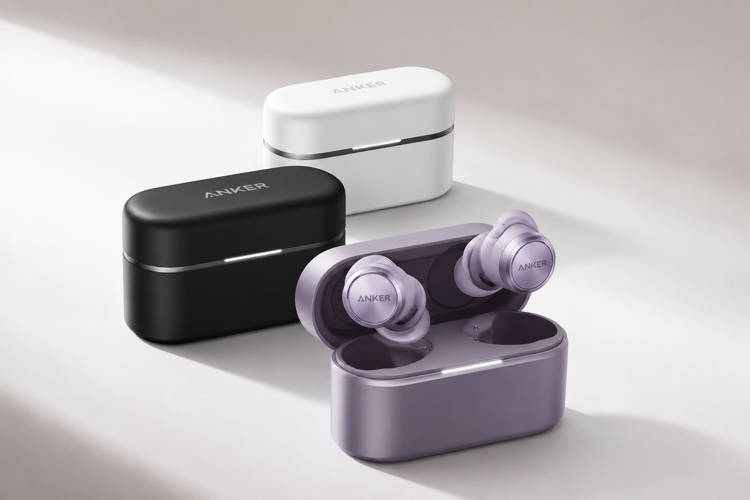
Anker soundcore Liberty Buds 2 provides a relevant example. It uses a compact, stemless, bean-shaped in-ear design. Multiple ear-tip and ear-wing options give the wearer several ways to adjust the canal seal and stabilize the shell instead of forcing one fit on both ears.

The earbuds also include adaptive ANC and a comfort-focused noise-canceling setting intended for quieter indoor spaces. That setting changes how much room noise reaches the listener and may reduce the urge to raise playback volume. It should not be treated as a barrier that stops audio from traveling outward. Tip choice, seating, and volume still decide the result at the neighboring desk.
Liberty Buds 2 makes the most sense in this discussion as a fit-adjustable in-ear option, not as proof that one product can guarantee discretion. Workplace awareness rules matter too. If your job requires you to hear colleagues or alarms, transparency or an open-ear design may be the appropriate choice even if more sound can be heard nearby.
A silent office can expose audio that disappears under everyday background noise. Start with the seal and retest from the same nearby seat. Only if reseating does not reduce the leakage should you lower the volume by one step and test again. That sequence shows whether fit, level, or form factor is doing most of the work.
If the seal keeps moving, try different ear-tip and wing combinations before replacing the earbuds. When a change is justified, an in-ear design with several fit options can make the desk setup easier to control. No design promises complete privacy, so the final check should always be what another person can hear at the distance that matters in your office.
Frequently Asked Questions
Can Sealed In-Ear Earbuds Still Leak in a Quiet Office?
Yes. A weak tip seal or a higher playback level can let a beat or vocal escape even when the earbuds sit inside the canal. A quiet room makes that sound easier to notice. Reseat the earbuds and retest before assuming the hardware has failed.
Does ANC Stop Sound From Leaking Out?
No. ANC changes the environmental noise reaching the listener. It may let you use a lower playback setting, but it does not seal sound inside the ear and cannot correct a loose tip.
How Can You Tell Whether the Ear Tips Are the Problem?
Leakage that changes after talking, chewing, or adjusting a mask often points to a moved seal. Thin bass or a frequent urge to turn the volume up can be another clue. Try another tip or wing combination and compare it at the same seat and volume.
Is Music Leakage the Same as Call Quality?
No. Music leakage describes what a nearby person hears from your playback. Call quality describes what the person on the call receives through microphones and voice processing. Better microphone pickup for calls does not prove that music is inaudible to a coworker.
Should You Use Open-Ear Earbuds at a Silent Desk?
It depends on the workplace. Open-ear earbuds help preserve awareness, which may be necessary around coworkers or alerts, but they do not seal the canal. A sealed in-ear pair is usually the better starting point when reducing audible playback at a nearby desk is the priority.

(0) comments
We welcome your comments
Log In
Post a comment as Guest
Keep it Clean. Please avoid obscene, vulgar, lewd, racist or sexually-oriented language.
PLEASE TURN OFF YOUR CAPS LOCK.
Don't Threaten. Threats of harming another person will not be tolerated.
Be Truthful. Don't knowingly lie about anyone or anything.
Be Nice. No racism, sexism or any sort of -ism that is degrading to another person.
Be Proactive. Use the 'Report' link on each comment to let us know of abusive posts.
Share with Us. We'd love to hear eyewitness accounts, the history behind an article.