
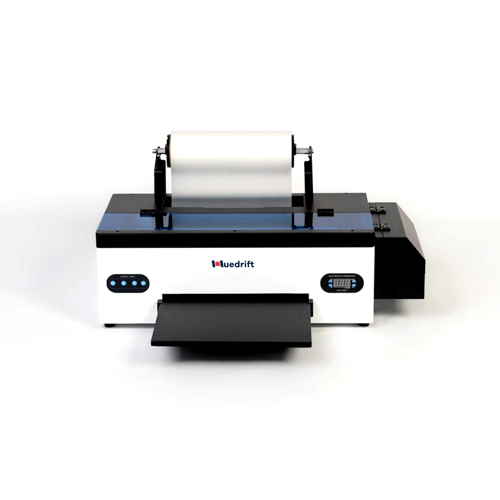
The custom fashion industry is undergoing a quiet but significant transformation. Across the country, a new generation of entrepreneurs — designers, creatives, and small business owners — are building premium clothing brands without factories, investors, or bulk inventory. At the centre of this shift is Direct to Film (DTF) printing technology, a method that delivers professional-grade results on virtually any fabric, in any quantity, with none of the constraints that have historically kept independent fashion at arm's length from quality production.
DTF printing works by transferring a design from a specially coated film onto fabric using heat and pressure. The process produces vivid, full-colour prints with soft hand-feel and strong wash durability — characteristics that align with the expectations of premium fashion consumers. Unlike screen printing, which demands high minimum orders and limits colour complexity, DTF allows creators to print single pieces or short runs without sacrificing quality. Those exploring entry points into this space will find that the Huedrift Product Range represents one of the more accessible and well-regarded options available to serious creators today.
Why DTF Printing Is Attracting Serious Entrepreneurs
The appeal of DTF printing within entrepreneurial circles extends well beyond technical specifications. Traditional fashion manufacturing has always favoured scale: the larger the order, the lower the per-unit cost, which historically locked small brands into a risky upfront investment model. DTF printing inverts that logic entirely. A creator can produce one custom piece at a margin comparable to producing one hundred, which means inventory risk effectively disappears. For those building premium brands where exclusivity and personalisation are core to the value proposition, the ability to offer truly custom, made-to-order pieces without sacrificing profitability changes the fundamental structure of the business.
Market timing also works in DTF printing's favour. Consumer appetite for personalised, limited-edition fashion has grown consistently, driven by a broader shift away from mass-produced goods toward products that feel considered and individual. Premium buyers actively seek out brands offering quality and distinction over commodity. A DTF-enabled creator can serve that market with short-run collections, bespoke pieces, and collaborative drops that large manufacturers simply cannot replicate at equivalent quality. For brands exploring the full landscape of machines suited to professional production, Huedrift Best DTF Printers offers a comprehensive overview of models calibrated for serious output across different scales and use cases.

From Concept to Closet: The DTF Workflow
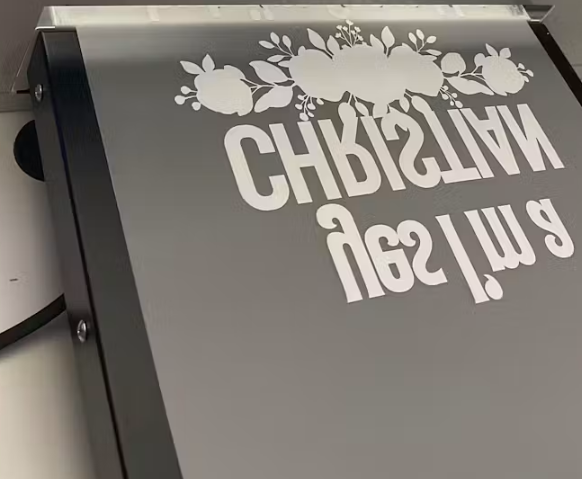
Understanding the production workflow helps explain why DTF printing has attracted entrepreneurs with genuine design ambitions rather than hobbyists looking for a side project. The process begins with a digital file — designed in industry-standard tools like Adobe Illustrator or Photoshop — which is sent directly to the printer with no additional setup requirements. The design prints onto DTF film, is coated with adhesive powder, cured under heat, and then transferred to the garment via a heat press. From final artwork approval to finished product, the timeline can be as short as a few hours.
Colour reproduction is where DTF printing consistently surprises those encountering it for the first time. The technology handles photographic gradients, intricate illustration, and complex multi-colour designs with equal precision. There is no colour limit, no design simplification required to accommodate printing constraints, and no degradation in vibrancy across different fabric types. For designers whose work depends on accurate colour relationships — a fashion-forward brand whose visual identity lives in specific tones and finishes — this fidelity matters enormously.
The Business Case: Margins, Markets and Momentum
The financial profile of a DTF-enabled fashion business differs meaningfully from conventional small-batch manufacturing. A quality blank garment costs between $4 and $8 wholesale. Transfer materials add approximately $1.50 to $3 per piece. A premium custom T-shirt, positioned correctly within a brand narrative emphasising local production, design quality, and exclusivity, commands retail pricing of $45 to $85 without resistance from a quality-conscious customer base. Those margins, achievable from the very first unit sold, make DTF printing a compelling foundation for a fashion business that does not require outside capital to remain viable.
Revenue streams extend beyond direct product sales. Entrepreneurs in the DTF space report income from custom commissions, corporate merchandise, event apparel, and collaborative capsule collections with complementary brands. Some operate hybrid models, combining a core product line with a service offering — printing custom pieces for local businesses, sports teams, or creative agencies — which diversifies income and keeps equipment utilised between product drops. The business adapts to its operator rather than imposing a fixed model.
Premium Quality That Speaks for Itself
One of the persistent misconceptions about independently produced custom fashion is that quality necessarily sits below what established brands deliver. DTF printing challenges that assumption directly. The prints produced on professional equipment are wash-stable, colour-accurate, and free from the cracking or peeling associated with cheaper transfer methods. Applied to a well-chosen blank — a premium-weight cotton, a structured fleece, a quality canvas tote — the finished product is indistinguishable in quality from pieces produced by significantly larger operations. For entrepreneurs building brands in the premium segment, this quality ceiling matters as much as any other business consideration.
Who Is Succeeding with DTF Printing Today
The profile of successful DTF-enabled fashion entrepreneurs is notably diverse. Independent designers use it to produce collections that would otherwise require minimum orders they cannot financially justify. Streetwear creators leverage the speed and flexibility to drop limited pieces tied to cultural moments, building brand heat through scarcity and responsiveness. Luxury lifestyle brands use DTF-printed accessories and apparel as brand touchpoints — custom pieces that extend their identity into wearable form. Artists and illustrators translate digital and physical work into clothing, finding a new distribution channel for work their audiences are eager to own and wear.
What these operators share is an understanding that the technology serves the brand rather than defining it. DTF printing is infrastructure, not identity. The brands succeeding in this space invest as seriously in design, storytelling, and customer experience as they do in production capability — and find that the technology's flexibility allows them to express their vision without compromise.
Getting Started the Right Way
For those considering DTF printing as the foundation of a fashion venture, the practical starting point is simpler than many anticipate. The equipment requires a dedicated workspace — a spare room or studio corner suffices — and a modest initial investment in printer, heat press, and consumables. The learning curve is real but manageable: most operators reach consistent production quality within their first weeks of use, particularly when starting with well-documented equipment from established manufacturers.
The more consequential decisions are creative and strategic. Defining the brand clearly — its aesthetic, its customer, its positioning — before the first garment is printed determines whether the venture becomes a sustainable business or an expensive hobby. Entrepreneurs who approach DTF printing as a tool in service of a deliberate brand strategy consistently outperform those who start with the technology and search for a market afterward. The custom fashion opportunity is genuinely significant. The technology to access it professionally and profitably is now within reach of any serious creator willing to commit to both the craft and the commerce.

(0) comments
We welcome your comments
Log In
Post a comment as Guest
Keep it Clean. Please avoid obscene, vulgar, lewd, racist or sexually-oriented language.
PLEASE TURN OFF YOUR CAPS LOCK.
Don't Threaten. Threats of harming another person will not be tolerated.
Be Truthful. Don't knowingly lie about anyone or anything.
Be Nice. No racism, sexism or any sort of -ism that is degrading to another person.
Be Proactive. Use the 'Report' link on each comment to let us know of abusive posts.
Share with Us. We'd love to hear eyewitness accounts, the history behind an article.