

Most golfers lose strokes not from bad swings, but from bad numbers. The best golf rangefinders fix that problem at the source, giving you the exact yardage to the pin before doubt even enters the picture. The challenges are real: flag acquisition gets tricky when trees crowd the background, sloped fairways demand more than a flat-line distance, and cheap displays wash out the moment sunlight hits them. After reviewing dozens of models across price points and playing conditions, this guide breaks down five options that actually deliver consistent, reliable results on the course.
How this ranking was put together
Product data, customer ratings, manufacturer specs, and feedback from independent review platforms were all pulled together to evaluate each option. Only rangefinders with a documented track record in golf equipment made the cut. Feature claims were cross-checked against real-world user reports before any pick was confirmed.
→ See the full research breakdown
- Bushnell Golf - Best for professional-grade laser rangefinder accuracy
- Golf Galaxy - Best for precision club fitting with advanced technology
- Precision Pro Golf - Best for budget-conscious accuracy seekers
- VoiceCaddie - Best for premium accuracy without subscriptions
- Nikon - Best for premium optical clarity and stabilization
Why Golf Rangefinders Are Worth a Closer Look
Picking the right rangefinder isn't just a gear decision. It's a course management decision that shows up in your scorecard every single round.
The flag pin doesn't always sit in clear sight. Trees, bunkers, and cart paths pile up behind it, making it genuinely difficult to lock onto the right target without solid pin-seeking technology. Sloped terrain adds another layer of challenge, because a flat 150-yard read on a hilly par 3 can send you to the wrong club entirely.
Well-chosen rangefinders cut through both problems. Devices with slope compensation translate raw yardage into a playing distance that accounts for elevation, while fast target acquisition keeps your pace of play intact.
The numbers that matter most are yardage accuracy within ±1 yard tolerance, effective range in yards, and target lock time in seconds. Get all three right, and club selection stops being a guessing game.
Comparing the 5 Best Golf Rangefinders
Note: All data in this table is sourced from review platforms and the official websites of the listed companies.
Company Name | Years Operating | Price Range | Headquartered In |
|---|---|---|---|
Bushnell Golf | 75+ years | $269 - $599.99 | Overland Park, Kansas, USA |
Golf Galaxy | 27+ years | $49.99 - $599.99 | Coraopolis, Pennsylvania, USA |
Precision Pro Golf | 11+ years | $279.99 - $399.99 | Cincinnati, Ohio, USA |
VoiceCaddie | 14+ years | $99 - $599 | Buena Park, California, USA |
Nikon | 100+ years | $239.95 - $529.95 | Tokyo, Japan |
Bushnell Golf - Best for Professional-Grade Laser Rangefinder Accuracy

How Does Bushnell Golf Function?
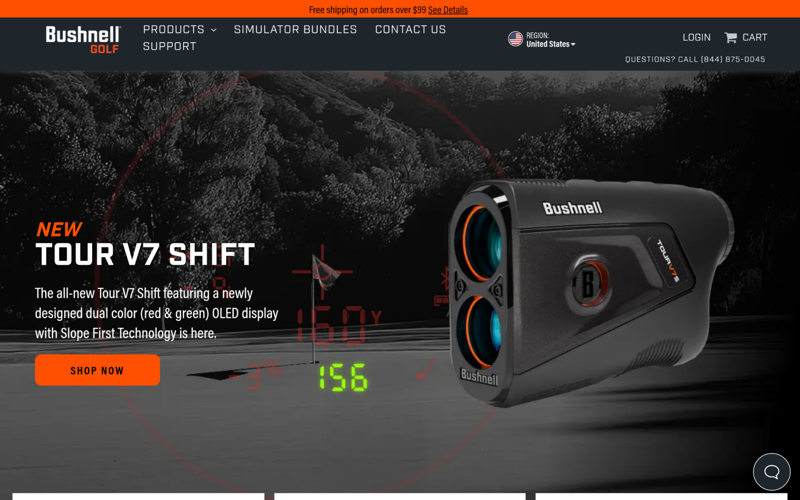
Bushnell Golf has spent over 75 years building optical technology, and that history runs through every rangefinder they make. Their lineup covers a wide range of needs, from the pocket-sized A1-Slope (their smallest model, built for golfers who want patented slope tech without the bulk) to the flagship Pro X3+ with 7x magnification, dual-laser technology, and LINK wind speed data at $599.99. Golfers looking for a reliable mid-tier pick will find the professional golf laser rangefinder by Bushnell Golf lineup includes the Tour V7 Shift at $399.99, which pairs an OLED slope-compensated display with LINK club recommendations for smarter decision-making on the course.
What Sets Bushnell Golf Apart for Golf Rangefinders?
The biggest problem Bushnell Golf solves is flag acquisition confidence. Their PinSeeker technology, paired with JOLT vibration feedback, physically confirms the lock-on so golfers stop second-guessing whether they've hit the flag or the tree line behind it. That kind of tactile verification is rare at this price range, and it's a big reason 98.1% of tour pros trust the brand.
What Users Are Actually Saying:
The Tour V5 Shift sits at 4.5 stars across 750-plus ratings on their own site, which is a strong signal of user satisfaction. Speed and pin-lock reliability are the two things users mention most. The Trustpilot feedback does flag some warranty and durability concerns (particularly around replacement policies after the 6-month mark), so it's worth registering your device early and knowing what your coverage includes.
Golf Galaxy - Best for Precision Club Fitting with Advanced Technology

How Does Golf Galaxy Function?
Golf Galaxy operates as a specialty retailer across 139 locations, stocking rangefinders from the brands that matter most in the space. Their shelves carry the Bushnell Tour V6 Laser Rangefinder, accurate within one yard up to 1,300 yards, alongside the Tour V6 Shift with patented Slope Technology and Visual JOLT pin confirmation. They also carry the Blue Tees Golf Series 2 Pro and the Precision Pro Titan Elite Slope Rangefinder with app connectivity. The combination of a wide brand selection and in-store fitting knowledge makes Golf Galaxy a solid stop for golfers who want to hold a device before buying it.
What Sets Golf Galaxy Apart for Golf Rangefinders?
Golf Galaxy addresses the challenge golfers face when they can't tell whether a rangefinder will actually fit their grip, eye relief preference, or display readability needs without hands-on testing first. Pairing TrackMan fitting technology with a diverse rangefinder selection in a physical retail environment gives buyers a real edge over purely online purchases.
What Users Are Actually Saying:
Reviews are genuinely split here. Customers who connect with a knowledgeable fitter tend to leave very happy, noting real improvements in their equipment setup. The inconsistency shows up mostly in customer service quality across different locations rather than the product selection itself. So your experience can vary quite a bit depending on where you shop.
Precision Pro Golf - Best for Budget-Conscious Accuracy Seekers

How Does Precision Pro Golf Function?
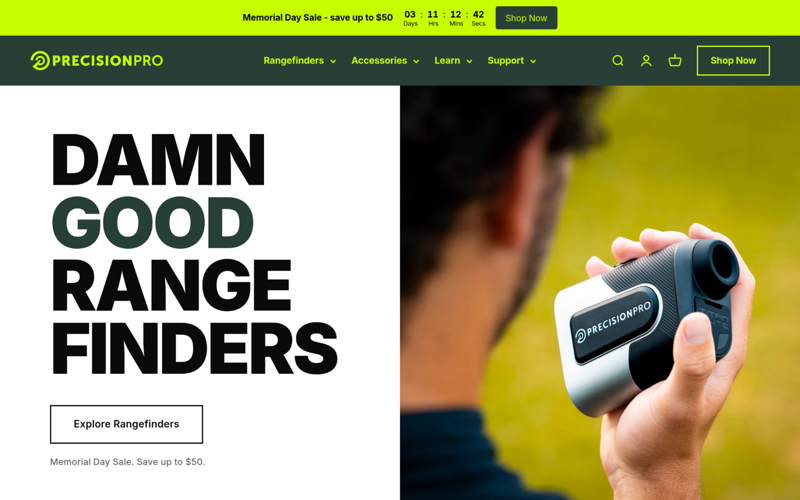
Precision Pro Golf was founded by a PGA pro and built around a simple idea: professional-grade accuracy shouldn't cost professional-grade money. Their lineup includes the Titan Elite (magnesium alloy shell, GPS distances visible in the viewfinder, and Find My Rangefinder tracking), the Titan Slope with a rechargeable USB-C battery and aluminum shell, the NX10 with 20-plus interchangeable side and face plates for personalization, and the NX9 Slope for fast flag-lock with uphill and downhill yardage correction. Everything ships with IP67 waterproofing and lifetime battery replacement, which competitors struggle to match at this price.
What Sets Precision Pro Golf Apart for Golf Rangefinders?
Precision Pro Golf solves the budget-versus-accuracy tension that frustrates most mid-handicappers. They deliver ±1 yard readings and target lock HUD confirmation at a price point well below Bushnell's premium tier. Independent reviewers like Breaking Eighty and Practical Golf have repeatedly called their products legitimate competitors to rangefinders that cost twice as much.
What Users Are Actually Saying:
The feedback pattern here is pretty consistent: users love the target lock speed, the build quality, and the customer support. The main complaint is app connectivity for GPS-enabled models, which can be hit-or-miss depending on your phone setup. But that's a small trade-off for the value most users get out of the device.
VoiceCaddie - Best for Premium Accuracy Without Subscriptions

How Does VoiceCaddie Function?
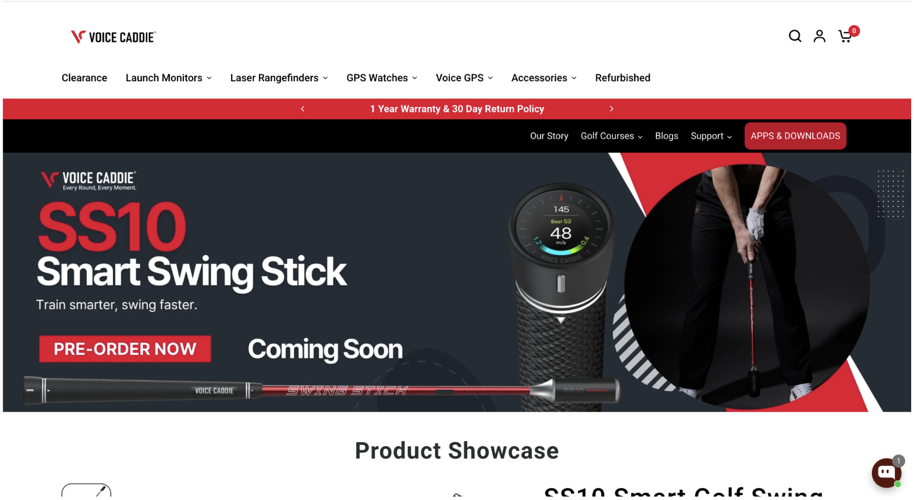
VoiceCaddie pioneered the world's first voice-output GPS rangefinder and has kept pushing the format forward. Their SL3 Hybrid GPS Laser Rangefinder combines a full-color touchscreen with slope adjustment and Pin Tracer technology, while the TL1 delivers a 0.1-second response time with slope adjustment built in. The L6 uses their proprietary V-Algorithm for slope compensation based on PGA and LPGA course data. For golfers who want something compact, the Laser FIT Micro packs Ball-to-Pin Mode, Pin Tracer, slope, and a dual-color OLED display into a small form factor. And there are no subscription fees on any of it, which stands out in a category that's quietly started charging for course data access.
What Sets VoiceCaddie Apart for Golf Rangefinders?
VoiceCaddie tackles the frustration of paying a subscription just to access slope or course map data that should come standard with the device. Their V-Algorithm slopes are built on real PGA and LPGA data, which gives the adjusted distances more real-world credibility than generic elevation formulas.
What Users Are Actually Saying:
Most buyers highlight display clarity and the no-fee GPS access as the top reasons they'd recommend VoiceCaddie to friends. A Trustpilot average of 3.8 stars across a limited review sample suggests solid satisfaction with some room to grow. Customer service response times are the one area where a few users felt the brand could do better.
Nikon - Best for Premium Optical Clarity and Stabilization

How Does Nikon Function?
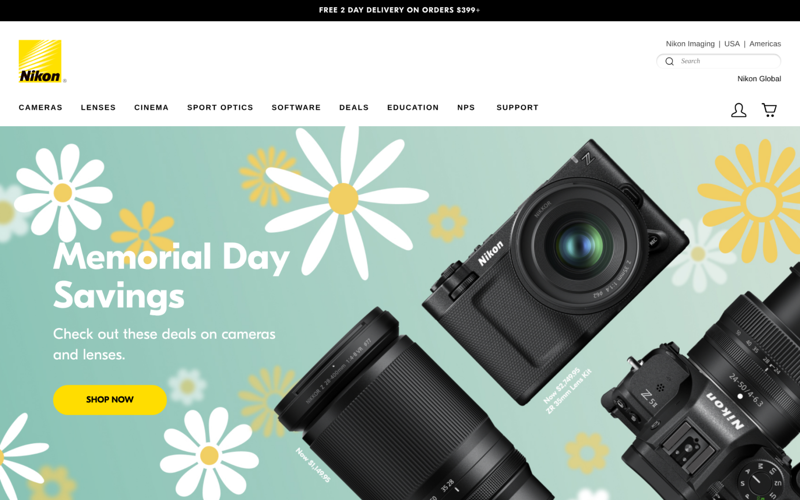
Nikon brings over 100 years of lens engineering to the golf course through their COOLSHOT rangefinder line. The COOLSHOT 20i GIII covers 6-800 yards with First Target Priority mode and LOCKED ON QUAKE vibration feedback, weighing in at just 4.6 oz for easy carry. Step up to the COOLSHOT 50i GII and you get a 1,200-yard range, dual Locked On Quake confirmation, a bright OLED display, and a magnetic cart mount included. The top-tier COOLSHOT PROIII STABILIZED adds optical stabilization and HYPER READ 0.1-second readings, plus full waterproof and fogproof construction for those early-morning rounds where conditions aren't cooperating.
What Sets Nikon Apart for Golf Rangefinders?
Nikon solves the shakiness problem that frustrates golfers trying to pinpoint flags at 200-plus yards. The optical stabilization built into the PROIII smooths out hand tremor and makes distant target acquisition noticeably easier. That optical heritage also shows up in display quality, where Nikon's lenses produce clearer images compared to brands without that kind of background.
What Users Are Actually Saying:
Reviewers consistently call out Nikon's optics as a genuine differentiator, with the stabilization on the PROIII earning particular praise from users who play on long, open courses. The main trade-off is price (premium tier across the board) and the absence of a built-in magnet on flagship models, which some cart players find inconvenient.
Methodology Behind These Picks
Gathering the Foundation: Data Collection Essentials
The research process started by pulling together a broad list of rangefinder options from multiple sources: specialty golf retailer listings, consumer review platforms, manufacturer websites, and golf equipment forums where players discuss real-world performance. Product spec sheets were collected alongside user ratings to establish a baseline picture of what each option actually delivers versus what the marketing says. The goal at this stage was breadth, building a longlist wide enough to capture both well-known brands and smaller specialists that don't always make mainstream "best of" lists.
The Shortlist Cut
From that broad pool, options with incomplete spec data, no verified purchase reviews, or no documented tournament-legal certifications were removed first. Review patterns were then analyzed across multiple platforms rather than relying on a single source. Products that showed consistent complaints about flag acquisition failure, display washout in sunlight, or battery life falling well short of advertised round counts were flagged and deprioritized. What remained after this pass was a tighter group of options with enough review volume and consistency to evaluate meaningfully.
Fact-Checking the Picks
Every claim made by a manufacturer about yardage accuracy, target lock speed, or waterproofing was cross-referenced against independent test reports and verified buyer reviews. Where a spec listed on an official site didn't line up with what real users reported in the field, that discrepancy was noted and weighed in the final assessment. Products that consistently delivered on their stated tolerances in real-world conditions carried more weight than those with impressive specs and mixed real-world results.
Authority Signals and Industry Standing
Brand standing was assessed through PGA Tour endorsements, presence in major golf publications, and mentions in respected independent review outlets. A brand's history in the optics or golf technology space was also considered, because consistent work across multiple product generations tends to signal genuine knowledge of the category. Companies that showed up repeatedly in respected editorial coverage of golf equipment earned higher credibility scores during this phase.
Golf Rangefinders Track Record
Each shortlisted option was evaluated for demonstrated performance in golf contexts, not just general laser rangefinder applications. This included checking for dedicated product pages covering slope compensation and pin-seeking features, verified golfer reviews discussing on-course use, and any documented results from competitive play settings. Rangefinders that showed strong performance records across multiple skill levels, from recreational weekend golfers to competitive club players, were prioritized over niche products built only for one type of user.
Picking the Right Golf Rangefinders for You
Choosing the right rangefinder comes down to matching the device's strengths to how you actually play. Here's what to weigh before making a decision.
- Industry/Domain Experience: Look for brands with documented track records in golf-specific optics. A company with decades of course-tested products behind them has worked through problems that newer entrants are still discovering.
- Features and Service Options: Prioritize slope compensation, fast pin acquisition, and display readability in your main playing conditions. Features like LINK connectivity or GPS hybrid modes add real value if you use them, but don't pay for features you won't reach for mid-round.
- Pricing Structure: Rangefinders range from under $300 to nearly $600. The jump from mid-tier to premium usually buys you faster lock times, better build materials, and more refined display technology, not just a badge.
- Results Measurement: Target lock acquisition time matters more than most buyers realize. A device that takes two seconds to confirm the pin slows your pace of play and adds mental friction to every approach shot.
- Industry Knowledge and Compliance: For competitive play, check which models offer a slope-off toggle. Slope mode is prohibited in most tournament rounds, so USGA Equipment Rules conformance with a clear switch between modes is a non-negotiable for serious club players.
The Verdict
The best golf rangefinder for you comes down to three things: how fast it locks onto the flag, how accurately it compensates for slope, and how clearly you can read it in the conditions you actually play in. Bushnell Golf leads on trust and breadth, Nikon on optics, and Precision Pro Golf on value. As rangefinder technology keeps adding GPS and wind data, the gap between mid-tier and premium picks will only keep narrowing.


(0) comments
We welcome your comments
Log In
Post a comment as Guest
Keep it Clean. Please avoid obscene, vulgar, lewd, racist or sexually-oriented language.
PLEASE TURN OFF YOUR CAPS LOCK.
Don't Threaten. Threats of harming another person will not be tolerated.
Be Truthful. Don't knowingly lie about anyone or anything.
Be Nice. No racism, sexism or any sort of -ism that is degrading to another person.
Be Proactive. Use the 'Report' link on each comment to let us know of abusive posts.
Share with Us. We'd love to hear eyewitness accounts, the history behind an article.