
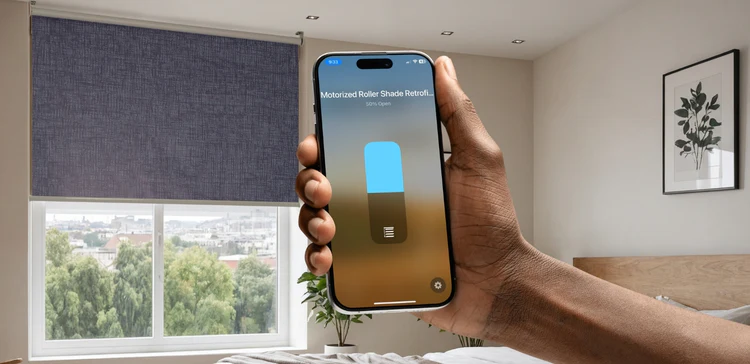
A client of mine spent three months choosing the stone for her kitchen countertops. Flew to Italy twice. The cabinet doors that open at a wave of her hand, she picked those in about forty minutes from a brochure. Which is funny, because the mechanism behind those doors is considerably more sophisticated than the stone, and it'll either perform beautifully for twenty years or become an embarrassing feature she avoids showing guests.
The difference between those two outcomes comes down almost entirely to how the motion was specified.
Automated homes have become a standard expectation at the high end of residential design. What hasn't quite caught up is the understanding that not all movement is the same, and that choosing the wrong type of motion for an application doesn't just affect performance. It affects how the whole space feels.
The Four Types, Briefly
Mechanical movement is divided into four categories that engineers have worked with for a long time: linear, rotary, oscillating, and irregular. The first three show up constantly in home automation. The fourth is more about what you design around than what you design with.
Linear motion is straight-line movement. Point A to point B, precisely, repeatably. This is what drives a pop-up television platform, a motorised kitchen lift, a hidden storage drawer in bespoke joinery. The reason it dominates precision residential applications is that it can be controlled to stop exactly where you want it, every time. That reliability is what separates a mechanism that feels considered from one that feels approximate.
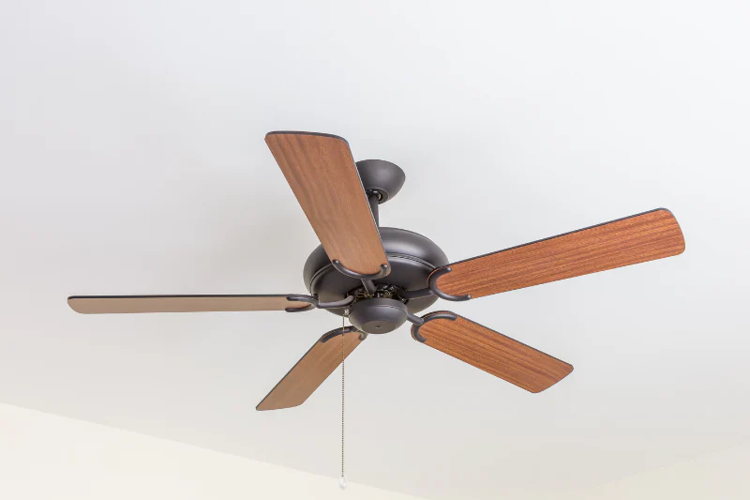
Rotary motion is rotation around a fixed axis. Fans, motors, the drive system inside most automated mechanisms. On its own it's not always what you see in a finished application, but it's often what's doing the work underneath. A rotating motor can be converted into linear motion through the right mechanical linkage, which is how a compact mechanism hidden inside a wall panel can drive a large architectural element across a precise path.
Oscillating motion swings back and forth through an arc. Clock pendulums. Garden sprinklers. More relevantly for luxury interiors, certain types of motorised acoustic panels used in high-end listening rooms, where the angle of the panel affects how sound behaves in the space and the ability to adjust that angle during a session is a genuine functional requirement, not a novelty.
Progressive Automations, whose detailed breakdown of motion types is worth reading if you're going deeper on this, has built most of their product range around linear and rotary applications precisely because those two cover the vast majority of what residential automation actually needs.

Where It Goes Wrong
The specification failures in residential automation tend to cluster around the same mistakes.
Industrial actuators installed in living spaces because the load rating looked right. The problem is that industrial components are built for performance and durability, not for operating quietly in a room where someone is reading or sleeping. The mechanical noise that's irrelevant in a factory is immediately noticeable in a bedroom. Getting this wrong produces the kind of home automation that owners stop using rather than showing off.
Rotary mechanisms specified for applications that actually need linear control. A system that needs to stop at a precise position consistently, a panel that should close flush with surrounding joinery every single time, needs linear actuation. A rotary system introduced because it was cheaper or simpler to install will drift, will vary, and will eventually require calibration that a properly specified system wouldn't need.
Outdoor applications are treated the same as indoor ones. Outside, irregular motion enters the picture. Wind loading on a motorised pergola. A pool cover mechanism operating on a surface that moves. Gate systems on ground that shifts seasonally. These applications need tolerance and sensor integration built in from the start, because the environment will introduce unpredictability that a purely precise system wasn't designed to handle.
What This Means for the Actual Design Process
Motion type should be a design decision made early, not a procurement decision made late. The best residential automation projects specify the actuation approach at the same stage as the architectural intent, because the two inform each other.
A concealed television panel requires a mechanism that's quiet enough to be inaudible during use, precise enough to sit flush with surrounding finishes, and reliable enough to operate daily for years without adjustment. Those constraints point directly to a quality linear actuator system. Discovering after installation that the specified mechanism doesn't meet one of those requirements is an expensive conversation.
The luxury end of Progressive Automations' range addresses this specifically for residential applications, which is distinct from their industrial product line. The tolerance requirements, the noise specifications, the finish quality of visible components, these are different considerations from what a manufacturing facility needs, and a supplier that understands that distinction produces better outcomes in residential contexts.
The Part Nobody Mentions
Maintenance access is the thing most residential automation designs don't account for properly until something needs servicing.
A mechanism buried deep inside a bespoke joinery installation with no consideration for future access is a design decision that seems invisible right up until the actuator needs attention. Which it will, eventually, because every mechanical system does. The projects that age well are the ones where access was considered as part of the specification, not as an afterthought.
Motion technology in the luxury home has genuinely matured. The mechanisms available now are quieter, more precise, and more reliable than they were a decade ago. The gap between a home that moves beautifully and one that moves awkwardly has narrowed to almost entirely a specification and installation quality question. Getting that right is worth the same attention as the stone.

(0) comments
We welcome your comments
Log In
Post a comment as Guest
Keep it Clean. Please avoid obscene, vulgar, lewd, racist or sexually-oriented language.
PLEASE TURN OFF YOUR CAPS LOCK.
Don't Threaten. Threats of harming another person will not be tolerated.
Be Truthful. Don't knowingly lie about anyone or anything.
Be Nice. No racism, sexism or any sort of -ism that is degrading to another person.
Be Proactive. Use the 'Report' link on each comment to let us know of abusive posts.
Share with Us. We'd love to hear eyewitness accounts, the history behind an article.