
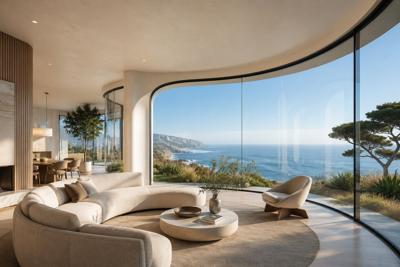

Modern luxury homes are getting softer around the edges. After years of sharp angles, flat glass walls, and boxy contemporary silhouettes, architects and homeowners are embracing a more fluid look. One of the most striking examples is the rise of curved windows in modern luxury homes.
Curved glass has a way of making a house feel less like a structure placed on a lot and more like a home designed around its setting. It opens rooms to sweeping views, softens hard architectural lines, and creates a more natural connection between the indoors and the landscape beyond the glass.
For homeowners building or renovating at the higher end of the market, curved windows offer more than curb appeal. They bring light, movement, elegance, and a custom architectural quality that standard rectangular windows rarely achieve.
The Shift Toward Softer Modern Architecture
For much of modern residential design, clean lines ruled. Flat roofs, rectangular windows, open floor plans, and glass walls became the shorthand for contemporary living. The look is still beautiful when done well, but too many straight lines can make a home feel severe rather than serene.
That is one reason curved forms are finding their way back into luxury architecture. Rounded walls, arched openings, curved staircases, sculptural rooflines, and curved glazing all help bring movement into a home. The result feels more organic, more relaxed, and often more connected to nature.
Curved windows are especially effective because they combine function and drama. They still do the practical work of bringing in daylight and views, but they do it with a softer, more architectural presence.
What Curved Windows Are
Curved windows are glass panels formed into a bend, arc, radius, or continuous curve instead of remaining flat. They may be used as rounded corner windows, sweeping glass walls, curved bay-style features, or custom glazing that follows the shape of a building.
In luxury homes, curved windows are often designed to frame a specific view. They may wrap around an ocean-facing living room, soften the corner of a primary suite, follow a curved staircase, or create a panoramic dining space that feels almost suspended in the landscape.
Unlike standard windows, curved glass is usually custom manufactured. That means the design must be carefully planned before construction, with close coordination between the architect, builder, engineer, and glazing specialist.
How Curved Glass Is Made
Creating curved glass is a highly technical process. The glass is heated until it becomes flexible enough to bend, then shaped over a mold or form. Once cooled, it holds its curved shape while maintaining strength and clarity.
Depending on the project, curved windows may be made from laminated glass, tempered glass, insulated glass units, or other high-performance glazing systems. For luxury homes, performance matters as much as appearance. The glass must be beautiful, but it also needs to help manage heat, glare, energy efficiency, weather exposure, and structural safety.
This is why curved windows are rarely an impulse upgrade. They are best treated as part of the home’s architectural plan from the beginning.
Energy Performance Matters With Curved Glass
Because curved windows are often large and highly exposed, energy performance should be part of the design conversation from the beginning. The U.S. Department of Energy explains that windows, doors, and skylights can gain and lose heat through glazing, framing, solar radiation, thermal radiation, and air leakage, which makes performance ratings especially important when glass is a major architectural feature.
Homeowners should ask about insulated glass, low-emissivity coatings, laminated glass, solar heat gain, glare control, and thermal performance, especially in sunny or coastal climates. The goal is to enjoy the drama of curved glazing without creating a room that feels like a very beautiful greenhouse.
Why Designers Love Curved Windows
Curved windows allow architects to design homes that feel more fluid and less predictable. Instead of stopping a view at a sharp corner, curved glazing can guide the eye across a room and out toward the landscape.
In coastal homes, desert retreats, mountain houses, and view-driven estates, this can be especially powerful. A curved window wall can make the horizon feel wider. A rounded glass corner can make a room feel more open. A curved breakfast nook can turn morning coffee into something that feels suspiciously close to a vacation.
Curved windows also give modern homes a more custom look. They signal that the house was not simply assembled from standard design parts. It was shaped, considered, and built around the way people actually want to live in the space.
How Curved Windows Enhance Natural Light
One of the biggest advantages of curved windows is the way they capture light. Because the surface bends, it can receive daylight from multiple angles throughout the day. This can help interiors feel brighter, warmer, and more open.
In rooms with flat windows, light often enters from one direction. Curved glazing can create a more enveloping effect, especially when used in living rooms, dining rooms, stairwells, and primary suites.
The result is not just more light, but better atmosphere. A curved window can soften sunlight as it moves across a room, creating a space that feels polished without feeling cold.
Curved Windows and Panoramic Views
For many luxury homeowners, the view is the point. Whether the home overlooks the ocean, a canyon, a golf course, a garden, or a city skyline, curved windows can make that view feel more immersive.
Traditional windows divide a view into sections. Curved glazing can reduce visual interruption and create a broader sense of connection. In the right setting, the window almost disappears, allowing the landscape to become part of the room.
This is especially effective in indoor-outdoor living spaces, where architecture is designed to blur the line between home and nature. Curved windows can make the transition feel seamless rather than abrupt.
Where Curved Windows Work Best
Curved windows are not necessary in every room. In fact, they work best when used with restraint. A home with too many dramatic window moments can start to look like it is trying very hard to impress the neighbors, which is never the goal.
The strongest placements are usually areas where the curve serves a purpose. A curved window can beautifully frame a staircase, wrap a sitting room, open a corner living space, or create a dramatic architectural moment in an entryway.
They are also ideal for homes with scenic surroundings. A curved glass wall facing a private garden, pool terrace, vineyard, canyon, or ocean view can turn a simple room into the most memorable space in the house.
Installation and Cost Considerations
Curved windows require more planning than standard windows. Because each panel is often custom-made, measurements must be precise. The framing system must be engineered correctly, and the installation team must understand how to handle specialized glazing.
Homeowners should also consider energy performance, privacy, glare control, cleaning access, and long-term maintenance. In sunny climates, high-performance glass may be especially important to help manage heat gain and comfort.
Curved windows generally cost more than flat windows because of the custom manufacturing, specialized installation, and additional design coordination involved. Still, for the right home, they can add significant architectural value and visual distinction.
Modern Buildings That Showcase Curved Glass
Curved glass has been used in some of the world’s most recognizable modern buildings. Apple Park in California is known for its sweeping glass forms and circular architectural language. The Elbphilharmonie in Hamburg uses curved glass panels to reflect the harbor and sky. The Harbin Opera House in China features fluid, sculptural architecture that feels shaped by the surrounding landscape.
While a private home may not need to perform on quite that scale, these buildings show why curved glass remains so compelling. It gives architecture movement. It reflects the environment. It turns transparency into a design statement.
The Future of Curved Windows in Modern Luxury Homes
The rise of curved windows in modern luxury homes reflects a larger shift in residential design. Homeowners still want clean lines and open spaces, but they also want warmth, softness, and individuality.
Curved glazing offers that balance. It feels modern without being harsh. It creates drama without relying on decoration. It allows a home to feel open, sculptural, and closely connected to its surroundings.
For homeowners planning a custom build or major renovation, curved windows can be one of the most elegant ways to elevate the design. They are not the simplest choice, and they are certainly not the cheapest, but when used well, they can make a home feel unforgettable.
In modern luxury architecture, the future may still be bright, glass-filled, and open. It may simply have a few more curves.
```
(0) comments
We welcome your comments
Log In
Post a comment as Guest
Keep it Clean. Please avoid obscene, vulgar, lewd, racist or sexually-oriented language.
PLEASE TURN OFF YOUR CAPS LOCK.
Don't Threaten. Threats of harming another person will not be tolerated.
Be Truthful. Don't knowingly lie about anyone or anything.
Be Nice. No racism, sexism or any sort of -ism that is degrading to another person.
Be Proactive. Use the 'Report' link on each comment to let us know of abusive posts.
Share with Us. We'd love to hear eyewitness accounts, the history behind an article.