

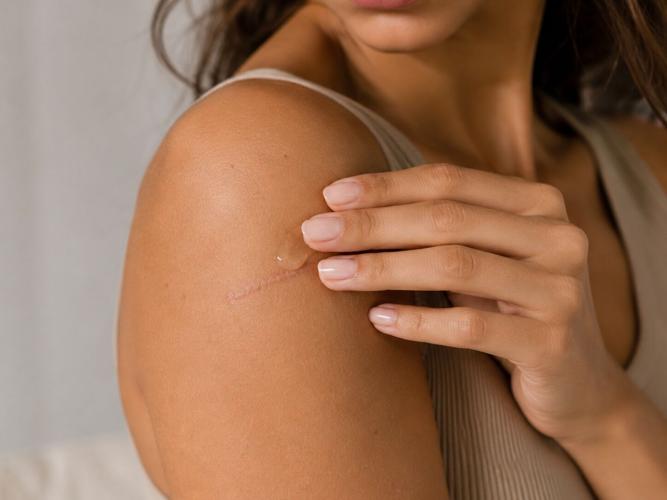

There are few beauty lessons more annoying than realizing the tiny mark you ignored all winter has become the first thing you notice in summer light. Scars are personal, unpredictable, and occasionally dramatic. One day they seem calm and well behaved. The next, they look darker, redder, or more obvious because they spent one cheerful afternoon in the sun without enough protection.
Healing skin needs a different level of care than regular skin. Whether the mark came from surgery, a burn, a cosmetic procedure, acne, a skin cancer removal, or an injury that arrived with absolutely no elegance, learning how to protect scars from the sun can make a meaningful difference in how the area looks over time. The goal is not flawless skin. The goal is calmer skin, better protection, and fewer regrets caused by one unplanned patio lunch.
Why Scars and Sunlight Are a Complicated Pair
Fresh scar tissue is more delicate than the skin around it. While the area is healing, collagen is still forming and reorganizing beneath the surface. That process can take months, and during that time, ultraviolet exposure may make a scar look darker or more noticeable. It is one of those unfair little skincare truths: the skin is doing its best, and the sun is not always helping.
The American Academy of Dermatology recommends covering scars or using a broad-spectrum sunscreen with SPF 30 or higher. That advice is especially important for scars on the face, chest, neck, shoulders, arms, and hands because those areas tend to collect casual sun exposure even when you are not technically “sunbathing.” Driving, gardening, errands, brunch, and sitting near a bright window all count. The sun is irritatingly detail-oriented that way.
Wait Until the Skin Has Fully Closed
Before putting sunscreen, scar gel, silicone sheets, exfoliants, or active skincare directly on a healing area, the skin should be fully closed. An open wound is not a scar-care project yet. It is still a wound, and it deserves proper medical care, not a beauty experiment performed under bathroom lighting.
After surgery, stitches, laser treatments, peels, burns, or deeper injuries, follow the aftercare instructions from your doctor or medical provider. Ask when it is safe to begin topical scar care and sun protection directly on the area. This is not the glamorous part of beauty, but it is the part that keeps healing skin from being bullied by our impatience.
Protect Scars From the Sun With Layers
The most reliable way to protect scars from the sun is to use more than one strategy. Sunscreen matters, but it should not have to do all the work by itself. Clothing, hats, shade, and smart timing can be just as important, especially when a scar is new or in a high-exposure area.
A wide-brim hat can help protect facial scars. A rash guard can be a lifesaver for beach days. Lightweight linen, UPF clothing, high-neck cover-ups, and long sleeves can protect chest, shoulder, and arm scars without making you look like you have surrendered your personal style. Shade is also a beauty tool, despite being terribly under-marketed.
Choose Sunscreen Like You Mean It
For healing scars, broad-spectrum SPF 30 or higher is the standard starting point. Broad-spectrum protection matters because it helps protect against both UVA and UVB rays. Mineral sunscreens with zinc oxide or titanium dioxide can be a smart choice for sensitive or recently treated skin, although the best sunscreen is ultimately the one you will apply correctly and reapply without acting personally offended by the concept.
Use enough product, apply it before sun exposure, and reapply as directed, especially after swimming, sweating, or toweling off. For scars on the face or chest, sunscreen should become part of the morning routine, not something remembered only after you are already standing outside with iced coffee and misplaced confidence.
Keep the Skincare Routine Calm
When a scar is still healing, the surrounding skincare routine should be gentle. This is not the moment to attack the area with scrubs, peels, acids, retinoids, brightening treatments, or every product that looked promising on social media at midnight. Healing skin is already doing a complicated job. It does not need a full committee of active ingredients shouting instructions.
A simple routine is usually better: gentle cleansing, moisturizer when appropriate, sun protection, and targeted scar care once the skin is ready. Readers rebuilding their skincare habits may also enjoy FINE’s guide to modern skincare routines for real skin, real texture, and real life, which takes a more practical look at caring for skin without turning the bathroom counter into a chemistry lab.
Where Silicone Scar Care Can Help

Silicone scar-care products are often used after the skin has fully closed because they help create a protective, occlusive environment over the scar. This may help the area retain moisture and can support a softer, smoother-looking appearance over time. Silicone gels and sheets are commonly used for raised, thickened, or surgical scars, although results vary depending on the scar, the skin, consistency of use, and medical history.
One option in this category is NewGel+, a medical-grade silicone scar-care line that includes gels and silicone sheeting. For visible scars, NewGel+UV combines silicone scar care with zinc oxide SPF 30, while silicone sheeting may be better suited for larger body scars where broader coverage is helpful. It is a useful example of how scar care has become more targeted, but it should still be used only on closed skin and with professional guidance when appropriate.
Different Scars Need Different Strategies
A small scar on the cheek does not need the same plan as a long abdominal scar. A flat acne mark is different from a raised surgical scar. A C-section scar, breast surgery scar, skin cancer removal scar, burn scar, and old injury scar can all behave differently. That is why the best scar-care routine is not the most expensive one. It is the one that fits the scar you actually have.
Larger body scars may benefit from coverage that stays in place under clothing, while visible facial scars often need a routine that works with sunscreen, makeup, and daily life. Raised or thickened scars may need a dermatologist’s input. Dark marks after acne or inflammation may need a different plan entirely. This is where expert guidance can save a person from buying twelve products and still feeling betrayed by the mirror.
Older Scars Still Need Sun Protection
Older scars are less fragile than fresh ones, but they are not immune to the effects of sun exposure. If a scar is already darker than the surrounding skin, repeated sunlight can make the contrast more noticeable. If the texture is uneven, tanning around the area can make the scar stand out in a new and deeply unwelcome way.
Consistent sunscreen and coverage can still help older scars look less obvious by preventing additional darkening. For scars that are raised, painful, itchy, tight, or bothersome, a dermatologist or plastic surgeon can discuss treatment options such as lasers, microneedling, injections, or revision procedures when appropriate. For a broader look at modern aesthetic treatments, FINE’s guide to cutting-edge cosmetic procedures offers a useful starting point.
Do Not Pick, Peel, or Rush the Process
If there is one rule healing skin would like us to remember, it is this: stop touching it. Picking at a scab, peeling flaky skin, rubbing the area too aggressively, or testing whether a scar is “still sensitive” seventeen times a day can irritate the area and make healing more complicated. The hands are rarely as helpful as they think they are.
Scar improvement is usually slow. Weeks matter. Months matter. Consistency matters. That can be frustrating in a world where we expect overnight shipping, instant filters, and skin results by the weekend, but healing tissue is working on its own schedule. A calm routine, sun protection, and patience will usually serve the skin better than constant interference.
When to Ask a Professional
Some scars need medical attention. If a scar is growing beyond the original injury, becoming very raised, darkening quickly, itching intensely, hurting, limiting movement, or showing signs of infection, it is time to ask a qualified medical provider. Early advice can be especially helpful for people who have a history of keloids or hypertrophic scars.
This is also important after cosmetic surgery, C-sections, breast procedures, skin cancer removals, burns, or deeper injuries. A doctor can tell you when to begin scar care, what to avoid, and whether a scar needs more advanced treatment. The internet can offer ideas. Your own skin deserves an actual professional.
The Best Scar Care Looks Boring Until It Works
To protect scars from the sun, think consistency, not panic. Cover the area when possible. Use broad-spectrum SPF 30 or higher once the skin is ready. Reapply sunscreen. Keep the skincare routine gentle. Consider silicone scar care when appropriate. Avoid picking. Ask a professional when something looks or feels wrong.
Scars are part of the skin’s repair story, but they do not have to be ignored. With thoughtful sun protection, gentle skincare, and realistic expectations, healing skin has a better chance of settling into a calmer, softer, less noticeable finish. And after everything your skin has already managed, it has more than earned a little shade.


(0) comments
We welcome your comments
Log In
Post a comment as Guest
Keep it Clean. Please avoid obscene, vulgar, lewd, racist or sexually-oriented language.
PLEASE TURN OFF YOUR CAPS LOCK.
Don't Threaten. Threats of harming another person will not be tolerated.
Be Truthful. Don't knowingly lie about anyone or anything.
Be Nice. No racism, sexism or any sort of -ism that is degrading to another person.
Be Proactive. Use the 'Report' link on each comment to let us know of abusive posts.
Share with Us. We'd love to hear eyewitness accounts, the history behind an article.