
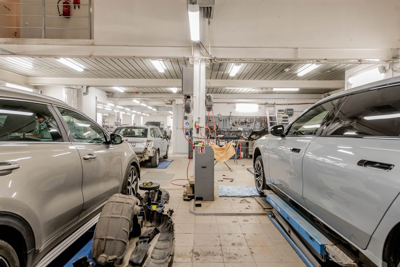

Ever wondered if your car was actually fixed properly after that last fender bender?
The majority of drivers believe that if their vehicle was serviced at a shop that they did the job correctly. They take their car home and everything looks glossy so they drive away... Truth is more repairs are botched than not. Some problems are obvious. Others are covered up by paint, hidden in the wiring harness or buried deep within the computer.
The scary part?
You often won't spot the problems until something goes seriously wrong.
What you'll discover:
- Why Bad Repairs Slip Through So Often
- 6x Warning Signs Your Previous Repair Wasn't Done Right
- How Diagnostic Scanning Reveals Hidden Damage
- What To Do When You Spot A Bad Repair
Let's jump in!
Why Bad Repairs Slip Through So Often
Body shops face increasing pressure. Insurance companies demand low costs. Customers demand quick turnaround times. And today's vehicles are more complex than ever.
The result?
Cut Corners. Minor Repair Issues Becomes Major Safety Hazards. The California Bureau of Automotive Repair found 60% of inspected repairs had damage remaining. While 42% of repairs inspected had major safety issues. That means out of all those vehicles repaired major defects are being sent out on the road.
This is where diagnostic scanning comes in.
Diagnostic scanning is a computerised scan that connects to your vehicle's onboard computer and reads all of the modules for trouble codes, pending codes, missed calibrations, and stored fault codes. A reputable auto body repair shop will perform a pre-scan before working on the vehicle and a post-scan before returning it to you. Without diagnostic scanning undetected electrical problems, uncleared safety system calibrations and stored crash data can drive out of the door.
Now let's look at the warning signs.
6x Warning Signs Your Previous Repair Wasn't Done Right
If you see any of these things on a repaired vehicle....Take it somewhere else for a second opinion.
1. Warning Lights That Just Won't Turn Off
Cars today have dozens of sensors communicating with the ECM at all times. When a repair is properly performed, those sensors should be verified, cleared, and reset/calibrated with diagnostic scanning.
When they aren't:
- Check engine light stays on
- Airbag warning light glows
- ABS or traction control lights flicker
- Tyre pressure warnings behave oddly
Lots of warning lights on the dashboard are often a tell-tale sign that diagnostic scanning was neglected or improperly performed.
2. Panel Gaps That Don't Line Up
Walk slowly around the car. Observe the gap between the hood and the fender. Observe the trunk lid. Observe the doors.
If your gaps are inconsistent or wider on one side compared to the other -- something isn't lining up. This could be due to:
- The frame wasn't pulled straight
- Panels were forced back into place
- Structural damage wasn't fully addressed
Inspection research recently showed that 50% of vehicles assessed had unrepaired structural damage from the crash. The easiest way to identify this problem is with the naked eye.
3. Paint That Doesn't Quite Match
Colour matching is an art form. If a shop rushes the process, the paint on the repaired panel will usually end up slightly different than the rest of the car.
Look for:
- Different shades in direct sunlight
- Orange peel texture on new panels
- Overspray on trim, glass, or rubber seals
- Dust or debris trapped in the clear coat
Bad paint doesn't just look bad... it wears out much sooner than it should too.
4. Strange Handling Or Alignment Issues
Is there pull in one direction when driving? Does the steering wheel hang uneven when driving straight?
Symptoms of incomplete frame/suspension repair. If it was repaired correctly, the vehicle should drive straight, brake balanced and feel stable at highway speeds.
If it doesn't... something got missed during the repair.
5. Rattles, Squeaks And Odd Noises
New sounds are almost always a red flag. If the vehicle has developed:
- Rattles from inside the doors
- Wind noise around the windows
- Clunks when going over bumps
- Squeaks in the suspension
...highly likely that panels were put back together incorrectly or bolts were not torqued properly.
6. ADAS Features Acting Up
This is a big one.
Today's vehicles are equipped with Advanced Driver Assistance Systems -- lane keep assist, adaptive cruise control, automatic emergency braking, blind spot detection, just to name a few. According to a 2022 IIHS study, 42% of vehicles equipped with ADAS had at least one faulty/unrecalibrated sensor following repair.
When lane assist steers you in the opposite direction you want or auto-brake engages sporadically...... sensors were never recalibrated using a scan tool.
How Diagnostic Scanning Reveals Hidden Damage
Diagnostic scanning is the single best tool for uncovering a bad repair.
Here's why:
Every vehicle on the road today has dozens of electronic control modules that record data every second. A thorough diagnostic scan retrieves trouble codes from every module - even those not represented on the dashboard.
A thorough diagnostic scan will catch:
- Uncleared crash data in the airbag module
- Missed calibrations on ADAS sensors
- Broken communication between control modules
- Unresolved fault codes from the previous repair
- Battery and charging system issues
The best part?
Diagnostic scans typically run under an hour. If you have any suspicion about past work done this is the quickest way to receive honest answers.
What To Do When You Spot A Bad Repair
Found some warning signs? Don't panic -- but don't ignore them either.
Here's what to do:
- Get a post-repair inspection. An impartial shop will inspect your car and write up a complete report with pictures and documentation.
- Request the repair paperwork. There should be records of scans, calibrations, parts installed, etc from the original shop.
- Call your insurance company. If you used insurance to select the shop, they might pay for a redo.
- Have the work corrected. Structural and safety concerns should never be avoided.
Botched repairs can be more than frustrating. They can compromise crash safety, resale value and long-term reliability.
All body shops do not repair cars correctly. Some don't use diagnostic scanning. Some speed through paint. Others overlook frame damage.
But now the warning signs are clear:
- Warning lights that won't switch off
- Uneven panel gaps
- Paint that doesn't match
- Strange handling
- Rattles and new noises
- Faulty ADAS features
If any of these are found on a repaired vehicle... have it inspected by a reputable shop and ask for a complete diagnostic read. It's the quickest way to ensure your safety, your family and your investment.
Don't wait for something to fail before taking action.


(0) comments
We welcome your comments
Log In
Post a comment as Guest
Keep it Clean. Please avoid obscene, vulgar, lewd, racist or sexually-oriented language.
PLEASE TURN OFF YOUR CAPS LOCK.
Don't Threaten. Threats of harming another person will not be tolerated.
Be Truthful. Don't knowingly lie about anyone or anything.
Be Nice. No racism, sexism or any sort of -ism that is degrading to another person.
Be Proactive. Use the 'Report' link on each comment to let us know of abusive posts.
Share with Us. We'd love to hear eyewitness accounts, the history behind an article.