
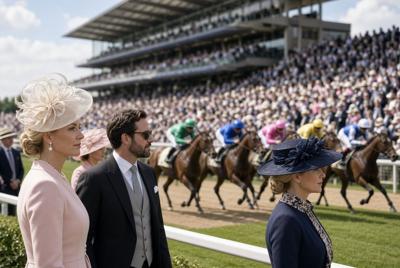

Horse racing has long been called the Sport of Kings, but its appeal stretches far beyond the track. The biggest races combine athletic competition with fashion, tradition, celebrity, and destination travel. People attend not only to watch the horses but to experience the atmosphere, the rituals, and the sense of occasion that surrounds these events.
From historic English meetings to modern Middle Eastern spectacles and American classics, each major race has developed its own distinct culture. Here’s a closer look at some of the most celebrated.
Royal Ascot: Pageantry and Tradition
Royal Ascot dates to 1711, when it was founded under Queen Anne. It remains one of the most formal and tradition-rich events in the sport, running over five days in June. Each afternoon begins with a royal procession of horse-drawn carriages, and a strict dress code governs the enclosures. Elaborate hats, morning dress for men, and carefully observed etiquette turn the meeting into as much a fashion and social event as a sporting one.
The racing itself is high quality, but the lasting appeal lies in the continuity. Many of the rituals have been observed for generations, giving the event a sense of ceremony that few modern sporting occasions can match. For visitors, attending Royal Ascot is often as much about the setting, the gardens, and the people-watching as it is about the results.
Dubai World Cup: Modern Spectacle
In contrast to Ascot’s deep history, the Dubai World Cup is a relatively recent creation, first run in 1996. Held at Meydan Racecourse, it is known for its scale and prize money—one of the richest races in the world. The atmosphere leans toward contemporary luxury: modern architecture, international fields of horses, and a jet-set crowd that treats the night as a major social destination.
Where Royal Ascot emphasizes continuity and formality, Dubai emphasizes spectacle and global appeal. It attracts owners, trainers, and spectators from around the world and showcases the way horse racing has expanded beyond its traditional centers.
Kentucky Derby: American Pageantry
Often called “the most exciting two minutes in sports,” the Kentucky Derby is the first leg of the American Triple Crown and one of the most widely recognized races in the United States. Held at Churchill Downs in Louisville on the first Saturday in May, it draws a broad audience that includes lifelong racing fans and casual spectators who come for the event itself.
The Derby mixes high fashion and celebrity with a more accessible, regional character. Mint juleps, elaborate hats, and red-carpet energy sit alongside a working-class Kentucky setting and long local traditions. The result is an event that feels both glamorous and grounded, which helps explain why it reaches far beyond dedicated horse-racing audiences.
Breeders’ Cup: Championship Racing
Founded in 1984 by breeder John R. Gaines, the Breeders’ Cup was created as a year-end championship series for thoroughbred racing. It has grown into a multi-day event that rotates among different tracks. The focus is primarily on the quality of the racing rather than extended pageantry, which has made it a reliable source of memorable finishes and high-level competition.
While it attracts celebrities and formal hospitality, the Breeders’ Cup is more about the horses and the sport’s competitive climax than about fashion or royal tradition. Its rotating locations also give it a different character each year, depending on the host track and region.
Why These Events Endure
Each of these races offers something different: centuries-old ceremony at Ascot, modern global spectacle in Dubai, broad cultural resonance at the Derby, and pure championship racing at the Breeders’ Cup. What they share is the ability to turn a sporting contest into a larger social and travel experience. Attendees plan trips around them, follow dress codes or local customs, and treat the day as an occasion rather than simply a race.
Horse racing continues to thrive in part because it supports these varied expressions. Some people are drawn to the history and formality, others to the competition or the destination atmosphere. The events themselves remain flexible enough to accommodate both dedicated fans and those who simply want to be part of a distinctive gathering.
Whether the appeal is the hats at Ascot, the scale of Dubai, the energy of the Derby, or the racing at the Breeders’ Cup, these meetings demonstrate how a sport rooted in centuries of tradition can still function as a modern lifestyle experience.

(0) comments
We welcome your comments
Log In
Post a comment as Guest
Keep it Clean. Please avoid obscene, vulgar, lewd, racist or sexually-oriented language.
PLEASE TURN OFF YOUR CAPS LOCK.
Don't Threaten. Threats of harming another person will not be tolerated.
Be Truthful. Don't knowingly lie about anyone or anything.
Be Nice. No racism, sexism or any sort of -ism that is degrading to another person.
Be Proactive. Use the 'Report' link on each comment to let us know of abusive posts.
Share with Us. We'd love to hear eyewitness accounts, the history behind an article.