

A beautiful car deserves more than regular washes and an occasional trip to the service department. Whether you're driving a luxury sedan, a family SUV, or a rugged weekend adventure vehicle, protecting that investment means thinking about safety long before something goes wrong.
Modern vehicles come equipped with sophisticated technology, from automatic emergency braking to blind-spot monitoring. Yet some of the smartest precautions remain surprisingly simple: properly maintained tires, a reliable flashlight, a well-stocked emergency kit, and knowing what to do when an unexpected problem interrupts the journey.
The good news is that vehicle safety doesn't have to be complicated. A few thoughtful habits can make everyday driving safer, reduce avoidable expenses, and prepare you for the occasional roadside surprise.
Here are eight practices worth making part of your driving routine.
1. Make Preventive Maintenance a Priority
A well-maintained vehicle is more than a point of pride. It's an essential part of responsible ownership.
Follow the manufacturer's recommended service intervals for oil changes, fluid checks, brakes, filters, and other mechanical components. The appropriate maintenance schedule will depend on your vehicle, driving habits, and whether it uses gasoline, hybrid, or fully electric power.
Pay attention to unusual noises, vibrations, dashboard warnings, and changes in braking performance. Small problems don't always remain small, and addressing them promptly can prevent a breakdown or a significantly more expensive repair.
Visibility matters, too. Keep your windshield clean, replace deteriorating wiper blades, and confirm that headlights, brake lights, and turn signals are functioning properly.
If you own a luxury or performance vehicle, consider developing a relationship with a qualified service provider familiar with your model. Specialized systems and components sometimes require more than a general maintenance approach.
2. Pay Attention to Your Tires
Your tires provide the critical connection between your vehicle and the road. Even sophisticated suspension systems and advanced driver-assistance technology cannot compensate for badly worn tires.
Check tire pressure at least monthly, preferably before driving when the tires are cold. Use the recommended pressure shown on the driver's door placard or in the owner's manual, not the maximum pressure molded onto the tire.
Inspect tread depth, sidewalls, and signs of uneven wear. A tire may look perfectly acceptable from a distance while hiding damage that compromises performance.
The National Highway Traffic Safety Administration provides guidance on tire pressure, maintenance, and recognizing when replacement is necessary.
For drivers heading into mountains, rainy conditions, or long-distance road trips, tire condition deserves particular attention. Proper traction can make the difference when sudden braking or evasive maneuvering becomes necessary.
3. Choose Parking Spaces With Security in Mind
Where you park can be just as important as how you drive.
Whenever possible, choose well-lit parking areas with regular pedestrian activity, monitored access, or visible security measures. Avoid isolated corners of large parking structures, particularly when returning to your vehicle after dark.
At home, consider motion-activated lighting, garage-door security, and surveillance cameras positioned to cover the driveway.
Never leave handbags, electronics, shopping bags, or other valuable items visible inside the vehicle. Even an empty bag can attract unwanted attention.
If you must leave possessions in the car, secure them before arriving at your destination rather than making an obvious display of placing valuables in the trunk.
For owners of high-value vehicles, additional theft-prevention measures such as manufacturer-connected security features, professionally installed immobilizers, or discreet tracking systems may be worth investigating.
No single security measure guarantees protection, but several sensible precautions together can make your vehicle a less attractive target.
4. Build Better Driving Habits
Even the most advanced automotive technology cannot replace an attentive driver.
Maintain a safe following distance, adjust your speed to road and weather conditions, and give yourself sufficient time to react to changing traffic.
Avoid using your phone while driving, even for what seems like a quick message or navigation adjustment. Set your destination and preferred entertainment before leaving.
Defensive driving also means anticipating the unexpected. Watch for vehicles entering traffic, pedestrians near intersections, cyclists in shared lanes, and drivers who may change direction without signaling.
When traveling long distances, plan rest stops rather than pushing through fatigue. Driving while tired can affect judgment, reaction time, and attention.
A comfortable, capable vehicle can make a long journey feel effortless. Staying alert behind the wheel is what keeps it safe.
5. Keep a Properly Equipped Roadside Emergency Kit
No one plans to spend an evening on the shoulder of a highway waiting for roadside assistance.
Nevertheless, a little preparation can make an unexpected delay considerably easier to manage.
The National Highway Traffic Safety Administration recommends that drivers carry emergency supplies including a flashlight, first-aid kit, phone charger, drinking water, tire-pressure gauge, basic tools, and seasonal necessities.
One particularly useful addition is a dependable flashlight.
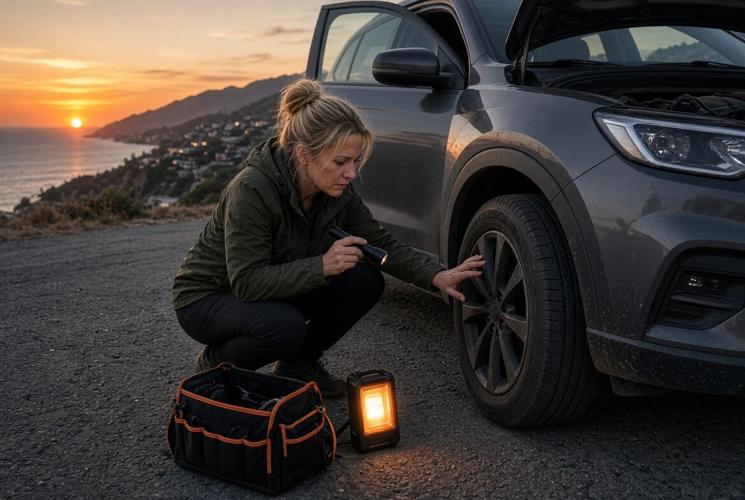
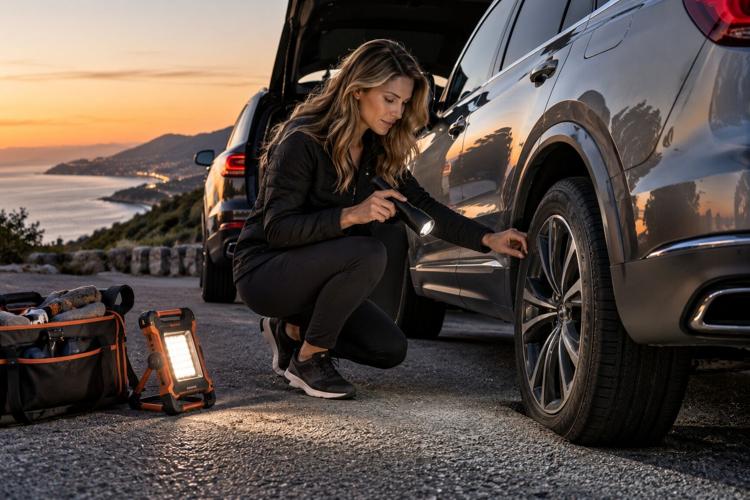
The Infinity X1 5,000-Lumen Dual Power Flashlight combines a rechargeable battery with an AA battery backup option, making it a practical choice for checking a tire, locating tools, or inspecting an unexpected problem after dark. Its adjustable beam provides flexibility for both close-up work and longer-distance illumination.
A compact emergency kit should also include a reflective vest, suitable roadside warning equipment, essential medications, and a portable charging solution for your phone.
For longer journeys, pack additional water, weather-appropriate clothing, and supplies suited to the climate.
Remember that a flashlight is not a substitute for a road flare or approved warning device. If your vehicle breaks down in traffic, prioritize getting to a safe location and contacting assistance rather than attempting a repair beside moving vehicles.
6. Make Routine Vehicle Checks Easier With Proper Lighting
A quick inspection before a road trip can reveal issues that might otherwise go unnoticed.
Look for visible tire damage, fluid leaks, loose items, worn wiper blades, and problems with exterior lighting.
These checks are particularly valuable before an early-morning departure or after returning from a long drive.
Good portable lighting can make the process easier, especially in dim garages or poorly illuminated parking areas.
For hands-free illumination, the Infinity X1 2,000-Lumen Rechargeable Work Lights offer adjustable brightness, magnetic mounting, and USB-C charging. They can be positioned to illuminate a tire, wheel well, or stationary work area without requiring someone to hold a flashlight.
Portable work lights are useful for routine inspections and simple maintenance, although they should never encourage repairs in an unsafe roadside location.
Rechargeable equipment should also be checked periodically to ensure the battery is ready when needed. Follow the manufacturer's storage and charging instructions, particularly in vehicles exposed to extreme temperatures.
A few minutes of preparation in your own driveway is always preferable to discovering a problem miles from home.
7. Use Your Vehicle's Safety Technology Wisely
Today's vehicles offer an impressive range of driver-assistance systems, but understanding what they do—and what they don't do—is essential.
Automatic emergency braking, blind-spot monitoring, lane-departure warnings, and adaptive cruise control can provide useful assistance in appropriate conditions.
However, their capabilities vary between manufacturers and models. Cameras and sensors may also perform differently in heavy rain, fog, intense sunlight, or when obstructed by dirt.
Review your owner's manual and understand which functions are active, how they issue warnings, and when driver intervention is required.
Another useful addition is a quality dash camera. Unlike collision-avoidance systems, dash cameras primarily document events rather than prevent them.
For more on their practical value, read FINE Magazine's Are Dash Cams Worth It? 7 Reasons Every Driver Should Consider One.
The most effective approach combines helpful technology with sound driving habits, rather than relying entirely on electronic assistance.
8. Prepare Your Vehicle for the Journey Ahead
A car that performs beautifully during a short commute may face very different demands on a weekend road trip.
Before traveling, consider the distance, terrain, weather forecast, and availability of services along your route.
Check fluid levels where applicable, inspect tires, confirm that your emergency equipment is complete, and make sure navigation and communication devices are functioning.
If you're traveling in an electric vehicle, identify reliable charging opportunities along the route and plan for alternatives if a station is unavailable.
For gasoline and hybrid vehicles, avoid beginning remote journeys with a nearly empty tank.
It's also worth reviewing your roadside-assistance coverage before leaving. Know whether your manufacturer, insurance company, auto club, or credit card offers towing or emergency services.
And if you're driving through remote areas, share your planned route and expected arrival time with someone you trust.
Preparedness shouldn't take the enjoyment out of a road trip. It should give you the confidence to enjoy the drive without unnecessary worry.
The Best Car Safety Investment Is Preparation
Some of the most valuable automotive upgrades are surprisingly modest.
A reliable flashlight, correctly inflated tires, attentive driving habits, and a properly maintained vehicle may not generate the excitement of a new sound system or performance package.
But when something unexpected happens, their value becomes immediately apparent.
The smartest approach to vehicle ownership combines preventive care, sensible technology, and practical emergency preparation.
Because protecting your vehicle isn't simply about preserving its appearance or resale value. It's about protecting the people who travel in it—and making sure every journey has the best possible chance of ending exactly where you intended.

(0) comments
We welcome your comments
Log In
Post a comment as Guest
Keep it Clean. Please avoid obscene, vulgar, lewd, racist or sexually-oriented language.
PLEASE TURN OFF YOUR CAPS LOCK.
Don't Threaten. Threats of harming another person will not be tolerated.
Be Truthful. Don't knowingly lie about anyone or anything.
Be Nice. No racism, sexism or any sort of -ism that is degrading to another person.
Be Proactive. Use the 'Report' link on each comment to let us know of abusive posts.
Share with Us. We'd love to hear eyewitness accounts, the history behind an article.