
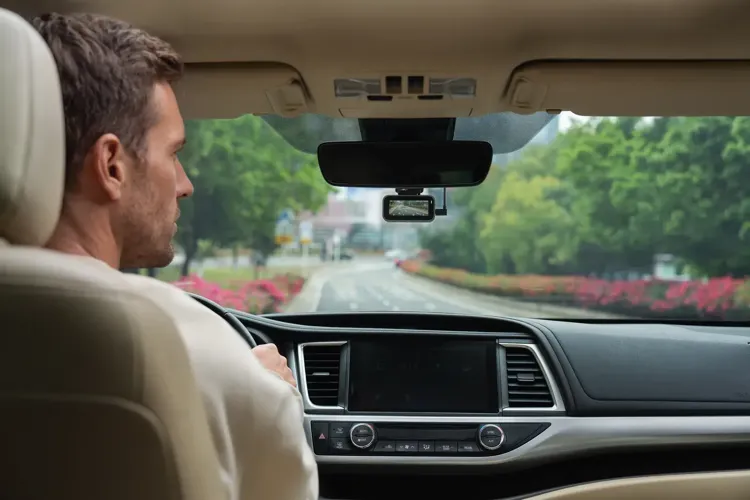
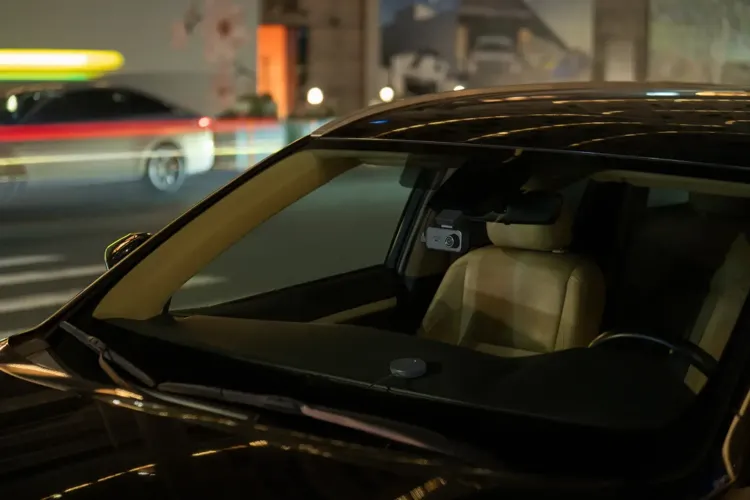
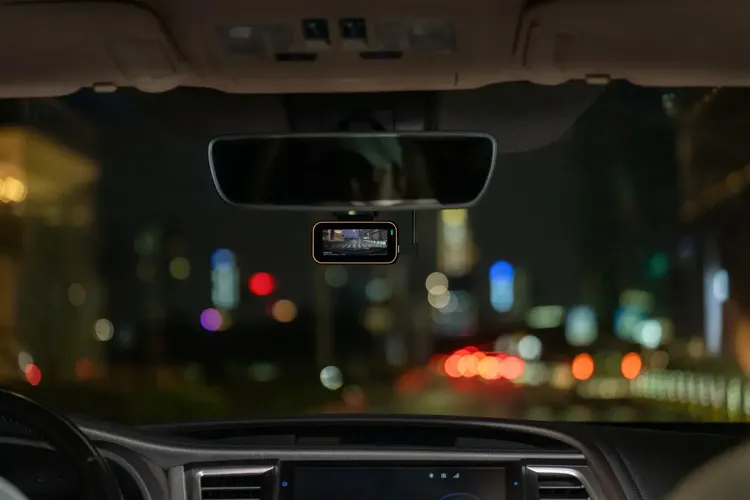
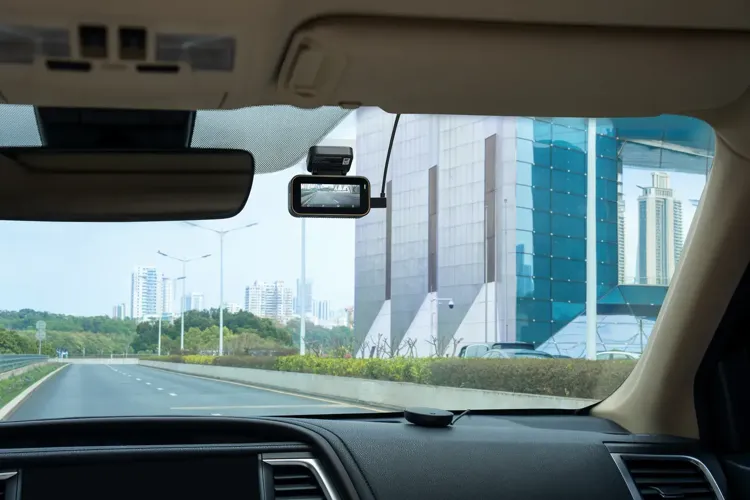

Cars have become rolling technology platforms. Cameras help us reverse into tight spaces, sensors watch blind spots, smartphones unlock doors and increasingly sophisticated driver-assistance systems monitor what is happening on the road.
Yet one surprisingly useful piece of technology is still absent from many vehicles: a camera system dedicated to creating an independent record of what happens around the car.
That is why the modern dash cam deserves another look. What was once a small windshield camera primarily purchased to document accidents has evolved into something much more sophisticated. The latest smart dash cams can record several areas of a vehicle, monitor a car while it is parked, capture clearer footage after dark and, with compatible hardware, provide a connection to the vehicle after its owner has walked away.
For someone who regularly leaves a valuable vehicle at a hotel, airport, restaurant, shopping center or crowded parking garage, that changes the conversation considerably.
Dash Cams Have Moved Beyond the Windshield
The original appeal of a dash cam was simple. If two drivers disagreed about what happened during a collision, there might be video showing the sequence of events.
There is still plenty of reason to want that record. The National Highway Traffic Safety Administration estimates its national crash sampling system draws from roughly 6 to 7 million police-reported crashes each year, ranging from property-damage incidents to fatal collisions.
But recording only what happens directly in front of the vehicle can leave part of the story missing.
The 70mai Dash Cam 4K T800 takes a broader approach with three recording channels. Its front and rear cameras each record in 4K using Sony STARVIS 2 IMX678 sensors, while a separate 1080p infrared camera covers the vehicle interior.
That combination creates three distinct perspectives rather than relying solely on the traditional view through the windshield.
Recording What Happened Before the Impact
One of the more useful developments in current dash-camera technology happens before a collision is detected.
The T800 includes buffered emergency recording. Instead of saving only the instant an impact triggers the camera, the system can preserve footage leading up to the collision as well as what happens afterward. According to 70mai, the pre-collision buffer can extend up to three minutes depending on the recording settings and timing of the incident.
That context could prove considerably more useful than a clip beginning at the point of impact. Lane position, traffic movement, another vehicle's approach and the moments preceding a collision may all help explain what happened.
The recordings are also saved separately from normal loop footage, reducing the chance that an important emergency clip gets overwritten during routine recording.
The Parking Garage Changes the Equation

Many vehicles spend far more time parked than moving, which may be where the newest generation of smart dash cams becomes particularly interesting.
The 70mai Dash Cam 4K Omni addresses that problem with a camera capable of rotating to provide a 360-degree view. The current model records at up to 4K 60fps and uses Sony's STARVIS 2 IMX678 image sensor along with HDR dual-channel recording.
Its parking features go further. AI Motion Detection 2.0 is designed to recognize activity around the vehicle rather than continuously treating every movement as equally important.
For the driver returning to a car with bumper damage, a scraped door or evidence that someone has been unusually interested in the vehicle, recorded footage can provide information that otherwise might not exist.
Some advanced parking functions require a compatible 70mai hardwire kit, so this is one feature buyers should investigate before assuming everything works simply by plugging the camera into a power outlet.
Resolution Matters for More Than Pretty Video

There is an understandable tendency to dismiss 4K as another specification manufacturers use to make electronics sound more impressive.
A dash cam presents a more practical argument for additional resolution.
The relevant detail in a recording may occupy only a small portion of the frame. A license plate, traffic signal, road marking, vehicle or person can become important after an incident, particularly if the footage needs to be reviewed later.
The 4K Omni's combination of 4K 60fps recording and HDR is intended to preserve more of that visual information, while the T800 takes another route by supplying 4K views both ahead of and behind the vehicle.
Nighttime recording matters for the same reason. Glare from headlights, darker surroundings and rapidly changing exposure can make important details considerably harder to capture than they are during daylight.
The goal is not to create beautiful driving footage. It is to create useful footage.
Connected Monitoring Adds Another Layer
The newest smart dash cams are also beginning to behave less like standalone cameras and more like connected vehicle devices.
Both the 4K Omni and T800 are compatible with 70mai's optional 4G hardware. Depending on the model, hardware and service configuration, connected functions can include remote access, notifications and cloud-related features.
That can be useful when the driver and vehicle are separated. A car parked overnight at a resort, left in an airport garage during a trip or sitting several floors below a restaurant is no longer necessarily completely out of sight.
It is a subtle shift, but an important one. The dash cam is moving from something that simply stores footage for later toward something that can become part of a broader vehicle-monitoring system.
Even Expensive Cars Can Have Technology Gaps

r
Premium vehicles already contain an extraordinary number of cameras and sensors, which raises an obvious question. Why add another camera to a car already surrounded by them?
Because most factory systems have a different primary job.
Surround-view cameras generally help maneuver and park. Driver-assistance cameras support functions such as lane monitoring, collision warnings or other vehicle systems. A dedicated dash cam is designed specifically to record and retain footage.
FINE previously explored just how much technology is now operating behind the scenes in What Drivers Should Know About the Technology Inside Modern Cars. The more sophisticated vehicles become, the more useful it is to distinguish between technology designed to operate the car and technology intended to document what happens around it.
A dash cam does not replace factory safety equipment. It fills a different gap.
Installation Should Be Nearly Invisible
There is one aesthetic issue worth discussing, particularly inside a well-designed luxury cabin.
Nobody wants a windshield surrounded by gadgets, dangling wires and bulky mounts.
A properly selected dash cam should disappear into the environment as much as possible. Camera placement, cable routing and the location of rear or interior cameras can make the difference between an installation that looks factory-finished and one that feels temporary.
Owners interested in parking surveillance or 4G connectivity may also need hardwired power. In newer premium vehicles, professional installation may be worthwhile simply to keep wiring concealed and avoid interfering unnecessarily with interior trim or vehicle electronics.
It follows the same philosophy behind the upgrades discussed in FINE's Upgrade Your Ride Accessories That Make Any Car Feel Luxurious. The most successful technology additions tend to be the ones that improve the experience without visually taking over the cabin.
What to Look for in a Smart Dash Cam
Resolution is only the beginning. Camera coverage, low-light performance, parking surveillance, emergency recording and storage should all be considered before choosing a system.
Drivers who primarily want documentation during their commute may be satisfied with front-and-rear recording. Someone who frequently leaves a valuable vehicle unattended may place greater importance on parking surveillance, motion detection and connected monitoring. Drivers using their vehicles for road trips may want yet another combination.
The 70mai T800 and 4K Omni illustrate those different approaches particularly well. The T800 emphasizes three-channel coverage with dedicated front, rear and interior cameras. The 4K Omni emphasizes its rotating 360-degree view, higher-frame-rate 4K recording and intelligent monitoring around the vehicle.
Neither approach makes every feature necessary for every driver. The better question is what you actually want the camera to see.
A Technology Upgrade You Hope You Never Need
Some automotive upgrades make a car faster. Others make it more comfortable, attractive or entertaining.
A dash cam offers a different kind of value.
Most owners will probably accumulate hours of entirely uneventful footage, and that is precisely what everyone should hope for. Its value becomes apparent on the day when something does happen and there is no need to rely entirely on memory, conflicting accounts or a mysterious new dent discovered in a parking lot.
Products such as the 70mai Dash Cam 4K Omni and T800 show how far the category has moved from the little camera that once simply recorded the windshield view.
With higher-resolution imaging, broader coverage, parking surveillance, intelligent motion detection and optional connectivity, smart dash cams are becoming less like automotive accessories and more like an additional layer of vehicle technology.
For an upgrade you may hope never to need, that can provide a surprising amount of reassurance.

(0) comments
We welcome your comments
Log In
Post a comment as Guest
Keep it Clean. Please avoid obscene, vulgar, lewd, racist or sexually-oriented language.
PLEASE TURN OFF YOUR CAPS LOCK.
Don't Threaten. Threats of harming another person will not be tolerated.
Be Truthful. Don't knowingly lie about anyone or anything.
Be Nice. No racism, sexism or any sort of -ism that is degrading to another person.
Be Proactive. Use the 'Report' link on each comment to let us know of abusive posts.
Share with Us. We'd love to hear eyewitness accounts, the history behind an article.