
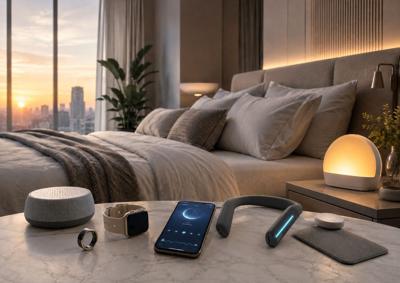
There was a time when sleep technology meant placing your phone on the mattress and hoping it could tell the difference between deep sleep and the dog jumping onto the bed. Things have changed.
Today’s sleep technology includes smart rings that monitor overnight changes in heart rate and temperature, watches that look for breathing disturbances, sensors hidden beneath the mattress, temperature-controlled beds, sunrise alarms, app-guided relaxation programs, and even daytime wearables designed around the idea that better sleep may begin hours before bedtime.
That does not mean every glowing score, colorful graph, or “readiness” notification deserves to be treated as medical truth. The most useful sleep devices do not magically manufacture eight perfect hours. They help reveal patterns, improve the bedroom environment, support better routines, or encourage someone to speak with a healthcare professional when something does not look right.
So, can sleep technology actually help you rest better? Yes, sometimes—but only when you know what the device is measuring, what it is changing, and where its abilities end.
What Sleep Trackers Are Really Measuring
A clinical sleep study, known as polysomnography, measures brain activity, eye movements, breathing, blood oxygen, muscle activity, heart rhythm, and other signals. A consumer wearable does not have that full collection of equipment, no matter how impressive its morning report looks.
Most consumer trackers estimate sleep by combining movement with signals such as heart rate, heart-rate variability, breathing patterns, skin temperature, and blood oxygen trends. Algorithms then use those measurements to estimate when the wearer fell asleep, how often they awakened, how long they slept, and how much time they may have spent in different sleep stages.
Modern devices have become considerably more sophisticated than the phone-based sleep apps that dominated the market several years ago. Research comparing consumer devices with laboratory testing has found that many are reasonably useful at distinguishing sleep from wakefulness. Estimates of light, deep, and rapid eye movement sleep can be less consistent, however, particularly across different brands and users.
That distinction matters. A tracker may be very good at showing that you went to bed later after a long dinner, slept fewer hours after drinking alcohol, or awakened repeatedly during a stressful week. It may be less reliable when declaring that you received exactly 52 minutes of deep sleep and should spend the day worried about it.
Smart Rings Make Overnight Tracking Less Intrusive
Smart rings have become popular partly because they collect information without asking users to sleep with a bright screen strapped to their wrist. Devices such as the Oura Ring monitor movement and physiological signals throughout the night and translate them into sleep, recovery, and readiness insights.
The value is not necessarily the score itself. It is the ability to compare nights over time. A single poor result may mean very little. A recurring pattern—such as shorter sleep after late meals, higher resting heart rate after cocktails, or improved consistency when bedtime moves earlier—can be more informative.
Smart rings can be especially useful for people who dislike wearing a watch to bed. They are not invisible, however. Charging, subscription costs, fit, travel across time zones, illness, medication, and even cold fingers can influence the user experience or the data being collected.
Smartwatches Can Flag Patterns Worth Discussing
Smartwatches now do more than count overnight movement. Depending on the model and region, they may monitor respiratory patterns, blood oxygen trends, wrist temperature, heart rate, and sleep duration.
Supported Apple Watch models, for example, can analyze breathing disturbances over time and notify eligible users when the pattern may be consistent with moderate to severe sleep apnea. Apple explicitly states that this notification is not a diagnosis. It is a reason to discuss the findings with a healthcare provider.
That is the right way to view health alerts from a wearable: as a tap on the shoulder, not a physician living on your wrist.
A watch can also make sleep patterns easier to connect with daytime behavior. Exercise, travel, illness, stress, bedtime consistency, alcohol, and recovery can all appear in the same digital ecosystem. The downside is obvious to anyone who already spends too much time looking at a screen. More data is useful only when it leads to a practical decision.
Mattress Sensors Track Sleep Without Being Worn
Not everyone wants another device attached to the body. Under-mattress sensors offer a less intrusive alternative.
The Withings Sleep sensor, for example, is positioned beneath the mattress and uses pneumatic sensing to monitor movement, heart rate, and respiratory rate. This category can appeal to people who routinely forget to charge a wearable or remove rings and watches before bed.
Mattress sensors also have limitations. A partner, pet, unusual mattress construction, placement problems, or simply spending time reading in bed may complicate interpretation. They still estimate sleep from indirect signals rather than measuring brain activity.
The best reason to use one is consistency. Because the sensor remains in place, it can collect information night after night without requiring much effort. That makes it easier to notice longer-term changes rather than obsessing over one questionable Tuesday-night score.
Temperature Technology Changes the Bed Instead of Scoring It
Tracking explains what may have happened. Environmental sleep technology attempts to change the conditions in which sleep occurs.
Temperature-controlled sleep systems such as the Eight Sleep Pod heat or cool the sleep surface and can provide separate settings for each side of the bed. That is useful when one partner wants an arctic breeze and the other has arrived dressed for January.
Temperature regulation may be more immediately useful than another sleep graph for people whose rest is regularly interrupted by overheating, night sweats, seasonal temperature changes, or disagreements over the thermostat.
These systems can be expensive and may require apps, maintenance, connectivity, or subscriptions. A breathable mattress pad, lighter bedding, a fan, or adjusting the room temperature may accomplish enough for far less money. The important question is not whether the bed is technologically impressive. It is whether temperature is actually one of the reasons you are waking up.
Sound Machines Can Make an Unpredictable Room More Consistent
Sound machines cannot silence a barking dog, an early landscaping crew, or the neighbor who apparently rearranges furniture after midnight. They can make sudden noises less noticeable by creating a steady sound environment.
White, pink, brown, and nature-based sounds have become common in dedicated machines and sleep apps. Some people find a consistent low-volume sound calming, while others sleep better in silence. Louder is not better, and a device should not be placed at maximum volume beside the pillow.
A sound machine is most useful when it solves a recognizable problem. Buying one because the internet declared brown noise life-changing is not quite the same thing.
Smart Lighting Helps Set the Mood Before Bed
Lighting is another area where bedroom technology can support a routine without pretending to diagnose anything.
Smart bulbs and lighting systems can be programmed to become warmer and dimmer in the evening, reducing the blast of bright overhead light that tells the room—and possibly your brain—that it is still the middle of the day. In the morning, lights can gradually brighten to create a gentler transition into wakefulness.
The same principle applies without an elaborate connected-home setup. Dimmer lamps, warm-toned bulbs, blackout window coverings, and keeping bright screens out of direct view can make the bedroom feel more restful.
how beautiful spaces affect mood
Sunrise Alarms Support a More Gradual Wake-Up
Traditional alarms are very good at one thing: ending sleep abruptly.
Sunrise alarms gradually brighten before the chosen wake time. Many also add soft sound, guided wind-down content, or a dim evening light. Products such as the Hatch Restore combine several of these functions into a single bedside device.
A sunrise alarm does not guarantee that someone will leap from bed cheerful and fully rested. It may make mornings feel less punishing, particularly in dark bedrooms or during seasons when natural morning light arrives late.
The practical benefit may be keeping the phone away from the bed. That eliminates the familiar routine of setting an alarm and somehow finding yourself reading restaurant reviews, emails, and celebrity divorces 40 minutes later.
Sleep Apps Work Best When They Change Behavior
Sleep apps range from simple breathing exercises to structured programs based on cognitive behavioral therapy for insomnia. The quality and purpose vary considerably.
A useful app might help establish a consistent schedule, provide guided relaxation, create a wind-down reminder, record a sleep diary, or teach techniques for managing thoughts that become louder the moment the lights go out.
An app becomes less useful when it merely produces more information without helping the user act on it. Knowing that bedtime was inconsistent is helpful when the next step is choosing a more realistic schedule. Receiving a poor score and then spending the morning anxious about sleep is not progress.
This fixation has become common enough to earn a name: orthosomnia, or the pursuit of perfect sleep data to the point that the tracker itself contributes to worry. When the device makes you more anxious than informed, it may be time to stop wearing it for a while.
Evolv28 Takes a Daytime Approach to Better Sleep
One of the more unusual developments in sleep technology is a device that is not worn in bed at all.
Evolv28 is a lightweight neck-worn device intended for daytime use. The company says it delivers ultra-low-intensity variable magnetic fields and is designed around the theory that chronic insomnia can involve persistent neurological hyperarousal. Instead of waiting until bedtime to begin a relaxation routine, users wear Evolv28 for at least four hours during the day as part of a 28-day program.
The device does not function like a conventional sleep tracker. It is not primarily trying to count awakenings or award a morning score. Its proposed role is to influence the state users bring to bedtime.
There is published research behind the broader approach. A randomized, double-blind, sham-controlled clinical trial involving 153 adults evaluated a pulsed magnetic therapy system over four weeks. The treatment group showed greater improvements in insomnia severity, sleep duration, sleep onset, and sleep efficiency than the sham group.
There are also important reasons to keep the language measured. The published study describes a pulsed magnetic therapy system rather than repeatedly identifying the commercial product by the Evolv28 brand name. Evolv28 is currently presented in the United States as a wellness device and is not FDA cleared or approved to diagnose or treat insomnia. The company says it is pursuing a prescription-device regulatory pathway.
That makes Evolv28 interesting, but still emerging. It belongs in the conversation because it approaches sleep from a different direction, not because one device has settled the complicated science of insomnia.
People with pacemakers, implanted electronic devices, seizure disorders, pregnancy, or other medical considerations should review the company’s safety information and speak with an appropriate healthcare professional before using magnetic-field technology.
What Consumer Sleep Devices Cannot Tell You
No ring, watch, app, sunrise alarm, or smart mattress can independently explain every reason someone is sleeping poorly.
Consumer devices cannot rule out sleep apnea because an alert never appeared. They cannot determine that persistent insomnia is harmless. They cannot reliably distinguish every awakening caused by pain, medication, hormonal changes, depression, anxiety, breathing problems, restless legs, or another underlying condition.
They also cannot replace a clinical sleep study when one is medically appropriate.
Warning signs that deserve professional attention include loud habitual snoring, gasping or choking during sleep, witnessed pauses in breathing, severe daytime sleepiness, morning headaches, difficulty staying awake while driving, or sleep problems that persist despite reasonable changes in routine and environment.
Bring useful device data to the appointment, but bring it as supporting information. A month of bedtime, wake time, symptom, and breathing-disturbance trends may help guide a conversation. A screenshot of one alarming sleep score does not establish a diagnosis.
How to Choose Sleep Technology That Is Actually Useful
Start with the problem rather than the product.
If you do not know when or how long you sleep, a ring, watch, or mattress sensor may reveal patterns. If overheating wakes you, temperature control may matter more than detailed tracking. If noise is the problem, a sound machine could be enough. If mornings are brutal, a sunrise alarm may support a steadier schedule. If racing thoughts and inconsistent habits are the issue, a structured sleep program may offer more value than another sensor.
Then ask several less glamorous questions. Is there a subscription? Can you export your data? Will the device function without an internet connection? How is personal health information handled? Does the company clearly distinguish wellness claims from medical claims? Is there independent research, or only testimonials from people who suddenly wake up glowing?
Finally, decide in advance what success would look like. It might be falling asleep more consistently, awakening less often, feeling more alert during the day, or identifying a habit that repeatedly interferes with rest. A higher proprietary score is not automatically the same as feeling better.
The Smartest Sleep Upgrade May Be the One You Stop Noticing
The most effective sleep technology should eventually fade into the background. It may quietly cool the bed, soften the room’s lighting, establish a predictable wake-up cue, or reveal that a late glass of wine is not nearly as relaxing at 3 a.m. as it seemed at dinner.
Devices can provide clues and make the bedroom more supportive. Emerging products such as Evolv28 may expand the conversation beyond overnight tracking and toward what happens in the nervous system during the day. But technology works best as part of a broader approach that includes consistent habits, a comfortable environment, and medical attention when symptoms point to something more serious.
A sleep score can be interesting. Waking up feeling rested is still the point.

(0) comments
We welcome your comments
Log In
Post a comment as Guest
Keep it Clean. Please avoid obscene, vulgar, lewd, racist or sexually-oriented language.
PLEASE TURN OFF YOUR CAPS LOCK.
Don't Threaten. Threats of harming another person will not be tolerated.
Be Truthful. Don't knowingly lie about anyone or anything.
Be Nice. No racism, sexism or any sort of -ism that is degrading to another person.
Be Proactive. Use the 'Report' link on each comment to let us know of abusive posts.
Share with Us. We'd love to hear eyewitness accounts, the history behind an article.