
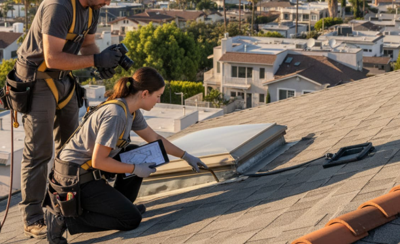

A new roof runs $8,000 to $30,000 or more, depending on size and materials. Most homeowners spend that kind of money after comparing bids, checking reviews, and maybe calling a reference or two. Almost nobody asks to see the roofer's certificate of insurance.
That's the document worth asking for. Insurance agents who work with contractors, like the team at Farmer Brown Insurance, see the fallout from skipped coverage more often than most homeowners ever will, which is exactly why it's worth understanding before you sign a contract.
Roofing is dangerous work
Roofers fall more often than workers in almost any other construction trade. That's why roofing insurance costs more than a general contractor's policy for framing or drywall work. Steep pitches, ladders, loose shingles, summer heat on black shingles: the injury rate reflects the job.
The risk doesn't stay on the roof, either. If a worker gets hurt on your property and the company has no workers' compensation, you can end up named in a lawsuit over medical bills that insurance was supposed to cover. A dropped tile that cracks your windshield, a nail gun accident that punches through a window: the roofing company's general liability policy pays for that. Not your homeowners policy.
Ask for the certificate
Any legitimate roofing company can hand you a certificate of insurance within minutes. It's a one-page document from their insurance agent listing coverage types and limits. "We're insured, don't worry about it" is not an answer. Get the certificate.
Once you have it, check the general liability limit. Most established roofers carry at least $1,000,000 per occurrence; anything lower is worth a follow-up question on a job of real size. Check whether workers' compensation is listed separately. A roofer who says the crew is "all subcontractors" so comp doesn't apply is often just skipping the coverage, so ask who those subs are insured through and get their certificates too.
For larger projects, some homeowners also ask to be named as an additional insured, which keeps their own policy fully protected if something goes wrong mid-job. Your insurance agent can tell you whether that's worth requesting for your particular project.
The cheapest bid isn't always cutting materials
A roofing company that carries real coverage pays more for it than one skating by on the legal minimum. That cost shows up in the bid somewhere. When one quote comes in far below the others, ask directly whether the savings comes from coverage rather than labor or materials.
Plenty of cheap bids are legitimate. But an underinsured roofer can afford to charge less precisely because they're not paying for the protection built into everyone else's price. If something goes wrong on that job, the savings disappears fast.
When something actually goes wrong
A storm blows through halfway through a reroof and water gets into your attic through exposed decking. A worker slips off a ladder in your driveway. A subcontractor punctures a gas line pulling old flashing.
The roofing company's insurance is supposed to cover all three: property damage, medical bills, liability. When that coverage doesn't exist, or doesn't apply to what actually happened, homeowners are the ones fielding calls from adjusters and lawyers.
A few more things worth confirming before signing anything: whether the policy is currently active (a quick call to the carrier on the certificate settles this), whether it covers residential work specifically since some policies are written for commercial roofing only, and who's actually doing the labor. If it's a subcontractor rather than the company you signed with, that sub needs their own certificate. A general contractor's policy doesn't automatically extend to a crew they hired out.
A roof replacement protects your home. So does the paperwork behind it. Getting a certificate costs nothing, and any roofer worth hiring will produce one without hesitation. If a company hedges, changes the subject, or can't come up with the document, that's the warning sign.
For a deeper look at how contractors' insurance actually works, including what general liability and workers' comp cover on a job site, Farmer Brown's guide to roofing contractor insurance breaks down the coverage types and what each one protects against.

(0) comments
We welcome your comments
Log In
Post a comment as Guest
Keep it Clean. Please avoid obscene, vulgar, lewd, racist or sexually-oriented language.
PLEASE TURN OFF YOUR CAPS LOCK.
Don't Threaten. Threats of harming another person will not be tolerated.
Be Truthful. Don't knowingly lie about anyone or anything.
Be Nice. No racism, sexism or any sort of -ism that is degrading to another person.
Be Proactive. Use the 'Report' link on each comment to let us know of abusive posts.
Share with Us. We'd love to hear eyewitness accounts, the history behind an article.