

How factory-built homes now deliver polished aesthetics, customizable floor plans, and more predictable pricing for value-conscious buyers.
A beautiful home used to mean custom site-built construction, creeping timelines, and a budget that ballooned with every change order. In 2026, that equation has fundamentally changed. Modern modular homes are rewriting the rules of residential real estate, and they're doing it faster than most buyers expect.
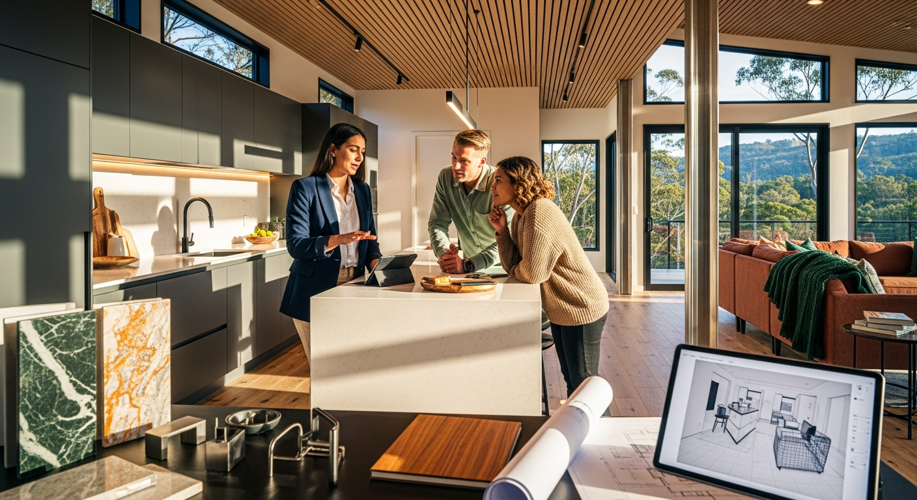
A new wave of factory-built properties brings together clean-lined architecture, customizable layouts, energy-conscious construction, and delivery models that actually stick to a schedule. The category feels far more polished than most people imagine when they first start researching modular homes for sale. Off-site building can reduce delays tied to weather and labor coordination, a trend supported by data showing the U.S. modular construction sector is projected to sustain a steady 6.1% annual growth rate over the next decade. For buyers tired of serving as on-site project managers for a year or more, this shift opens a path to an elevated, timeless space without the traditional headaches.
So what exactly does "modular" mean in plain English? Modular homes consist of sections (or modules) built inside a climate-controlled factory, then transported to your property and assembled on a permanent foundation. They differ significantly from manufactured homes because they're built to local or state building codes rather than the federal HUD code. Because factory production can occur while your local crew prepares the site and pours the foundation, the process compresses timelines in ways traditional building simply can't. Picture two parallel tracks running at once; one team is finishing your walls in a controlled environment while another is pouring concrete on your lot. The result is a sophisticated final product that blends into traditional neighborhoods while often keeping costs under tighter control.
Name | Best For | Pros | Cons | Pricing |
|---|---|---|---|---|
Home Nation | Transparent pricing and delivery |
|
| Dynamic, ZIP-based |
Clayton Homes | National scale and broad style selection |
|
| Quote-based |
Champion Home Builders | Code-built modular variety |
|
| Quote-based |
Cavco Homes | Broad product range and financing ecosystem |
|
| Quote-based |
Future Homes | Regional turnkey on-your-lot builds |
|
| Quote-based |
Next Modular | Deep customization in the Midwest |
|
| Quote-based |
S2A Modular | Eco-luxury and net-zero ambitions |
|
| Quote-based |
Heritage Modular Homes | New England custom builds and ADUs |
|
| Starts around $125,000 (select models) |
This list reflects the qualities that matter most when a modular home needs to feel both beautiful and genuinely livable. Buyers are especially value-conscious right now, navigating a housing market where the median existing-home price recently hit a record $417,700. To find the best options, builders were evaluated across seven core benchmarks: design credibility, floor plan flexibility, energy efficiency, quality control, pricing transparency, delivery footprint, and local installation support.
Home Nation

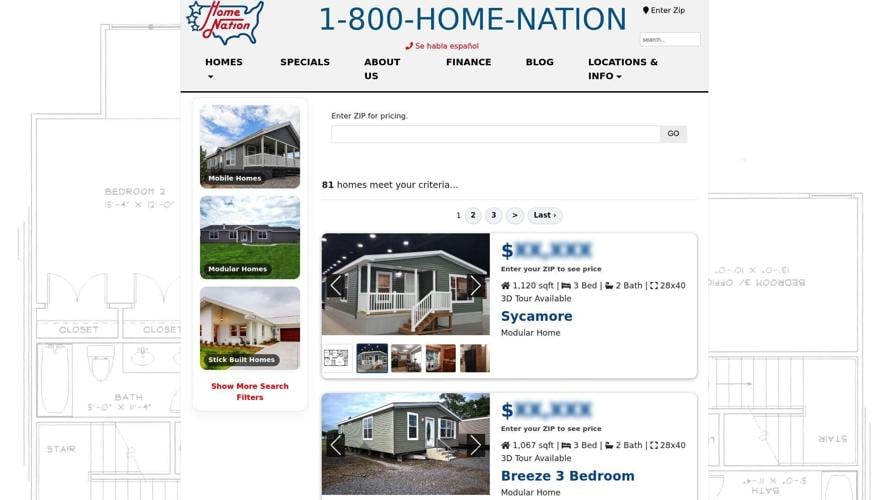
Home Nation gives buyers one of the clearest starting points for browsing modular homes, single-wides, double-wides, and ADUs without the traditional dealership runaround. This online-first retailer lets you enter a ZIP code, compare available homes, and view location-specific delivered pricing. Because the platform calculates shipping costs up front and partners directly with third-party factories, it separates the home purchase from site completion. This model offers early price visibility that is highly beneficial for rural buyers, remote landowners, and first-time purchasers who want a broader inventory than a single local sales lot can provide.
Where Home Nation differentiates itself is in this upfront transparency; you are not waiting for a showroom salesperson to pull numbers from behind a counter. However, final project costs still depend on foundation work, utility hookups, and local permitting, so coordination with local contractors remains vital. To ease the friction, the company guides buyers through the financing process via partner lenders. Most models come backed by standard manufacturer warranties, with extended seven-year protection plans available for added peace of mind.
Clayton Homes

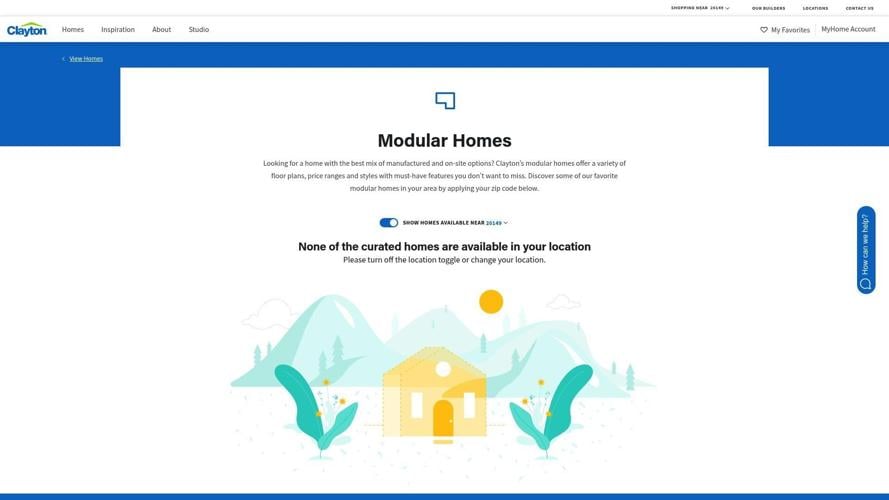
Clayton Homes is a massive national player in this lineup, making it a strong fit for buyers who want a familiar brand name and an extensive selection of styles. Its modular collection is part of a giant portfolio that includes manufactured homes, tiny homes, CrossMod layouts, and traditional site-built options. Building more than 59,000 homes annually, Clayton leverages building scales that few competitors can match. Buyers can choose floor plans ranging from traditional and modern farmhouse to contemporary layouts, with clear upgrade paths for premium finishes and advanced insulation packages designed to minimize material waste and lower ownership costs.
The tradeoff for this corporate scale is a more localized buying journey. Pricing flows directly through regional retail centers rather than through a single online calculator, meaning you must connect with a local representative to get a full quote. For buyers comfortable with a standard dealership process, Clayton provides an incredibly stable footprint. You will work directly with their affiliated builders to coordinate local site work, permanent foundation pouring, and utility hookups.
Champion Home Builders

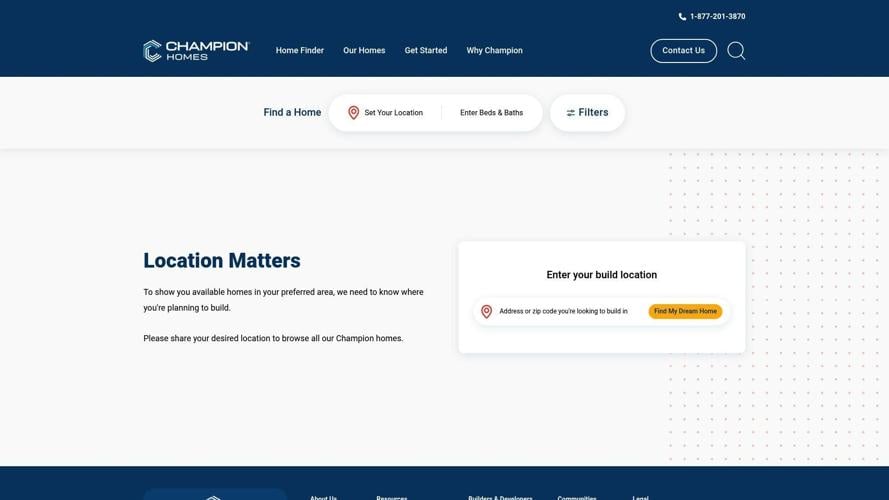
Champion Home Builders excels at providing code-built modular variety through a vast network of independent retailers. Operating under the Skyline Champion group, the company strictly builds its homes to the International Residential Code (IRC) or specific state regulations. Its core strength lies in structural engineering tailored to local climates—offering features such as hurricane straps in coastal zones or heavy-snow-load trusses for northern states.
Because Champion relies on external retailers, community developers, and local builders to sell and install its units, the final customer experience depends heavily on your local partner. This brand is ideal for buyers who want a highly reputable, code-compliant product base and are comfortable relying on regional experts to handle transportation logistics, crane scheduling, and permitting. Buyers should plan financing early, as non-conventional construction loans require close collaboration with your retailer to finalize foundation blueprints before approval.
Cavco Homes

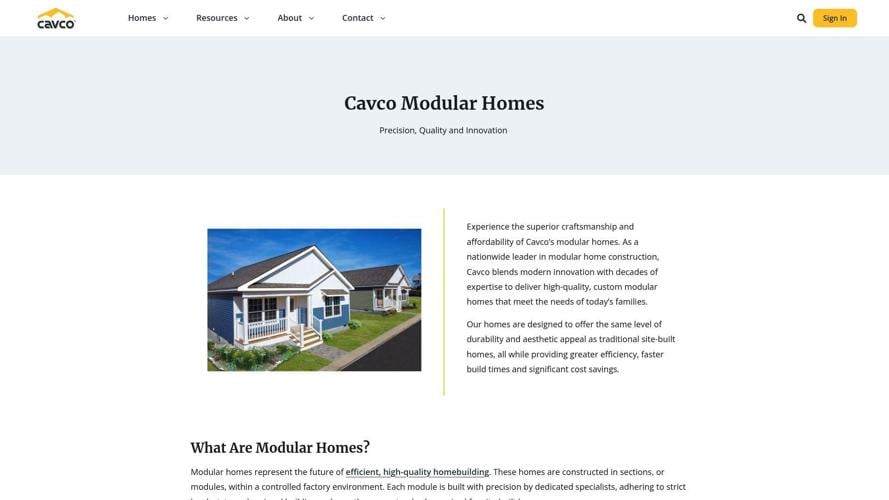
Cavco Homes appeals to buyers who value manufacturing scale, upscale finish options, and an integrated corporate ecosystem that simplifies the buying process. Operating more than 30 building facilities nationwide, Cavco spans modular homes, duplexes, and vacation cabins. Their premium lines stand out for offering fully finished drywall interiors and contemporary architectural details. Furthermore, demand for adaptable housing continues to rise as demographic shifts reshape household needs; recent real estate market reports note that up to 21.5% of Americans are now aged 65 or older.
Cavco stands apart from independent builders because its corporate structure includes dedicated mortgage (CountryPlace Mortgage) and insurance (Standard Casualty) subsidiaries, removing the hassle of juggling multiple external financial vendors. They do not publish standardized pricing online, meaning localized quotes from regional retail partners will dictate your final project timeline and site coordination.
Future Homes

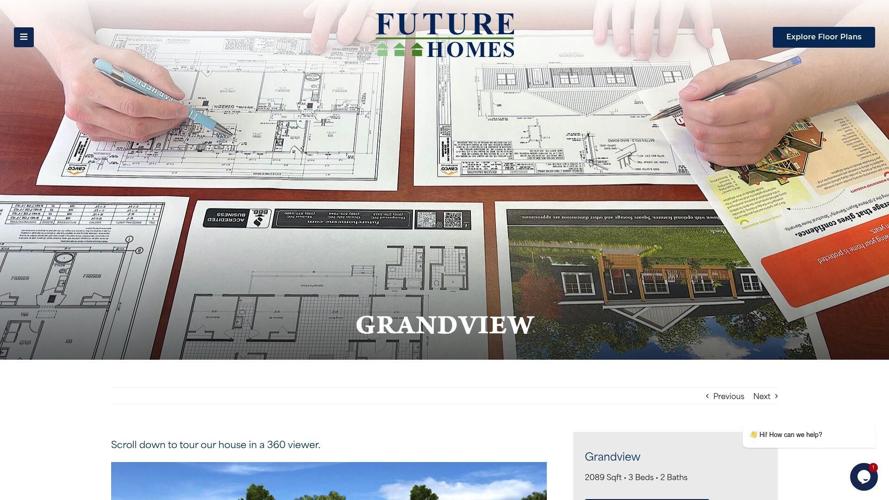
Future Homes operates as a regional specialist, offering a premier concierge-style experience for buyers who own land in southeastern North Carolina or northeastern South Carolina. Unlike manufacturers that simply drop modules at the curb, Future Homes acts as a fully licensed general contractor. Their team manages the entire fragmented build lifecycle, directly overseeing land reviews, budgeting, site preparation, grading, septic system installation, and final structural inspections.
The obvious drawback is its strict geographic boundary. However, for landowners within their Carolinas territory, Future Homes offers a seamless design process supported by three physical design centers where you can personalize floor plans with local zoning experts. While financing factory-built homes can present challenges, their coordinators connect clients directly with regional lenders who specialize in modular construction loans.
Next Modular

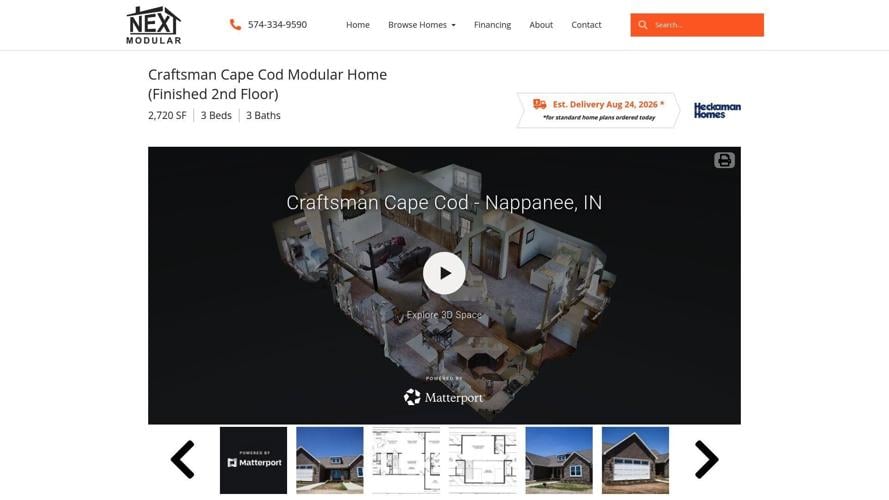
Next Modular is an exceptional solution for Midwest buyers who require deep layout customization paired with comprehensive site management. Based in Goshen, Indiana, this builder designs standard floor plans alongside fully custom, stick-built modular homes tailored to specific site conditions. Operating as a full-service general contractor across its Indiana-centered footprint, the company manages foundations, garage additions, custom porches, well drilling, and septic systems under a single contract.
By handling everything under one umbrella, Next Modular notes a highly efficient four-to-six-month timeline from order to move-in, eliminating the standard handoff friction between separate transport teams and site crews. Because their work is highly customized and project-based, upfront public pricing is limited, making early design consultations essential to establishing your financial roadmap.
S2A Modular

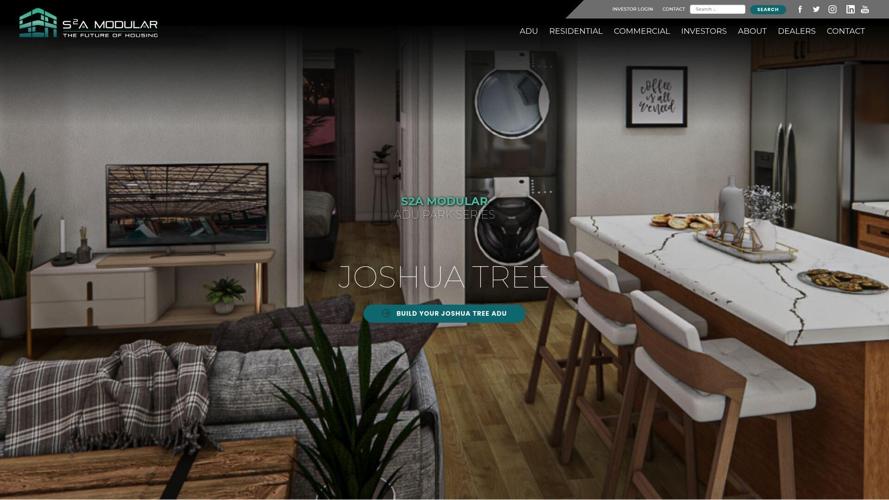
S2A Modular is the technological outlier of the industry, targeting buyers drawn to contemporary architecture, all-electric living, and ultra-high energy performance. The company positions its high-end "GreenLux" homes as self-sustaining luxury properties featuring integrated solar arrays, Tesla Powerwall battery storage, and smart-home automation engineered for net-zero or net-positive energy bills. These sleek designs show just how far the aesthetics of the modular category have stretched.
Because these homes operate in a luxury tier—focusing on long-term sustainability rather than entry-level affordability—buyers should approach the planning phase carefully. It is wise to independently verify active factory production timelines and local delivery availability in your specific market before making a deposit. Additionally, ensure your local team is equipped to handle specialized solar permitting and grid-interactive system configurations.
Heritage Modular Homes

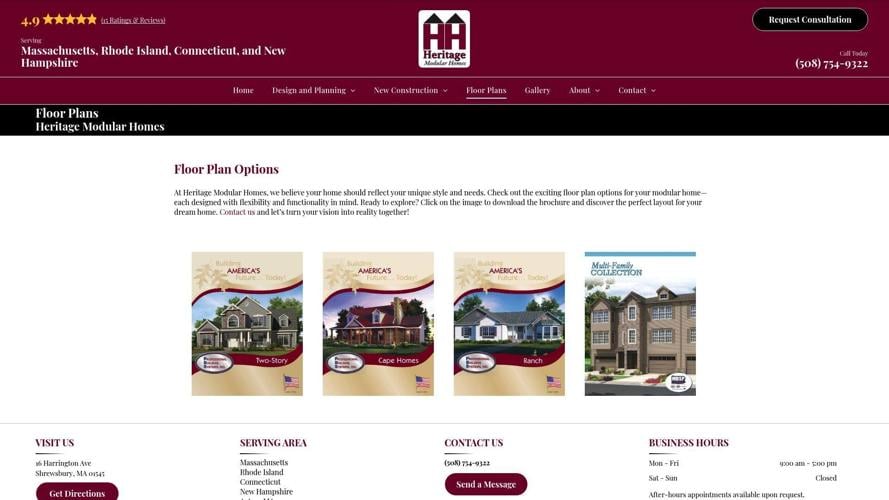
Heritage Modular Homes brings a consultative, family-owned feel to the New England market, specializing in custom modular residences and Accessory Dwelling Units (ADUs). Serving Massachusetts, southern New Hampshire, and northern Connecticut, the company assists with design consultations, historic curb appeal replication, and local permit acquisition. Heritage provides a rare and helpful pricing anchor by referencing select smaller footprints, such as an 811-square-foot two-bedroom model, starting around $125,000.
This clear baseline is incredibly useful for planning detached ADUs, especially as multigenerational living arrangements grow in popularity. While final costs for larger custom homes will naturally exceed entry-level figures as finishes are upgraded, Heritage offsets this uncertainty by offering free consultations and detailed estimates up front. Their builds come with a one-year construction warranty and a ten-year limited manufacturer's warranty.
The Takeaway
The best modular home isn't simply the least expensive model on paper; it's the one that aligns design, site realities, energy performance, and cost clarity with how you actually want to live. In 2026, modular homes for sale across the country offer far more sophistication and permanence than many buyers realize. By prioritizing transparent pricing, energy efficiency, and architectural quality, you can create a customized home that fits your future, not just your current budget.

(0) comments
We welcome your comments
Log In
Post a comment as Guest
Keep it Clean. Please avoid obscene, vulgar, lewd, racist or sexually-oriented language.
PLEASE TURN OFF YOUR CAPS LOCK.
Don't Threaten. Threats of harming another person will not be tolerated.
Be Truthful. Don't knowingly lie about anyone or anything.
Be Nice. No racism, sexism or any sort of -ism that is degrading to another person.
Be Proactive. Use the 'Report' link on each comment to let us know of abusive posts.
Share with Us. We'd love to hear eyewitness accounts, the history behind an article.