
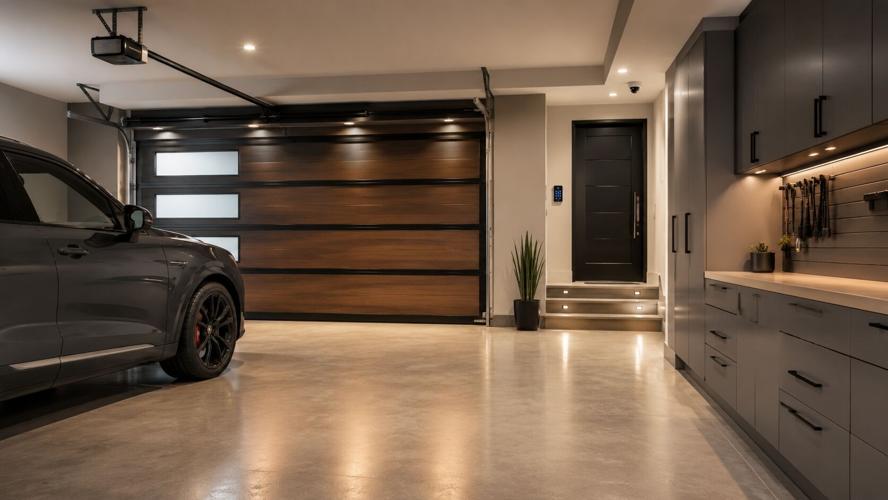

The garage is one of the most useful spaces in the home, but it is also one of the easiest areas to overlook when thinking about security. It may hold cars, tools, bikes, sports equipment, luggage, holiday storage, and a direct entry point into the house. In many homes, it is also the entrance the family uses more often than the front door.
That makes garage security more important than many homeowners realize. A beautiful garage door and a smart opener are a strong start, but they are only part of the picture. The best garage security plan layers access control, lighting, cameras, sensors, door hardware, and smart-home habits so the space feels protected without becoming complicated.
For homeowners building a more polished and connected home, the garage should not be treated like a forgotten utility zone. It should be secured with the same care given to the front entry, patio doors, and main living spaces.
Why Garage Security Deserves More Attention
Garages are busy, valuable, and often full of blind spots. Unlike a front door, which is usually designed to be seen, the garage often has side entries, interior doors, windows, and opener systems that are not checked as often as they should be.
An attached garage can also create a direct path into the home. That means garage security is not only about protecting what is stored inside the garage. It is about protecting the rest of the house as well.
For homeowners already upgrading the garage, security should be part of the same conversation as curb appeal and convenience. FINE has covered how garage door openers are the quiet luxury upgrade homeowners forget about and how garage doors can elevate curb appeal, security, and functionality. This article takes the next step by focusing on the features that help make the garage feel safer every day.
Smart Garage Door Openers Add Control

A smart garage door opener is one of the most practical security upgrades for the garage. It allows homeowners to check whether the door is open, close it remotely, receive alerts, and manage access through an app.
This is especially helpful for households where the garage is constantly in use. Kids may come and go after school. A contractor may need temporary access. A delivery may need to be placed inside. Someone may leave in a rush and forget whether the garage door closed. Smart access makes those moments easier to manage.
The real value is visibility. Instead of wondering whether the door is open, the homeowner can check. Instead of giving out a permanent code, temporary access may be easier to manage depending on the system. Instead of relying only on memory, alerts can help confirm what happened and when.
If you are comparing models, FINE’s product-driven guide to smart garage door openers that make everyday home access easier is the natural next read.
Cameras Help You See What Is Happening
Garage cameras can be useful both inside and outside the garage. An exterior camera can monitor the driveway, garage door, side gate, and approach to the home. An interior garage camera can help confirm whether the door is closed, whether a package arrived, or whether a family member came home safely.
For homeowners who use the garage as a delivery zone, a camera can add a meaningful layer of reassurance. It can also help monitor tools, bicycles, golf clubs, surfboards, luggage, or other items that tend to live in the garage.
The camera does not need to turn the garage into a surveillance-heavy space. A well-placed camera with motion alerts can be enough. The goal is to remove uncertainty, not overcomplicate daily life.
When choosing cameras, consider night vision, motion detection, app alerts, privacy settings, storage options, and whether the camera works with the rest of the home security system.
Motion Lighting Makes the Garage Less Inviting to Intruders
Lighting is one of the simplest garage security upgrades, and it also improves the way the space feels. A dark driveway, dim side yard, or poorly lit garage entry can make the home feel less secure and less welcoming.
Motion-activated lighting near the garage door, side entry, driveway, and walkway can help discourage unwanted activity while making everyday arrivals safer. Inside the garage, brighter lighting can reduce shadows, make storage easier to navigate, and help homeowners notice when something is out of place.
Exterior lighting should feel integrated with the home’s design. Sleek sconces, low-profile motion lights, pathway lighting, and warm architectural lighting can all improve visibility without making the exterior feel harsh.
Good security lighting does not have to look industrial. It should simply make the garage and driveway feel visible, intentional, and easier to use after dark.
Keypads and Temporary Access Need Boundaries
Garage keypads are convenient, but they should be managed carefully. A code that has been shared with family members, contractors, dog walkers, housekeepers, or previous owners can quickly become less secure than intended.
Homeowners should update keypad codes regularly, especially after a move, renovation, staff change, or short-term rental stay. Avoid obvious codes such as birthdays, addresses, or simple number patterns. If the system allows temporary or guest codes, use them instead of handing out the main household code.
It is also worth checking where the keypad is placed. It should be convenient for authorized users but not so exposed that someone can easily watch the code being entered from the sidewalk or street.
Small access habits matter. The most advanced garage system can still be weakened by an old code that too many people know.
The Door Between the Garage and Home Matters
One of the most overlooked parts of garage security is the interior door between the garage and the house. Homeowners often focus on the big garage door but forget that the connecting door may be a direct entrance into the living space.
This door should be treated like an exterior door. It should have a solid core, a reliable lock, and hardware that is appropriate for a true entry point. If the garage connects to a mudroom, laundry area, hallway, or kitchen, that door should not be left unlocked simply because it is inside the garage.
A smart lock may also make sense here, especially for households that want to track access or avoid hiding spare keys. For broader context, FINE has also covered the essential components of modern home security systems.
Window Coverings and Storage Choices Can Reduce Temptation
Garage windows can bring in natural light, but they can also reveal what is stored inside. If the garage holds high-value tools, bikes, outdoor gear, or vehicles, privacy should be part of the plan.
Frosted film, obscure glass, window coverings, or thoughtful shelving placement can help keep the garage from becoming a display case. This does not mean the space has to feel closed off. It simply means homeowners should be intentional about what is visible from the street, alley, or side yard.
Storage choices matter too. Wall-mounted systems, closed cabinetry, lockable cabinets, and organized zones can make valuable items less visible and easier to keep track of. A garage that is tidy and well organized is not only more attractive. It is also easier to secure.
Sensors Can Catch What People Forget
Contact sensors, motion sensors, tilt sensors, and smart-home alerts can help homeowners monitor garage activity without constantly checking the space. These small devices can notify you when a door opens, when motion is detected, or when something changes unexpectedly.
Sensors are especially useful for detached garages, side doors, interior connecting doors, and garage windows. They can also work well for households that travel often or have several people coming and going throughout the day.
The key is to avoid alert fatigue. Too many notifications can make homeowners ignore the system. Choose alerts that matter most, such as the main garage door staying open too long, a side door opening at night, or motion when no one should be home.
Smart Devices Need Smart Security Habits
Connected garage devices can make life easier, but they also need basic digital security. The National Institute of Standards and Technology recommends smart-home habits such as using unique passwords and setting up two-factor authentication.
The Federal Trade Commission also recommends changing default usernames and passwords on internet-connected devices and using two-factor authentication when available.
For a smart garage, that means homeowners should avoid reused passwords, keep apps updated, review who has access, and remove old users when they no longer need control. If the device connects through Wi-Fi, the home network should also be secured with a strong password.
Convenience is useful only when it is paired with control. A smart garage should make the home easier to manage, not create a weak point because old settings were never reviewed.
Safety Features Are Part of Security Too
Security is not only about keeping unwanted people out. It is also about making sure the garage door system operates safely for the people who use it every day.
The Consumer Product Safety Commission safety standard for automatic residential garage door operators addresses entrapment protection requirements, which is why modern safety sensors and reversal systems should be taken seriously.
Homeowners should test the garage door’s safety features, keep photo-eye sensors clean and aligned, and call a qualified professional if the door reverses unexpectedly, refuses to close, hesitates, grinds, or moves unevenly.
A secure garage is not just locked. It is properly maintained.
Detached Garages Need Their Own Plan
Detached garages should not be treated as secondary spaces when it comes to security. In some cases, they may be easier to access without being noticed, especially if they sit behind the home, near an alley, or at the edge of the property.
A detached garage may benefit from exterior lighting, cameras, smart locks, door sensors, reinforced side doors, window privacy, and a separate alarm zone. If it stores vehicles, tools, or recreational equipment, the security plan should match the value of what is inside.
Wi-Fi coverage also matters. Smart devices are only useful if they remain reliably connected. For larger properties, a mesh system or professionally planned network may be needed to keep the detached garage online.
How to Build a Layered Garage Security Plan
The strongest garage security plans are layered. No single feature does everything. A smart opener may help with access, but it does not replace lighting. A camera may add visibility, but it does not replace a strong interior door. A keypad may be convenient, but it still needs good code habits.
Start with the basics. Make sure the garage door closes properly, the opener is reliable, the interior door is secure, and the lighting is adequate. Then add smart features where they make daily life easier.
For many homes, a thoughtful security plan may include a smart opener, exterior lighting, an interior or exterior camera, a keypad with updated codes, a secure connecting door, window privacy, and selected sensors. For higher-value garages, additional cabinetry, alarm integration, or professional installation may be worth considering.
The goal is not to make the garage feel intimidating. The goal is to make it feel protected, organized, and easy to manage.
Final Thoughts
The garage is too important to leave out of the home security conversation. It is an entry point, a storage zone, a parking area, and often one of the busiest parts of the house. Smart security features can make that space safer without making it feel complicated.
For homeowners upgrading a garage door, adding a smart opener, or making the garage feel more finished, security should be part of the design from the beginning. Lighting, cameras, smart access, sensors, stronger doors, and better digital habits all work together.
A well-secured garage does not just protect the things stored inside. It makes the entire home feel more considered.
(0) comments
We welcome your comments
Log In
Post a comment as Guest
Keep it Clean. Please avoid obscene, vulgar, lewd, racist or sexually-oriented language.
PLEASE TURN OFF YOUR CAPS LOCK.
Don't Threaten. Threats of harming another person will not be tolerated.
Be Truthful. Don't knowingly lie about anyone or anything.
Be Nice. No racism, sexism or any sort of -ism that is degrading to another person.
Be Proactive. Use the 'Report' link on each comment to let us know of abusive posts.
Share with Us. We'd love to hear eyewitness accounts, the history behind an article.