

Packing for Yosemite is where fantasy and reality need to have a quick meeting. The fantasy is linen layers, golden-hour photos, camp coffee, pine-scented mornings, and hikes that end with spectacular views. The reality is temperature swings, dusty trails, crowded parking lots, bear-safe food storage, tired feet, and the sudden realization that you forgot a headlamp but somehow packed three sweaters you will never wear.
A five-day Yosemite camping trip does not require overpacking. It requires thoughtful packing. The right gear lets you move from trail to campsite to dinner around the picnic table without feeling like you brought half the garage. The best Yosemite camping packing list is practical, comfortable, and just polished enough to make the trip feel like an adventure rather than a survival exercise.
For 2026, Yosemite National Park says an entrance reservation is not required, although the park entrance fee still applies. Camping, lodging, and backpacking reservations are still strongly recommended, especially for peak season. Translation: you may not need a timed vehicle reservation, but Yosemite is still Yosemite. Plan ahead, arrive early, and pack with intention.
Start With The Right Footwear
Footwear can make or break a Yosemite trip. This is not the place to rely on cute sneakers with no traction or a pair of sandals you bought because they looked good with a road-trip outfit. Yosemite trails can be dusty, uneven, wet near waterfalls, and tiring even when they are not technically difficult.
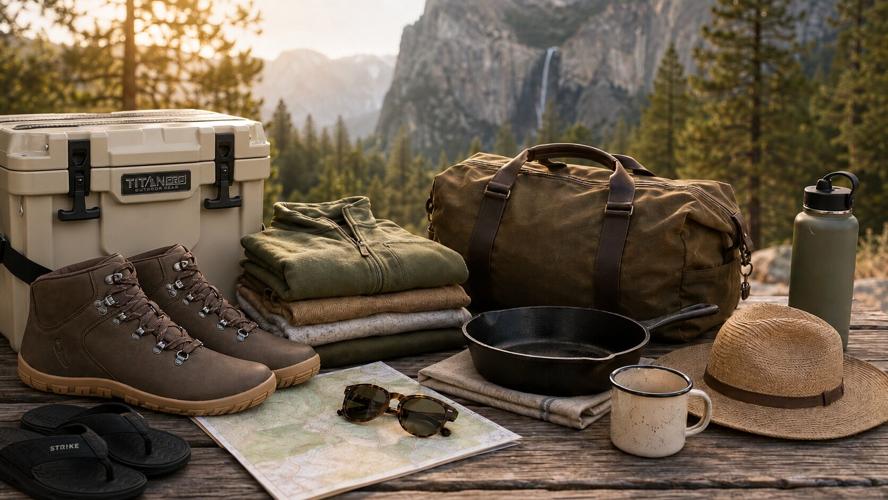
For hiking, choose real trail shoes or lightweight hiking boots with grip, comfort, and weather protection. Freet Mudee L2 is a strong option for travelers who prefer a lighter barefoot-style hiking boot. Freet describes the Mudee L2 as waterproof, extremely light, and built with grip for harsh trail conditions. It is best for hikers who like a wide toe box and natural movement, not for someone who wants a stiff, traditional mountain boot.
Then pack a second pair of shoes for camp. This is where Strike Footwear Narrowtooth Flip Flops make sense. They are not hiking shoes, and they should not be treated like hiking shoes. Their role is much smarter: camp showers, walking around the campsite, slipping on after a long hike, or giving your feet a break after spending hours in boots.
That two-shoe system is one of the easiest ways to keep a five-day trip more comfortable. Wear the trail boots when the terrain matters. Wear the flip flops when recovery matters.
Pack Layers For Real Yosemite Weather
Yosemite can feel warm and sunny in the afternoon, then surprisingly cool once the sun drops. Elevation, shade, and season all matter. Even in summer, you want layers that can move from cool mornings to hot trails to breezy evenings at camp.
Your clothing section should include moisture-wicking tops, a lightweight fleece or pullover, hiking pants or shorts, a sun shirt, a rain shell, warm socks, and sleep layers that are actually comfortable. Avoid packing only “outfit” clothing. Camp life is not kind to anything fussy.
A good Yosemite camping packing list should also include a hat, sunglasses, and a breathable long-sleeve layer for sun protection. The goal is not to look like you are on an expedition unless you are actually on one. The goal is to stay comfortable enough to enjoy the trip.
Take Food Storage Seriously
Food storage is not optional in Yosemite. It is part of camping responsibly in bear country. Yosemite says food lockers are available at every campsite, Housekeeping unit, and Curry Village tent cabin. The park also advises visitors to keep food, trash, and recycling secured when not actively being used.
That means your cooler is for transporting and organizing food, not for leaving food sitting out overnight. A large Titan Arctic Zone cooler is useful for road-trip groceries, drinks, breakfast staples, and easy campsite meals, especially if you are driving in and setting up for several days. Once you arrive, follow Yosemite’s storage rules and move food and scented items into the proper food locker when required.
Also remember that “food” includes more than dinner. Scented items can include toiletries, sunscreen, lip balm, gum, snacks, cooking oils, wipes, and trash. The easiest system is to keep everything scented together in one organized bin so nothing gets forgotten in a tent, backpack, or car.
Build A Camp Kitchen You Will Actually Use
There is a big difference between a camp kitchen and a pile of random cooking gear. For a five-day trip, you want a simple setup that can handle breakfast, coffee, easy lunches, and satisfying dinners without turning every meal into a production.
Lodge outdoor and camping cookware is an easy fit here because cast iron works beautifully for camp-style meals. A skillet or griddle can handle eggs, breakfast potatoes, grilled sandwiches, vegetables, burgers, and simple one-pan dinners. It also gives the trip that slightly elevated camp feeling without being delicate.
Pack a camp stove if your site and current fire rules require it, fuel, matches or a lighter, a cutting board, knife, plates, utensils, mugs, paper towels, biodegradable soap, sponge, trash bags, and a small wash basin. Bring fewer specialty gadgets and more practical basics. You do not need a full outdoor kitchen to eat well in Yosemite. You need a reliable pan, a clean prep surface, and a plan.
Bring A Sleep Setup That Does Not Ruin The Trip
Sleep is where many camping trips go wrong. People spend a fortune on hiking gear, then try to sleep on a thin pad that feels like a yoga mat with ambition. For five days, comfort matters.
Your sleep setup should include a tent that fits your group comfortably, a ground tarp or footprint, sleeping bags suited to the expected temperatures, sleeping pads or an air mattress, pillows, and extra blankets if you are car camping. Earplugs can also be useful, especially in busy campgrounds.
The best Yosemite camping packing list is not about packing the most rugged version of everything. It is about packing the version that helps you wake up ready to hike, explore, and enjoy the day instead of negotiating with your lower back.
Do Not Forget Lighting And Power
A headlamp is one of the most useful things you can pack. Bring one for each person, plus extra batteries or a charging option. A lantern is helpful for the picnic table, but a headlamp is what you will want when walking to the restroom, cooking after sunset, or finding something inside the tent.
For power, bring a portable charger, charging cables, and a car charger. Cell service can be limited in and around Yosemite, so download maps, campsite details, reservation confirmations, and trail information before you arrive. A printed map is still a smart idea, especially if your phone battery starts behaving like it is also on vacation.
Pack A Simple Trail Bag

Each day, you will want a small hiking pack or day bag with water, snacks, sunscreen, lip balm, a light layer, first-aid basics, a map, ID, and a small trash bag. If you are hiking near waterfalls or in areas with spray, a dry bag or zip pouch can protect your phone and keys.
Water matters. Bring reusable bottles or a hydration reservoir, and carry more than you think you need on hot days. Yosemite hikes can feel deceptively easy at the beginning and much less charming when you are thirsty halfway back.
Keep Beauty And Grooming Practical
Camping beauty should be simple. This is not the time for a ten-step routine, but it is also not necessary to abandon comfort entirely. Pack sunscreen, lip balm with SPF, moisturizer, face wipes or cleansing cloths, dry shampoo if needed, deodorant, toothpaste, a compact brush or comb, and any prescription items.
For hair, bring something that actually holds. A Goody claw clip or Ouchless elastic is one of those tiny items that earns its place quickly. It helps on hot hikes, during camp cooking, after showers, and on windy scenic stops when your hair decides to participate in every photo.
This is a small detail, but small details matter on day four. A clip, a good hair tie, and a travel-size dry shampoo can be the difference between “fresh mountain casual” and “I have fully surrendered.”
Plan For Comfort At Camp

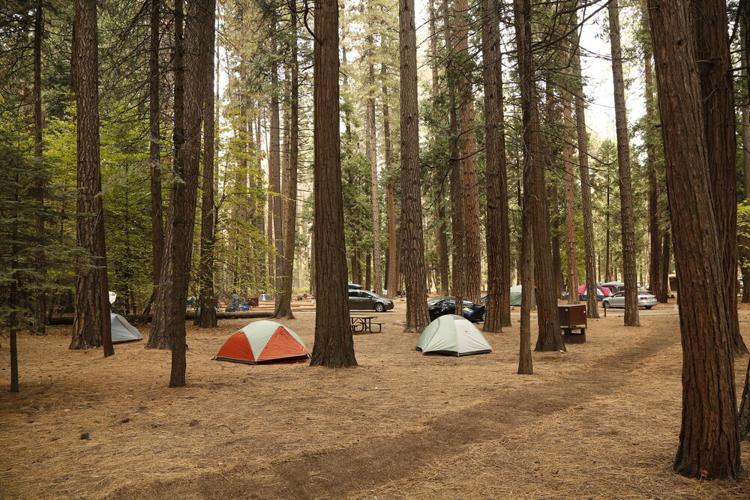
Tent camping in Yosemite National Park
After hiking, the campsite becomes the main event. Bring camp chairs, a small table if your site does not have enough surface space, a picnic blanket, towels, warm socks, and a cozy layer for evenings. A deck of cards or a small game can also be worth packing, especially if you are traveling with family or friends.
This is where the Strike flip flops come back into play. After a long day in trail shoes, having something lightweight and easy to slip on makes the campsite feel much more civilized. Use them for shower runs, quick walks around camp, and post-hike lounging.
Use A Five-Day Packing System
The easiest way to avoid chaos is to pack by category. Keep sleep gear together, kitchen gear together, food together, clothing together, and toiletries together. Use clear bins if possible. Labeling may sound excessive until you are trying to find a lighter in the dark while someone asks where the marshmallows went.
For five days, plan simple meals before you shop. Breakfast can be eggs, fruit, yogurt, granola, oatmeal, or breakfast burritos. Lunch should be trail-friendly. Dinner should be satisfying but not exhausting. A Lodge skillet and a Titan cooler can cover a lot of ground if you keep the menu realistic.
A smart Yosemite camping packing list should make the trip easier before you even leave the driveway.
The Five-Day Yosemite Camping Packing List
For footwear, bring waterproof hiking boots or trail shoes, camp sandals or flip flops, hiking socks, and a spare pair of dry socks. For clothing, bring moisture-wicking tops, hiking bottoms, a fleece, rain shell, sleepwear, undergarments, a sun hat, sunglasses, and a warm evening layer.
For camp, pack your tent, sleeping bags, sleeping pads, pillows, lantern, headlamps, camp chairs, picnic blanket, and a small table if needed. For cooking, bring a cooler, cookware, stove, fuel, utensils, plates, mugs, food storage bins, trash bags, soap, sponge, paper towels, and a wash basin.
For personal care, bring sunscreen, lip balm, moisturizer, toiletries, hand sanitizer, wipes, towel, brush or comb, claw clip or hair ties, medications, and a small first-aid kit. For trail days, bring a daypack, water bottles, snacks, map, portable charger, light layer, and a small trash bag.
For Yosemite specifically, remember the bear-storage rule. Keep food and scented items secured according to park guidance. Do not leave snacks in your tent. Do not leave trash out. Do not assume a closed cooler sitting on the picnic table is good enough.
Pack Less But Pack Better
The best Yosemite trips are not the ones where you bring everything. They are the ones where you bring the right things. A comfortable hiking boot, a smart camp shoe, a reliable cooler, sturdy cookware, organized food storage, and a few comfort items can make five days outdoors feel easy, memorable, and surprisingly polished.
That is the real goal of this Yosemite camping packing list: not to make camping feel complicated, but to make it feel considered. Yosemite already brings the drama with granite cliffs, waterfalls, meadows, and pines. Your packing should simply help you enjoy it without overthinking every meal, every hike, and every night at camp.
Pack well, respect the park, store your food properly, and give your feet something comfortable to slip into after the trail. That is how a five-day Yosemite camp vacation starts to feel less like roughing it and more like the kind of outdoor escape you will actually want to repeat.


(0) comments
We welcome your comments
Log In
Post a comment as Guest
Keep it Clean. Please avoid obscene, vulgar, lewd, racist or sexually-oriented language.
PLEASE TURN OFF YOUR CAPS LOCK.
Don't Threaten. Threats of harming another person will not be tolerated.
Be Truthful. Don't knowingly lie about anyone or anything.
Be Nice. No racism, sexism or any sort of -ism that is degrading to another person.
Be Proactive. Use the 'Report' link on each comment to let us know of abusive posts.
Share with Us. We'd love to hear eyewitness accounts, the history behind an article.