
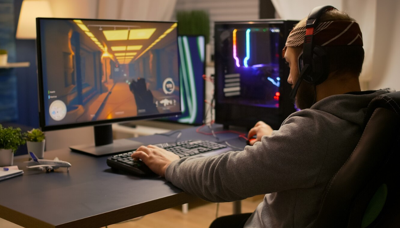

You know that feeling when you discover an incredible game that keeps you up way too late? The one where you tell yourself "just five more minutes" and suddenly it's 2 am? Well, that addiction didn't happen by accident. Someone, somewhere, spent years crafting every detail to hook you completely.
But how do developers actually turn a wild idea scribbled on a napkin into the game that's now destroying your sleep schedule?
Let’s find out.
The Blueprint
Every cracking game starts with an idea. This pre-production phase is where the magic begins, with developers sketching out concepts, characters, and gameplay mechanics. Australian studio PlaySide Studios, one of the country's largest developers, begins each project by crafting a Game Design Document (GDD), the project's north star.
"The GDD is where we map out everything from core mechanics to art direction," notes a senior designer at Mighty Kingdom in Adelaide. "It's not set in stone, though; a good plan needs breathing room."
During this phase, developers also make crucial decisions about target platforms, monetisation strategies, and staffing needs. Teams create rough prototypes to test if their gameplay concepts actually work in practice because what sounds brilliant on paper might fall flat when you've got a controller in hand.
Building the Foundation
With the blueprint ready, the production phase kicks off. It is the longest and most resource-intensive stage of development. This is where the rubber hits the road.
Programming teams begin coding the game's architecture, while artists create the visual elements. Sound designers craft audio landscapes, and writers flesh out narrative elements. For Melbourne-based House House, creators of the wildly successful Untitled Goose Game, this collaborative process drove their quirky vision forward.
Modern games typically use pre-built game engines like Unity or Unreal Engine rather than coding everything from scratch. Brisbane's Halfbrick Studios, creators of Fruit Ninja, have leveraged these tools to streamline development and focus on innovative gameplay rather than technical foundations.
The production pipeline involves several milestones:
First Playable: A rough implementation of core mechanics
Alpha: All major features are implemented, but unpolished
Beta: The game is feature-complete but requires refinement
Gold: The finished product is ready for release
Testing and Refinement
Quality assurance isn't an afterthought but a critical ongoing process. Testing teams meticulously hunt for bugs, examine balance issues, and ensure gameplay feels satisfying. Sydney-based Team Bondi (creators of L.A. Noire) dedicated months to polishing their facial animation technology, revolutionising character expression in games.
"Testing isn't just about finding glitches," explains a QA specialist at Firemonkeys Studios in Melbourne. "It's about making sure the game actually delivers the experience we promised."
Australian developers often use local players for beta testing, giving everyday gamers the opportunity to provide feedback before release. This community involvement has become increasingly important as the industry has grown.
The Final Push
As release day approaches, marketing teams ramp up promotion while developers address final bugs. For smaller Australian studios like SMG Studio (creators of Moving Out), this period is particularly intense, with team members often wearing multiple hats to get everything across the line.
Launch day arrives with a mixture of excitement and trepidation. Will players connect with the game? Have technical issues been sufficiently addressed? The moment of truth comes as reviews and player feedback begin rolling in.
After Launch
Unlike other media, a game's development doesn't necessarily end at release. Modern games often receive updates, patches, and downloadable content (DLC) to fix issues and extend the experience. Some Australian developers, like Torus Games, specialise in post-launch support for major titles.
The rise of digital distribution has transformed this post-launch phase, allowing developers to continually improve their games based on player feedback. This approach has been embraced by indie developers across Australia, allowing smaller teams to build communities around their games over time.
Sometimes, successful games get a second life through video game remakes that rebuild the original experience with modern technology and enhanced features.
Australia's game development scene has flourished in recent years, with studios in Melbourne, Brisbane, Sydney, and Adelaide creating globally recognised titles. From Summerfall Studios' musical RPG Stray Gods to Massive Monster's Cult of the Lamb, Australian developers are making their mark on the international stage.
The country's unique perspective has influenced game narratives and aesthetics, with Australian fauna, landscapes, and cultural references appearing in various titles. This distinctive voice has helped Australian games stand out in a crowded global marketplace.



(0) comments
We welcome your comments
Log In
Post a comment as Guest
Keep it Clean. Please avoid obscene, vulgar, lewd, racist or sexually-oriented language.
PLEASE TURN OFF YOUR CAPS LOCK.
Don't Threaten. Threats of harming another person will not be tolerated.
Be Truthful. Don't knowingly lie about anyone or anything.
Be Nice. No racism, sexism or any sort of -ism that is degrading to another person.
Be Proactive. Use the 'Report' link on each comment to let us know of abusive posts.
Share with Us. We'd love to hear eyewitness accounts, the history behind an article.