

Every golfer's objective is to achieve lower scores on the green. Practice is a must because the round often comes down to putting. Concentration-based drills are capable of enhancing accuracy, developing confidence, and enabling players to get better outcomes. Here are 10 putting drills any player can use in practice to lower their scores this season.
1. The Gate Drill
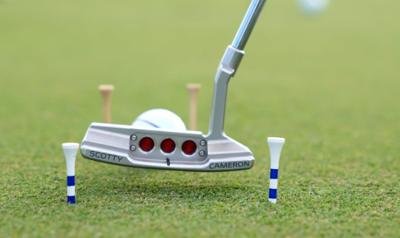
Confidence on short putts builds a solid base. The gate drill will help develop a more repeatable stroke by positioning two tees slightly wider than the putter head. It teaches precise control as golfers practice stroking putts without even touching the tees. Repetition is key here and helps develop muscle memory for straight and strong strokes.
Among common putting drills, the gate drill is widely used, since placing two tees around the putter head encourages a straight, controlled stroke and builds muscle memory through repetition.
2. The Clock Drill
One factor most distinguishes excellent putters from mere mortals: distance control. In the clock drill, golf balls are placed equidistant from the hole, much like the numbers surrounding a clock face. Regardless of their position on the green, players practice putting with an emphasis on technique rather than the outcome. This drill works consistently at all different angles and distances.
3. The Coin Drill
Trilingual is, well, like a coin drill: focus and strike. There is a coin right ahead of the path of the ball. It helps players practice putting to roll the ball over the coin, which encourages square contact. This routine enhances concentration and challenges you to pinpoint the optimal location.
4. The Ladder Drill
Distance control is the key to long putts. For the ladder drill, markers are set at three, six, and nine feet away from where the first ball was placed. Basically, you want to leave each putt within a foot beyond each of the markers. Regular practice strengthens the sensation for longer-distance putts.
5. The One-Handed Drill
Hand dominance is tricky business for many golfers when they take a swing. It helps us create a good gesture with only practice for the lead hand. Increasing feel while decreasing unnecessary wrist movement, the one-handed drill. The golfing public soon begins to observe better putting stability and better alignment at the hole over time.
6. The Around-the-World Drill
Pressure on the green can often lead to hesitation. The around-the-world drill, which places balls several feet from the hole at equal points, provides a solution to this. Participants attempt to make each putt consecutively. If you miss one, you reset, emulate high pressure, and develop mental fortitude.
7. The Eyes-Closed Drill
Overemphasizing the visual can disrupt a natural stroke. The eyes-closed drill is simple—practice making putts with your eyes closed, relying on feel instead of sight to know where to aim. It heightens the feel, allowing golfers to have a more intuitive stroke and more feel on the green.
8. The String Line Drill
Most of the time, missed putts stem from alignment issues. A string line drill works by running a taut string between two stakes above where you want the line to be. The players then put the ball under it to make sure it was rolling on the correct line. Working with visual feedback instills confidence in alignment and creates repeatable motion.
9. The Four-Quadrant Drill
You need to be able to read the above for it to work. In the four-quadrant drill, balls are placed 10-15 yards apart in four directions, dividing the cup’s area into many quadrants. Golfers putt from each spot to see how much slope and break influence each shot. Golfers develop their green-reading skills and adaptability through repeated practice of various perspectives, which helps them understand how different angles and slopes affect their putting performance.
10. The Two-Ball Drill
Two-ball drill leads to controlled, smooth putts. In this drill, golfers hit two balls with one shot. It is balanced if they both travel in straight lines and they are at equal distances. It really helps to highlight where there may be flaws in a golfer's technique and to keep a steady tempo, which is essential for improving overall performance in putting, as it allows golfers to identify inconsistencies in their stroke and make necessary adjustments for better accuracy and control.
A commitment to purposeful practice is essential for improving putting skills. These 10 drills are excellent ways to work on touch, accuracy, and mental toughness. Another way to create a comprehensive putting practice is by using variety in your routines. Doing them regularly will allow any golfer to take fewer putts on the green and experience more success during the season.


(0) comments
We welcome your comments
Log In
Post a comment as Guest
Keep it Clean. Please avoid obscene, vulgar, lewd, racist or sexually-oriented language.
PLEASE TURN OFF YOUR CAPS LOCK.
Don't Threaten. Threats of harming another person will not be tolerated.
Be Truthful. Don't knowingly lie about anyone or anything.
Be Nice. No racism, sexism or any sort of -ism that is degrading to another person.
Be Proactive. Use the 'Report' link on each comment to let us know of abusive posts.
Share with Us. We'd love to hear eyewitness accounts, the history behind an article.