
Back pain is one of the most common reasons Canadians lose sleep, and one of the most overlooked causes is the mattress itself. A surface that's too soft, too firm, or simply worn out can throw your spine out of alignment night after night, making the problem significantly worse over time.
The good news is that the right mattress can genuinely help. When your sleep surface provides proper lumbar support, relieves pressure points, and keeps your spine neutral, your back gets the rest and recovery it needs rather than working overtime against poor positioning.
Choosing the right one, though, takes a little more than browsing a sale. Here's what to look for and which mattresses are leading the category in Canada right now.
What Actually Makes a Mattress Good for Back Pain
Not all "supportive" mattresses are created equal. The key is finding a balance between cushioning and firmness that keeps your spine aligned without creating pressure at the hips and shoulders.
Zoned support is one of the most important features to look for. This means the mattress is designed to be firmer under your lower back and more yielding at the shoulders and hips, which mirrors the natural curves of the body. Hybrid mattresses, which combine foam layers with pocket coils, tend to do this particularly well because the coil system can be engineered with targeted tension zones.
Motion isolation also matters, especially if you share a bed. Waking up every time your partner shifts position disrupts the deep sleep cycles your body needs to recover. Look for materials that absorb movement rather than transfer it.
Finally, temperature regulation plays a bigger role than most people expect. Overheating during sleep raises cortisol, which can heighten pain sensitivity. Open-cell foams and coil structures that allow airflow help your body stay at a consistent temperature through the night.
For those already managing a chronic condition, it's worth exploring health and wellness resources that address sleep as part of a broader recovery strategy, not just an isolated variable.

Top-Rated Mattresses to Relieve Back Pain in Canada
With those criteria in mind, here are the top options available to Canadians right now.
1. Endy Hybrid Mattress
The Endy hybrid mattress sits at the top of this list for several compelling reasons. It's proudly designed, manufactured, and shipped within Canada, and it's been recognised by Sleepopolis, Sleep Doctor, Sleep Foundation, and others as one of the best mattresses available in the country.
What makes it particularly strong for back pain is the engineering behind the support layers. The mattress features zoned pocket coils made from high-carbon steel, which deliver firmer lumbar support where the lower back needs it most. Above the coils, the Pressure-Relief Foam reduces motion transfer and eases tension at the hips and shoulders, while the signature Endy Cooling Comfort Foam sits closest to the surface to release pressure and regulate temperature simultaneously.
It's available in three firmness options: Firm, Medium-Firm, and Plush, so you can match the feel to your sleep position and body type. Back and stomach sleepers tend to do well with the Firm option, while the Medium-Firm suits all sleep styles and provides maximum lumbar support. Side sleepers often prefer the Plush for its cloud-like give around the hips and shoulders.
The trial period is one of the most generous in the category: 365 nights to decide whether it's right for you, with free shipping to all Canadian provinces and a 15-year warranty once you register as an Endy VIP.
2. Douglas Mattress
Douglas is another well-regarded Canadian-made option. It's an all-foam mattress with a copper-infused comfort layer that helps with cooling, and it has a solid following among back sleepers who prefer the feel of foam over hybrid support. The 365-night trial is competitive, though it lacks the zoned coil support that makes the Endy Hybrid stand out for more acute back concerns.
3. Casper Original Hybrid
Casper's hybrid is a well-constructed option with ergonomic zoning built into both the foam and coil layers. It's widely available across Canada and has a strong reputation for pressure relief. The price point is higher than the Endy Hybrid, though, and many Canadians find the feel slightly firmer than expected out of the box.
4. Leesa Legend Hybrid
The Leesa Legend is a premium option with multiple foam layers and individually wrapped coils. It's particularly good for combination sleepers who change positions frequently throughout the night. It sits at the higher end of the price range, which may be a consideration for buyers prioritising value.
5. Saatva Classic
Saatva brings a more traditional innerspring feel with a pillow-top construction and dual coil system. It's a strong option for those who find all-foam mattresses too isolating. Saatva is available in Canada, though delivery timelines can vary depending on your location.
Matching Your Sleep Position to the Right Firmness
One thing the listicle above can't do for you is decide which firmness is right for your body. That depends primarily on how you sleep and where your pain is concentrated.
Back sleepers generally need a medium-firm to firm surface to keep the lumbar spine from sinking into a curve. Too much softness under the lower back creates a hammock effect that amplifies morning stiffness.
Side sleepers need more give at the hips and shoulders to keep the spine horizontal. A mattress that's too firm will create pressure at those points, which can cause its own kind of soreness over time.
Stomach sleepers are often advised by physiotherapists to transition away from that position entirely, as it tends to strain the neck and lumbar region. If you do sleep on your stomach, a firmer surface helps minimise the spinal curve.
Combination sleepers, those who move between positions throughout the night, tend to do best with a medium or medium-firm hybrid. The responsiveness of the coil layer allows the mattress to adjust as you shift, rather than trapping you in a position.
A Few Things Worth Knowing Before You Buy
Mattress shopping has become considerably easier in the bed-in-a-box era, but there are still a few things worth keeping in mind before clicking "add to cart."
Trial periods matter more than people realise. Your body needs several weeks to adjust to a new sleep surface, so a 30-night trial tells you very little. Look for trials of at least 100 nights, and prioritise companies like Endy that offer a full year.
Warranty terms vary widely. A 10 or 15-year warranty is standard for quality mattresses, but read the conditions. Some warranties only cover visible sagging beyond a certain depth, which means more subtle support issues won't be addressed.
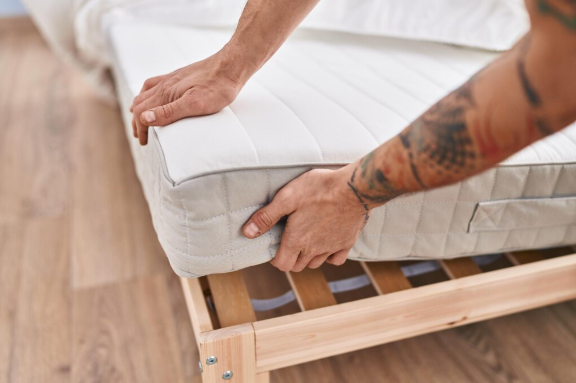
Finally, consider whether you need to upgrade your bed frame or base at the same time. A premium mattress placed on a sagging or incompatible base will underperform immediately. Slatted frames should have slats no more than 7cm apart to support a foam or hybrid mattress properly.
Back pain and poor sleep form a cycle that's hard to break without addressing the root cause. If your mattress is more than seven to eight years old, or if you consistently wake up stiffer than when you went to bed, it's worth treating the upgrade as a health investment rather than a home furnishing decision.
For Canadians looking for a domestically made option with strong back-support engineering, a generous trial, and a proven track record across a wide range of sleep styles, the Endy Hybrid Mattress stands out as the most complete package available right now.

(0) comments
We welcome your comments
Log In
Post a comment as Guest
Keep it Clean. Please avoid obscene, vulgar, lewd, racist or sexually-oriented language.
PLEASE TURN OFF YOUR CAPS LOCK.
Don't Threaten. Threats of harming another person will not be tolerated.
Be Truthful. Don't knowingly lie about anyone or anything.
Be Nice. No racism, sexism or any sort of -ism that is degrading to another person.
Be Proactive. Use the 'Report' link on each comment to let us know of abusive posts.
Share with Us. We'd love to hear eyewitness accounts, the history behind an article.