
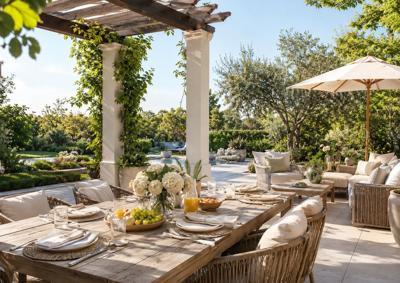

A great patio party should feel relaxed, beautiful, and easy. The host should not be sprinting between the kitchen and the grill like an unpaid caterer, guests should not be balancing plates on their knees, and nobody should have to sit in the one chair that somehow both wobbles and pinches.
Designing a patio for outdoor entertaining is about more than buying a table and hoping for the best. The best outdoor spaces are planned around how people actually gather: eating, drinking, lounging, cooking, talking, wandering, and occasionally pretending they are helping while standing near the grill.
Whether you are refreshing an existing patio or planning a new outdoor living space, these ideas will help create a patio that feels polished, comfortable, and ready for summer evenings, dinner parties, weekend barbecues, and impromptu cocktails that somehow turn into midnight.
Start With How You Actually Entertain
Before choosing furniture, lighting, plants, or an outdoor kitchen, think honestly about how you use the space. Do you host long dinners? Casual barbecues? Pool days? Cocktail parties? Family lunches? Quiet evenings with one other person and a bottle of wine that was absolutely meant to be shared?
This matters because outdoor entertaining spaces can become expensive quickly. A homeowner who loves cooking outside may benefit from a proper grill zone, prep counter, and outdoor dining area. Someone who prefers cocktails and conversation may care more about lounge seating, lighting, a fire feature, and side tables. The right patio is not the one with the most features. It is the one that matches your real life.
This is also where many homeowners overspend. A pool, pizza oven, outdoor bar, or built-in kitchen can be wonderful if you will truly use it. If not, it may become a very expensive backdrop for a folding table full of chips. Start with your habits first, then design around them.
For homeowners still planning the structure of the space, FINE’s 7 Patio Design Mistakes to Avoid is a useful companion before committing to permanent features.
Create Zones for Cooking, Dining, and Lounging
A successful patio for outdoor entertaining needs flow. Guests should be able to move easily from the cooking area to the dining table to the lounge seating without feeling like they are navigating an obstacle course designed by patio furniture.
Think in zones. A cooking zone may include a grill, prep space, serving surface, and trash or recycling area. A dining zone needs enough room for chairs to pull out comfortably. A lounge zone should feel separate enough for relaxed conversation but still connected to the rest of the party.
Even a small patio can have zones. Use an outdoor rug to define the seating area, planters to soften edges, lighting to guide movement, and furniture placement to create natural pathways. A large patio may need more structure, such as a pergola over the dining table or a fire pit area beyond the main entertaining space.
FINE’s Patio Design Ideas That Make Outdoor Living Feel More Luxurious offers more inspiration for turning these zones into a cohesive outdoor room.
Choose Furniture That Lets People Stay Awhile
Outdoor furniture should look good, but it also needs to be comfortable enough for real use. A dining chair that looks sculptural but makes guests shift every five minutes is not elegant. It is a small act of social sabotage.
For entertaining, choose furniture that supports the way people gather. Dining chairs should be sturdy and comfortable. Lounge seating should include enough surface space nearby for drinks and plates. Sectionals can be excellent for conversation, while benches work well when you need flexible seating for larger groups.
Scale matters. Oversized furniture can swallow a patio, while pieces that are too small can make the space feel unfinished. Measure before buying, and allow room for people to walk behind chairs, move around the table, and access doors, steps, garden paths, or the grill.
For more furniture planning ideas, see FINE’s Ultimate Patio Furniture Guide.
Make the Cooking Area Work Harder
If food is central to your gatherings, the cooking area deserves real planning. A grill alone may be enough for some patios, but frequent entertainers may benefit from prep space, storage, lighting, serving counters, and a nearby dining area.
The best outdoor cooking zones reduce trips back into the house. Keep the layout simple: a place to cook, a place to set food down, a place for serving pieces, and easy access to the dining table. If the kitchen is just inside the patio doors, you may not need a full outdoor kitchen. If the patio is farther from the house, more built-in function may be worth considering.
Safety also matters around grills and outdoor cooking areas. Keep grills away from siding, overhangs, low branches, and crowded seating zones. The National Fire Protection Association recommends using propane and charcoal grills outdoors only and placing them well away from the home, deck railings, and overhanging branches.
For larger entertaining spaces, FINE’s Is an Outdoor Kitchen a Smart Investment? can help homeowners think through whether a bigger outdoor cooking setup makes sense.
Use Lighting to Set the Mood After Sunset
Lighting is what turns a daytime patio into an evening entertaining space. Without it, the party either moves indoors or everyone sits under one harsh fixture that makes the backyard feel like a security checkpoint.
Layer the lighting. Use string lights or pendants for atmosphere, sconces or ceiling fixtures near covered areas, path lights for movement, step lights for safety, and lanterns or candles for softness. Warm lighting is usually best outdoors because it flatters plants, stone, wood, food, and guests.
Lighting should also support function. The grill needs enough light for cooking. Steps and pathways need visibility. Dining areas should feel intimate without leaving people guessing what is on their plate. Lounge areas should be soft enough to feel relaxed but not so dim that someone loses a shoe.
Good lighting is one of the simplest ways to make a patio for outdoor entertaining feel more expensive, even if the rest of the space is modest.
Add Shade Before Guests Start Melting
Shade is essential for daytime entertaining. A patio that looks stunning but has no shade can become unusable during the hottest part of the day. Guests may admire it briefly before retreating indoors, which is not exactly the outdoor lifestyle anyone had in mind.
Umbrellas, pergolas, shade sails, outdoor curtains, covered patios, and strategically placed trees can all help make the space more comfortable. The right option depends on the patio’s size, sun exposure, wind conditions, and style of the home.
Shade also helps protect furniture, reduce glare, and make dining more pleasant. If you host often, include shaded seating and shaded food areas so guests are not choosing between comfort and potato salad safety.
For more ideas on creating a relaxing outdoor setting, see FINE’s 5 Best Ways to Relax in Your Backyard.
Bring in Greenery Without Crowding the Space
Plants make a patio feel alive. They soften hard surfaces, add color, create privacy, and help the patio feel connected to the rest of the garden. The trick is using greenery intentionally instead of filling every available corner with pots until the patio feels like a nursery aisle.
Large planters usually look more polished than many small ones. Use them to frame an entrance, define a dining zone, soften a wall, or add height beside lounge seating. Herbs near the cooking area are both beautiful and useful, especially for guests who enjoy pretending they casually garnish things.
Native plants can also support a healthier outdoor environment. The National Wildlife Federation recommends native blooming trees, shrubs, and wildflowers to help provide nectar and pollen for pollinators.
For more outdoor greenery inspiration, FINE’s Garden Upgrade Ideas That Make Your Outdoor Space Look More Expensive offers additional ways to make the surrounding landscape feel more refined.
Use Real Tableware When It Makes Sense
Disposable plates and plastic cups may be convenient, but they rarely make a patio party feel elevated. For frequent entertaining, it is worth keeping a set of reusable outdoor-friendly tableware, serving platters, napkins, and drinkware on hand.
This does not mean every patio dinner needs to look like a wedding reception. Simple melamine plates, acrylic glasses, cloth napkins, and a few good serving bowls can instantly make outdoor meals feel more considered. The food can still be casual. The presentation does not need to look like everyone gave up.
Reusable pieces also reduce waste over time. If storage is limited, choose a coordinated set that works across casual lunches, barbecues, and evening dinners. Neutral pieces tend to last longer stylistically, while color can come from flowers, linens, candles, or seasonal serving pieces.
A small outdoor entertaining kit can make hosting easier: napkins, candles, matches, serving utensils, bottle opener, bug-repelling accessories, and a tray for carrying things outside. Future you will be grateful. Present you will pretend this was always your level of organization.
Prepare for Weather, Bugs, and Real Life
The perfect patio party is rarely perfect. There may be wind, sun, bugs, spilled drinks, a dog circling the appetizer table, or one guest who stands directly in front of the grill giving advice no one requested. Good design plans for real life.
Use washable cushions, durable rugs, stable side tables, and furniture that can handle weather. Keep baskets or storage benches nearby for throws and pillows. Consider outdoor curtains, fans, citronella candles, or screened areas if bugs are a regular problem.
Food safety also deserves attention during warm-weather entertaining. The USDA Food Safety and Inspection Service recommends keeping cold food cold, hot food hot, and not leaving perishable food out for more than two hours, or one hour when temperatures are above 90 degrees Fahrenheit.
That may not sound glamorous, but neither is explaining why everyone who ate the potato salad had a memorable evening for the wrong reason.
A Great Patio Party Starts With a Better Patio
Creating a patio for outdoor entertaining is really about making the space easy to enjoy. Guests need comfortable places to sit, a logical flow, enough shade, good lighting, easy access to food and drinks, and a setting that feels welcoming without being overdone.
The best patios do not try to do everything. They do the right things well. A beautiful dining table, a comfortable lounge area, smart lighting, useful greenery, and a well-planned cooking zone can make outdoor entertaining feel effortless.
Design the patio around how you actually live and host. The result will feel more personal, more useful, and far more elegant than a space built around trends alone.
And if the patio makes people want to stay for one more drink, one more story, or one more plate of something grilled, it is doing its job.

(0) comments
We welcome your comments
Log In
Post a comment as Guest
Keep it Clean. Please avoid obscene, vulgar, lewd, racist or sexually-oriented language.
PLEASE TURN OFF YOUR CAPS LOCK.
Don't Threaten. Threats of harming another person will not be tolerated.
Be Truthful. Don't knowingly lie about anyone or anything.
Be Nice. No racism, sexism or any sort of -ism that is degrading to another person.
Be Proactive. Use the 'Report' link on each comment to let us know of abusive posts.
Share with Us. We'd love to hear eyewitness accounts, the history behind an article.