
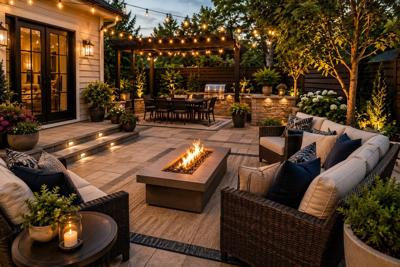

A well-designed patio can make a home feel larger, more luxurious, and far more enjoyable. It becomes the place for morning coffee, late dinners, outdoor lounging, weekend entertaining, and those rare quiet moments when nobody is asking where the scissors went.
But a patio is also one of those home projects where mistakes can become expensive quickly. A chair can be moved. A throw pillow can be replaced. A poorly placed concrete slab, a badly planned fire pit, or a patio that bakes like a skillet at 3 p.m. is much harder to fix.
Before you build, remodel, or furnish your outdoor living space, it helps to know the most common patio design mistakes homeowners make. A good patio should feel beautiful, comfortable, safe, and easy to use. It should not become a very expensive reminder that “we probably should have measured first.”
Ignoring How the Sun Hits the Patio
One of the biggest patio design mistakes is choosing a location without paying attention to sun exposure. A patio that looks perfect at 9 a.m. may feel completely unusable by late afternoon if it gets blasted with direct sun. In warm climates, that can turn an elegant outdoor seating area into a punishment zone with cushions.
Before finalizing the patio location, watch how the sun moves across the yard throughout the day. Think about when you are most likely to use the space. Morning coffee, afternoon lounging, and evening dinners all have different shade needs.
If the patio gets heavy sun, add shade from the beginning. Pergolas, umbrellas, shade sails, covered structures, outdoor curtains, or strategically planted trees can make the space much more comfortable. Shade also helps protect outdoor furniture and makes the patio feel more like an outdoor room.
For more ideas on creating a comfortable outdoor retreat, FINE readers may also enjoy 5 Best Ways to Relax in Your Backyard.
Making the Patio Too Big or Too Small
Patios need breathing room, but bigger is not always better. A patio that is too small can feel cramped the moment you add furniture. A patio that is too large can feel cold, empty, and oddly exposed, as if you accidentally built a small airport outside the kitchen.
The best patio size depends on how you plan to use it. A dining patio needs room for a table, chairs, and enough space for people to move around without performing a sideways shuffle with a plate of ribs. A lounge patio needs space for seating, side tables, and walkways. A mixed-use patio may need separate zones for cooking, dining, and relaxing.
Before building, map out the furniture on the ground with painter’s tape, stakes, or chalk. Include room for chair movement, foot traffic, planters, grill access, and any fixed features. This is not glamorous, but neither is discovering later that the dining chairs back directly into a shrub.
If your goal is a more polished outdoor living space, FINE’s Ultimate Patio Furniture Guide offers useful inspiration for choosing pieces that fit the space instead of overwhelming it.
Choosing the Wrong Patio Materials
Materials set the tone for the entire patio. They also determine how well the space holds up over time. Stone, concrete, brick, tile, pavers, gravel, and wood all have their place, but the wrong material in the wrong climate can become a maintenance headache.
For coastal homes, corrosion and salt air matter. For hot climates, surface temperature matters. For rainy areas, drainage and slip resistance matter. For families who entertain often, durability and stain resistance matter. A patio material should not only look beautiful on installation day. It should still make sense after weather, foot traffic, furniture movement, and the occasional dropped glass of sangria.
Concrete and pavers can be elegant and durable, but they need proper installation and maintenance. Natural stone can look timeless, but some stones may require sealing. Wood can be warm and inviting, but it often needs more upkeep. Porcelain outdoor tile can look sleek, but the product must be rated for exterior use and appropriate slip resistance.
Material choice should also support the overall look of the home. A modern house may suit large-format pavers and clean lines, while a Mediterranean or traditional home may feel better with stone, brick, or warm textured surfaces.
Forgetting About Drainage
Drainage is not the sexiest part of patio design, but ignoring it can turn a dream patio into a puddle with furniture. Poor grading, bad runoff planning, and improper installation can lead to standing water, slippery surfaces, soil erosion, and damage near the home’s foundation.
A patio should slope slightly away from the house so water does not collect against the structure. Drainage should be planned before the patio is built, not after the first heavy rain creates a surprise reflecting pool where the sofa used to be.
Permeable pavers, gravel borders, French drains, rain gardens, and thoughtful planting beds can all help manage water depending on the site. The U.S. Environmental Protection Agency notes that rain gardens can help collect and filter stormwater runoff, making them a smart option for certain landscapes.
For more sustainable outdoor ideas, see FINE’s Eco-Friendly Landscaping Solutions.
Skipping Proper Lighting
A patio should not clock out at sunset. Poor lighting is one of the most common patio design mistakes, especially when homeowners rely on one harsh porch light to do all the work. That kind of lighting does not create ambiance. It creates interrogation-room energy with mosquitoes.
Good patio lighting should be layered. Use soft overhead lighting, path lights, sconces, step lights, lanterns, and accent lighting to create a warm, usable space. The goal is to make the patio feel inviting while also helping people see where they are walking.
Lighting should also be practical around steps, level changes, outdoor kitchens, dining areas, and pathways. A patio may look gorgeous in photos, but if guests cannot safely carry a drink from the grill to the table, the design has missed something important.
Use warm lighting whenever possible. It flatters stone, plants, wood, and people. Cold lighting can make even an expensive patio feel like the parking lot of a medical building.
Overcrowding the Patio With Furniture
Outdoor furniture can make or break a patio. Too little furniture leaves the space feeling unfinished. Too much furniture makes it feel like a storage unit with throw pillows. The right balance depends on scale, traffic flow, and how the patio will be used.
A common mistake is buying furniture before measuring the space. Oversized sectionals, deep dining chairs, large fire tables, and bulky loungers can quickly swallow a patio. Even beautiful furniture looks wrong when people have to squeeze past it like they are boarding a budget airline.
Choose furniture that fits the patio’s proportions. Leave clear walkways. Keep access to doors, steps, grills, and garden paths open. If the patio is small, use flexible pieces such as benches, nesting tables, slim chairs, and built-in seating.
Comfort still matters. The goal is not to create a sparse showroom. The goal is to make the patio easy to move through and pleasant to use. FINE’s guide to outdoor rugs also shows how textiles can define seating zones without adding bulky furniture.
Placing Fire Features Without Enough Planning
Fire pits and outdoor fireplaces can make a patio feel cozy, luxurious, and deeply inviting. They can also become a problem if they are placed too close to the house, furniture, trees, fences, or anything else that would prefer not to be on fire.
Before adding a fire pit, fireplace, chiminea, or built-in fire feature, check local rules, HOA requirements, and manufacturer instructions. Placement matters. The U.S. Fire Administration advises keeping outdoor fireplaces and fire pits at least 10 feet away from anything that can burn.
Fire features also need the right surface beneath them, enough space around seating, and a safe plan for use. Wood decks, low-hanging branches, wind exposure, and crowded furniture layouts can all create unnecessary risk.
If the patio is near a pool or spa, safety planning becomes even more important. The Pool Safely campaign from the U.S. Consumer Product Safety Commission recommends layers of protection, including barriers, alarms, and other safety measures around pools and spas.
Trying to DIY a Patio That Needs Professional Planning
Some outdoor projects are excellent DIY candidates. Adding planters, updating furniture, hanging lights, or styling a seating area can be handled by many homeowners. But building a patio is different, especially when grading, drainage, structural work, electrical, gas lines, retaining walls, permits, or covered structures are involved.
A patio is not just a flat place to put chairs. It has to manage weight, weather, water, traffic, and the way people move between the home and yard. If the installation is wrong, the problems may not show up immediately. They may arrive later as cracks, pooling water, uneven surfaces, loose pavers, or drainage issues.
For larger builds, it is worth working with an experienced patio contractor, landscape designer, or outdoor living professional who understands layout, materials, permitting, drainage, and site conditions. A professional can help prevent costly mistakes before the first paver, slab, or support post goes in.
A professional can also help avoid costly layout mistakes. That includes placing the patio too close to problem drainage areas, using materials that do not suit the climate, or building fixed features before the furniture plan is clear.
A Better Patio Starts Before the First Paver Goes Down
The best patios look effortless, but they are rarely accidental. They are planned around sun, shade, furniture, drainage, lighting, safety, materials, and the way the homeowners actually live.
Avoiding the most common patio design mistakes can save money, frustration, and future repairs. More importantly, it can help create an outdoor space that feels natural to use instead of one that looks pretty but never quite works.
Before you build, think through the entire experience. Where will people sit? Where will the sun hit? Where will water go? How will the space look at night? Will furniture fit? Will the materials age well? Will the patio feel connected to the house and garden?
Answer those questions early, and your patio has a much better chance of becoming what it should be: a beautiful outdoor extension of the home, not a very expensive slab of regret.


(0) comments
We welcome your comments
Log In
Post a comment as Guest
Keep it Clean. Please avoid obscene, vulgar, lewd, racist or sexually-oriented language.
PLEASE TURN OFF YOUR CAPS LOCK.
Don't Threaten. Threats of harming another person will not be tolerated.
Be Truthful. Don't knowingly lie about anyone or anything.
Be Nice. No racism, sexism or any sort of -ism that is degrading to another person.
Be Proactive. Use the 'Report' link on each comment to let us know of abusive posts.
Share with Us. We'd love to hear eyewitness accounts, the history behind an article.