
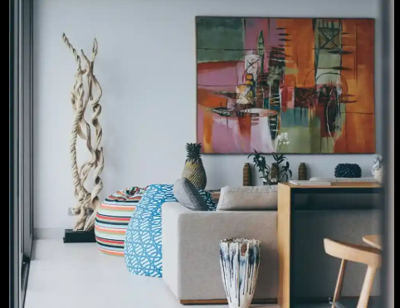

Street art has always lived with a certain urgency. It is visual culture that learned to speak quickly, to claim attention in a crowded field, and to leave a mark before the world moves on. When that sensibility is translated onto canvas and brought indoors, it does not lose its pulse. Instead, it offers homeowners a way to introduce boldness without inviting chaos.
Canvas is an unusually friendly format for this kind of work. It softens the glare that can make high-contrast graphics feel harsh, and it gives sprayed gradients, stenciled edges, and hand-drawn linework a tactile presence. A good street art print carries the spirit of a wall mural while behaving like a piece of home decor. That balance is exactly why it can inject energy into a living room or bedroom without overwhelming everything else.
The appeal is not just about color and attitude, though those matter. Street art is also a language of symbols, slogans, characters, and coded references that reward a second look. It brings narrative into a space, and it invites conversation in a way that safer, more neutral art often does not. In an era when many homes lean minimalist, one assertive canvas can function like a signal flare for personality.
From Alleyway to Living Room: Why the Translation Works
The move from public wall to private interior might sound like a domestication, but it is better understood as a reframing. Street art is built to survive distraction and compete with the noise of the city. In a home, that same visual force can animate quieter spaces and make them feel more lived-in. It is the difference between a room that looks styled and a room that feels inhabited.
Scale plays a role in the translation. A single large canvas can echo the impact of a mural, while a pair or trio of smaller prints can create a rhythm across a wall. Because street art often features strong shapes and direct messages, it reads well from across a room. The result is art that performs both as a statement piece and as a structural element that organizes the space around it.
The indoor setting also changes how viewers engage. On a street corner, you catch the work in motion, maybe for a few seconds. At home, you notice details: the layered textures, the purposeful drips, the tension between polished design and raw mark-making. That slower viewing turns the piece into a daily companion rather than a passing spectacle, and the room benefits from that added depth.
Color, Contrast, and the Psychology of Visual Spark
Street art prints tend to arrive with a built-in palette strategy. Many rely on high-contrast combinations, saturated primaries, or neon accents that slice through neutrals. In a home dominated by beige, gray, or soft whites, those colors act like caffeine. They sharpen the room’s mood and make furniture silhouettes feel more intentional.
Contrast is not only about brightness. It can be the clash between graphic black outlines and soft washes of color, or the interplay of clean typography against distressed backgrounds. These tensions create visual movement, which is why street art can make a room feel more dynamic even when nothing else changes. The art introduces a sense of momentum that interior design alone sometimes struggles to generate.
There is also a psychological element that designers quietly exploit. Vivid colors can lift energy levels, while bold composition can encourage focus and alertness. That makes street art canvas prints especially effective in spaces where people gather or work, such as living rooms, kitchens, and home offices. Even in a bedroom, a carefully chosen piece can feel invigorating rather than agitating if the palette is balanced with softer textiles and calmer lighting.
Choosing the Right Piece: Theme, Scale, and Placement
The most common mistake with street art prints is choosing purely for shock value. Energy is not the same as noise, and a good selection should complement the life of the home. Some pieces lean playful with cartoonish characters and bright blocks of color. Others feel political, poetic, or abstract, and they carry a different kind of intensity that can be more enduring.
Scale is where practical thinking matters. A small canvas in a large room can look like an afterthought, while an oversized piece in a tight space can feel like it is leaning into you. Measure the wall, consider sight lines from the doorway, and imagine where the eye naturally lands when you enter. Street art thrives when it has room to breathe because its graphic elements want clarity, not clutter.
Placement should also respect the room’s function. In a dining area, a bold piece can serve as a focal point that makes dinners feel more social and less staged. In a hallway, a series of smaller canvases can turn a transitional space into an intentional gallery. In a home office, one assertive print behind the desk can frame video calls and subtly broadcast a point of view without looking like branding.
Editorial Shopping Without the Sales Pitch
Street art is one of the few decor categories where the buying decision shapes the integrity of what ends up on your wall. The look may feel spontaneous, but the ecosystem includes independent artists, licensing, print standards, and fulfillment practices that vary widely. Treat sourcing as part of the aesthetic, not an afterthought. Decide whether you want an iconic image, a specific artist’s voice, or a mix that can grow into a wall. Also remember “street art” spans crisp graphic design and heavily layered work that rewards scale. Framed this way, shopping becomes about building a point of view.
A practical next step is choosing a retailer that can explain where the work comes from and how it is made, because those details shape both ethics and visual quality. Look for platforms that curate across creators and deliver pieces ready to hang, rather than dumping endless listings on the buyer. iCanvas, a Chicago-based wall art company and online marketplace, is one example, offering ready-to-hang work sourced from independent artists, licensed estates, and cultural institutions across materials beyond canvas. For buyers focused on an urban graphic vocabulary, their street art collection is an efficient way to compare palettes and compositions without getting lost in the broader market.
Even with good curation, the final call belongs to the room and the life that happens in it. Evaluate a print the way you would evaluate a sofa: does it hold up at the size you need, and will it still feel right after the initial jolt fades. Look for legible detail, clean edges in typography, and color that feels intentional rather than merely loud. Consider how daylight and lamps will change contrast across the surface. Then think about placement, since the same work can read playful above a console and confrontational in a tight hallway. Fit turns impact into longevity.
Mixing Street Art with Different Decor Styles
Street art is often associated with industrial lofts and brick walls, but that stereotype undersells its flexibility. In a modern minimalist home, a street art canvas can provide the one note of rebellion that keeps the space from feeling sterile. The cleaner the room, the more the art can act as a deliberate disruption. That contrast, when controlled, reads as confident rather than messy.
In more traditional interiors, the trick is to use street art as a counterpoint rather than a takeover. A classic sofa, warm wood tones, and a bold print can coexist if you echo one color from the artwork in a small accessory. Think of a single throw pillow, a vase, or a stack of books with a similar hue. The room then feels curated, not like it is trying on a costume.
Eclectic spaces are where street art can really sing. Mixed textures such as leather, linen, and rattan, along with layered rugs and varied lighting, create an environment that already expects visual diversity. A street art canvas becomes part of the dialogue rather than the sole speaker. If you want maximum personality, pair the print with objects that tell your story, like travel finds, records, or photography, so the room reads as personal and not merely styled.
Creating a Gallery Wall with Urban Rhythm
A single piece can carry a room, but multiple prints can create a visual cadence that feels distinctly urban. Gallery walls work well with street art because the style is naturally modular. Graffiti lettering, stencil portraits, and abstract tags can sit next to each other like tracks on an album. The key is to find a unifying element, such as a shared color family, repeated subject matter, or consistent framing.
Spacing is where many gallery walls falter. Street art often relies on tight composition, so the wall itself needs to feel organized to avoid visual overload. Keep gaps consistent, align edges where possible, and step back often during the layout process. A good gallery wall should feel like a curated exhibit, not a collage that drifted onto the wall.
Narrative sequencing can elevate the result. You might start with a bold central piece and build outward with quieter works that support it. Or you can arrange pieces to move from typography to portraiture to abstraction, creating a visual story as the eye travels. Done well, a gallery wall of street art prints can make a room feel like it has a viewpoint, the way a great magazine spread does.
Caring for Canvas Prints and Keeping the Look Sharp
Canvas is durable, but it still benefits from a little respect. Direct sunlight can fade colors over time, especially in highly saturated prints where pigments are doing most of the work. If the room gets strong sun, consider placing the art on a wall that receives indirect light or using window treatments that soften exposure. The goal is not to hide the piece, but to keep its punch intact.
Cleaning should be gentle and infrequent. A soft, dry cloth or a light dusting tool is usually enough, and harsh cleaners can damage the surface or leave streaks. Avoid humid areas where moisture can encourage warping, particularly if the canvas is not sealed for that environment. If the piece lives in a kitchen or near a frequently used fireplace, consider placement that reduces exposure to grease or soot.
Finally, the integrity of the presentation matters. Hang the piece level, use hardware rated for the weight, and avoid spots where it may get bumped by doors or traffic. Street art is about impact, but it should not look battered unless that is the intended aesthetic. When the canvas is cared for, the colors stay lively, the lines stay crisp, and the room keeps that sense of energized personality that drew you to the style in the first place.

(0) comments
We welcome your comments
Log In
Post a comment as Guest
Keep it Clean. Please avoid obscene, vulgar, lewd, racist or sexually-oriented language.
PLEASE TURN OFF YOUR CAPS LOCK.
Don't Threaten. Threats of harming another person will not be tolerated.
Be Truthful. Don't knowingly lie about anyone or anything.
Be Nice. No racism, sexism or any sort of -ism that is degrading to another person.
Be Proactive. Use the 'Report' link on each comment to let us know of abusive posts.
Share with Us. We'd love to hear eyewitness accounts, the history behind an article.