
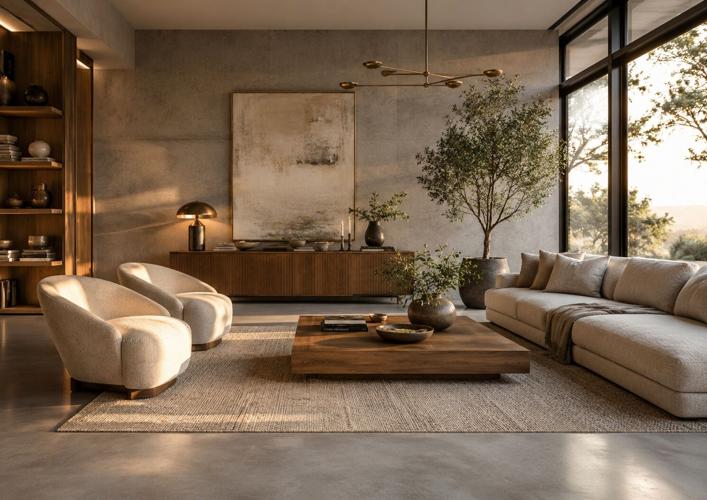
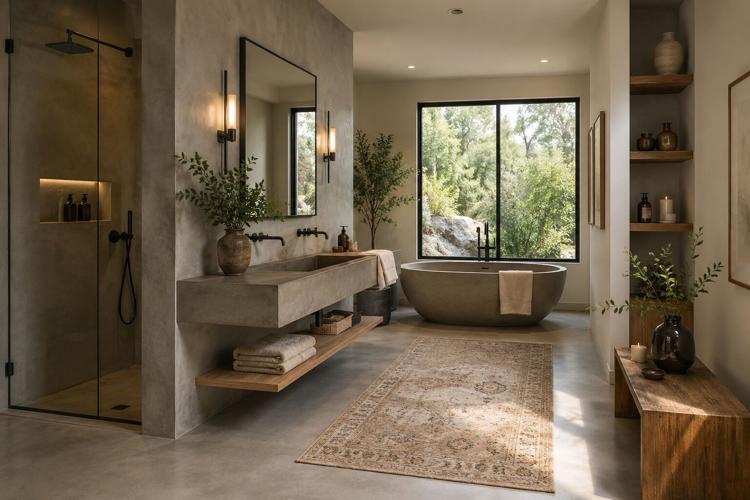

Concrete has had one of the better image makeovers in home design. Once treated as the cold, gray material of parking garages, sidewalks, and unfinished basements, it has become one of the most stylish ways to bring texture, strength, and modern character into a home. Used well, concrete can look polished, organic, industrial, rustic, or quietly luxurious. Used badly, of course, it can still look like someone forgot to finish the room.
The difference is in the design. Concrete works best when it is balanced with warmth, softness, and thoughtful materials. Wood, linen, leather, brass, marble, greenery, and good lighting all help soften its harder edge. That is where concrete home design becomes interesting. It is not about turning your house into a bunker. It is about using a durable, versatile material in a way that feels intentional, elevated, and livable.
Why Concrete Works in Modern Homes
Concrete has become popular because it does several things at once. It is durable, visually simple, and flexible enough to work in many different design styles. In a minimalist home, concrete can create a calm and sculptural backdrop. In a rustic home, it can balance reclaimed wood and natural textures. In a more glamorous space, it can make polished metals, statement lighting, and plush fabrics feel less precious.
It is also practical. Properly installed and sealed concrete can be used for floors, countertops, walls, fireplace surrounds, sinks, patios, and outdoor features. The Portland Cement Association explains concrete’s durability and resilience, which is part of the reason the material continues to be used in both structural and decorative applications. The key phrase there is properly installed and sealed. Concrete is strong, but it is not magic. It can stain, crack, absorb moisture, or become slippery when the wrong finish is used.
Concrete Walls That Feel Architectural
Concrete walls can give a room immediate presence. A smooth concrete wall feels modern and gallery-like, while a textured or board-formed finish adds warmth and movement. In living rooms, bedrooms, offices, and entryways, one concrete accent wall can create a dramatic backdrop for art, sculptural lighting, or simple furniture.
The trick is restraint. An entire room wrapped in concrete can be striking, but it can also feel severe if there is not enough natural light or softness in the design. For most homes, one feature wall is easier to live with. Pair it with wood flooring, oversized art, warm-toned upholstery, layered rugs, and greenery. Concrete needs friends. Without them, it starts acting like the emotionally unavailable character in a design magazine spread.
Concrete Floors With Lasting Style
Concrete floors are one of the most practical ways to use the material. They are durable, easy to clean, and can work beautifully in kitchens, living rooms, entryways, bathrooms, and outdoor-adjacent spaces. Depending on the finish, concrete floors can look polished and sleek, matte and organic, or lightly textured for a more natural feel.
For homeowners who like a cleaner modern look, polished concrete can reflect light and make a room feel more open. For a softer design, honed or matte concrete feels quieter and more natural. Rugs are especially important with concrete floors, both for comfort and visual warmth. A room with concrete floors and no textiles can quickly go from “modern retreat” to “boutique hotel lobby where no one knows where to sit.”
Concrete floors also require the right care. Concrete Network recommends pH-neutral cleaners for decorative concrete flooring and advises avoiding harsh products that may react with the surface or damage the finish. In other words, concrete may look tough, but it still does not want to be attacked with every bottle under the sink.
Concrete Countertops in the Kitchen
Concrete countertops can be a beautiful alternative to stone, quartz, or butcher block. They bring a handmade, custom feel to the kitchen because they can be poured, shaped, tinted, and finished in different ways. They work especially well in kitchens with natural wood cabinetry, matte black hardware, plaster walls, or warm metallic accents. Thanks to the strength and versatility of concrete, it's ideal for casting concrete sinks. If you want to look beyond the usual white ceramic sinks for something that provides unique aesthetics and customisation, check out concrete sinks by MASS Concrete.
There are practical considerations, however. Concrete countertops need to be sealed correctly to help resist stains, moisture, and everyday kitchen chaos. Concrete Network notes that properly sealed concrete countertops can be easy to clean with pH-neutral products, while abrasive cleaners can wear away the sealer. Red wine, citrus, oil, and coffee are not exactly gentle houseguests. A good sealer makes concrete easier to maintain, but homeowners should understand that concrete develops character over time.
Concrete in the Bathroom
Bathrooms are another natural place to use concrete, especially for vanities, sinks, shower walls, floors, and tub surrounds. Concrete can create a spa-like atmosphere when paired with soft towels, warm lighting, natural wood, and simple fixtures. It feels clean and sculptural without being overly glossy or predictable.
Because bathrooms involve constant moisture, proper sealing and slip resistance matter. Concrete shower floors and bathroom floors should be finished with safety in mind, not just aesthetics. A gorgeous bathroom is wonderful, but no one wants to risk a dramatic fall while reaching for the shampoo. For upper-level bathrooms, homeowners should also speak with a qualified professional before installing especially heavy concrete tubs, sinks, or slabs.

Concrete Fireplaces and Built-In Features
A concrete fireplace surround can instantly anchor a living room. It has the weight and simplicity of stone, but with a more modern and customizable feel. Concrete can be smooth, textured, tinted, or formed into clean architectural lines. It works especially well in rooms with high ceilings, large windows, natural wood beams, or neutral furniture.
Concrete can also be used for built-in benches, staircases, shelving bases, platform beds, or custom media walls. These features should be planned carefully because concrete is heavy and permanent. That is part of its appeal, but it also means you should be very sure before committing to a giant built-in concrete platform in the middle of the room. Some design decisions whisper. Concrete speaks in a deep voice and brings structural engineering with it.
Small Concrete Accents for an Easier Update
For homeowners who like the look of concrete but are not ready to pour a floor or redesign an entire room, smaller accents are a smart place to start. Concrete planters, lamps, trays, side tables, bowls, bookends, and candleholders can add texture without overwhelming the space.
These pieces work best when mixed with softer materials. A concrete planter looks better with lush greenery. A concrete lamp feels warmer with a linen shade. A concrete coffee table becomes more inviting with books, ceramics, flowers, or a tray. The goal is contrast. Concrete gives the room structure, while the surrounding pieces make it feel human.
Concrete Outdoors
Concrete is especially useful outdoors because it can stand up to weather, foot traffic, and everyday wear. Patios, walkways, fire pits, benches, planters, stepping stones, outdoor kitchens, and dining tables can all be designed with concrete. Stamped or stained concrete can also add pattern and color without the higher maintenance of some natural materials.
For outdoor spaces, concrete pairs beautifully with wood fencing, stone walls, woven furniture, linen cushions, and landscape lighting. It can feel clean and contemporary around a pool, casual and rustic in a garden, or resort-like on a patio. The best outdoor concrete design does not look like an afterthought. It connects the house, landscape, and entertaining areas into one polished living space.
How to Keep Concrete From Feeling Cold
The biggest mistake homeowners make with concrete is using it without enough contrast. Concrete needs warmth, texture, and softness around it. Add wood, woven materials, plants, warm lighting, upholstered seating, soft rugs, natural fabrics, and art. These details keep concrete from feeling stark.
Color also matters. Concrete does not have to be flat gray. It can be tinted, stained, polished, or finished in warmer tones. Even traditional gray concrete can feel inviting when surrounded by cream, camel, walnut, olive, terracotta, black, brass, or soft white. Concrete home design works best when the material feels like part of a larger design story, not like the contractor left early.
When to Call a Professional
Small concrete décor pieces are easy to experiment with, but larger concrete projects should usually involve a professional. Floors, countertops, shower applications, fireplaces, tubs, stairs, and structural features require proper installation, sealing, weight planning, and finishing. The National Ready Mixed Concrete Association provides technical guidance on concrete materials, which is a useful reminder that concrete performs best when the details are handled correctly.
Before starting a major concrete project, ask about the right mix, finish, sealant, maintenance plan, weight load, and slip resistance. The more functional the surface, the more those details matter. Concrete can be incredibly forgiving once installed correctly, but the planning phase is where the success of the project is decided.
The Bottom Line on Concrete Home Design
Concrete can be one of the most elegant materials in a home when it is used with intention. It brings strength, texture, and a modern architectural quality that few other materials can match. Whether used for floors, walls, countertops, fireplaces, bathrooms, patios, or small decorative accents, concrete has a way of making a space feel grounded and refined.
The secret is balance. Pair concrete with warmth. Use it where it makes sense. Respect its weight, finish, and maintenance needs. Done well, concrete home design feels timeless, sophisticated, and surprisingly livable. Done poorly, it feels like a very expensive sidewalk. Fortunately, with the right design eye, concrete can be much more than practical. It can be beautiful. A local plastering company covering Bristol can help transform your home with smooth finishes, expert repairs, and reliable craftsmanship.


(0) comments
We welcome your comments
Log In
Post a comment as Guest
Keep it Clean. Please avoid obscene, vulgar, lewd, racist or sexually-oriented language.
PLEASE TURN OFF YOUR CAPS LOCK.
Don't Threaten. Threats of harming another person will not be tolerated.
Be Truthful. Don't knowingly lie about anyone or anything.
Be Nice. No racism, sexism or any sort of -ism that is degrading to another person.
Be Proactive. Use the 'Report' link on each comment to let us know of abusive posts.
Share with Us. We'd love to hear eyewitness accounts, the history behind an article.