
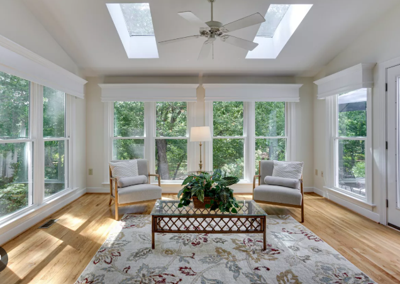

Older houses often have specific floor plans, masonry or timber walls with significant thickness and small rooms - these features can cause indoor air to become warm and stagnant during periods of high temperature. Many residents use mechanical cooling systems because air is not moving from one section of the building to another. Cross ventilation is a functional method that increases indoor comfort - allowing outside air to move through the house - this process is effective at lowering the temperature of trapped air and increasing air movement without high energy consumption.
Understanding Airflow Patterns
Air enters through one opening and exits through another during the process of cross ventilation - this movement is sometimes difficult in older buildings because of how rooms are arranged, windows that do not open or walls that stop the air. People should observe how air travels through a building before they attempt to improve it. Rooms that are on opposite sides of a property are suitable for natural airflow because the air is able to move in a straight line between them.
People may benefit from locating rooms with high temperatures and windows that face strong air currents. Cross ventilation occurs when residents open windows on opposite sides of a structure during cooler evening hours. Physics dictates that air travels from high pressure zones to low pressure zones. Minor adjustments to window usage are sufficient to increase air circulation within older structures.
Improving Window Function
Many older houses contain windows that are hard to move because they are old, covered in paint or have damaged components. Restoration of these windows is a method to increase air movement. If a window is only partially open, the amount of air that enters is small, which reduces the effectiveness of cross ventilation. Homeowners can increase airflow - fixing window tracks, adding new screens and removing items that obstruct the openings.
Air movement is also influenced by the design of the window - Double hung windows are useful because they allow warm air to exit through the top opening while cool air enters through the bottom opening. Homeowners who fix their windows are often able to lower the indoor temperature before they consider other upgrades. Better ventilation is also helpful after a professional central air conditioning installation is finished, as it reduces the need to run the equipment.
Creating Clear Interior Pathways
Airflow is dependent on more than just the exterior openings of a building. The paths inside the house are also important for how air moves between rooms. Older homes are often designed with narrow corridors and heavy doors that stop air movement. Creating clear paths between windows and doors is a method to allow air to travel through the structure.
Leaving interior doors open when the weather is cool is a simple way to increase circulation. Some people replace solid doors with doors that have built in vents. Moving furniture away from windows and halls ensures that air is not blocked. Even the relocation of tall shelves away from the path of the air is helpful for distributing air across different rooms.
Using Fans to Support Ventilation
Fans are tools that are useful for increasing air movement in older homes. Ceiling fans are effective for moving air in large rooms and portable fans are able to push air into specific warm areas. When windows are open, fans are able to make cross ventilation stronger - keeping the air in motion.
Positioning is an important factor for the effectiveness of a fan. A fan that is placed near a window is able to pull air from the outside into the room. Another fan placed at an opposite opening is able to push warm air out of the house - this technique is most effective during the morning and the evening. Some residents speak with technicians during an air conditioning installation service to learn how to combine fans with mechanical systems for better energy efficiency.
Reducing Heat Buildup Indoors
Cross ventilation is more effective when there is less heat trapped inside the building. Older houses are sometimes built with materials that absorb heat, like certain roofing types or dark fabrics. Managing these sources of heat is a way to help the ventilation system work.
Closing the blinds when the sun is at its brightest is a way to prevent rooms from becoming too warm. Using light colored fabrics or window films that reflect light are also ways to lower the temperature. Kitchens and laundry rooms are areas where appliances create heat - using the machines less often during the day is helpful. When the internal temperature is lower, moving air is more effective at cooling the space.
Maintaining Long Term Ventilation Performance
Property owners must maintain older houses regularly to ensure consistent airflow. Accumulations of particles, damaged screens and blocked vents lower the effectiveness of air circulation. We recommend that residents examine windows, attic openings and mechanical fans to confirm that air moves through the building.
Changing daily routines for each season helps sustain air quality. Residents should use windows plus fans to increase air movement during the spring and summer. The objective during the winter is to supply enough outdoor air for a healthy environment while avoiding cold air currents. Older houses are capable of cross ventilation that provides a pleasant indoor climate when owners follow a consistent schedule.
(0) comments
We welcome your comments
Log In
Post a comment as Guest
Keep it Clean. Please avoid obscene, vulgar, lewd, racist or sexually-oriented language.
PLEASE TURN OFF YOUR CAPS LOCK.
Don't Threaten. Threats of harming another person will not be tolerated.
Be Truthful. Don't knowingly lie about anyone or anything.
Be Nice. No racism, sexism or any sort of -ism that is degrading to another person.
Be Proactive. Use the 'Report' link on each comment to let us know of abusive posts.
Share with Us. We'd love to hear eyewitness accounts, the history behind an article.