
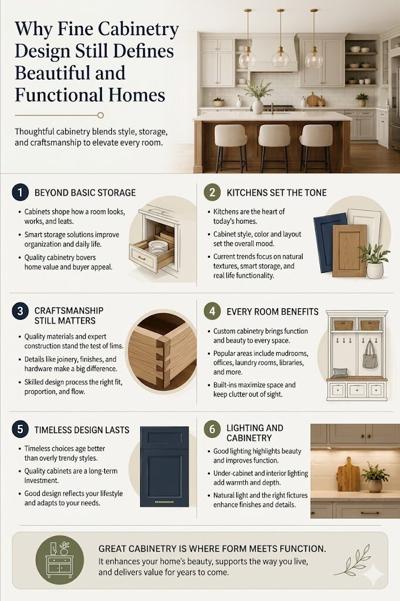

Home design trends change every few years. Paint colors shift, flooring styles evolve, and kitchen layouts continue to adapt to modern life. Cabinetry remains one of the few elements that always matters. Cabinets affect storage, organization, visual balance, and even the overall personality of a room. When cabinetry is designed with care, the entire home feels more polished and intentional.
Many homeowners focus heavily on countertops or appliances during renovations, but cabinetry often determines whether the space actually works day to day. Poor cabinet design creates clutter, awkward storage, and wasted square footage. Strong cabinetry design makes even smaller homes feel efficient and welcoming.
The art of cabinetry combines craftsmanship, planning, and design awareness. It is both practical and decorative, which is why it continues to hold such an important place in home design.
Beyond Basic Storage
Cabinets do much more than hold dishes or cleaning supplies. They shape the structure of a room and guide how people move through it. In kitchens, cabinets frame appliances, define work zones, and establish the visual rhythm of the space. In bathrooms, laundry rooms, mudrooms, and home offices, cabinetry helps maintain organization without sacrificing style.
Well-designed cabinets also improve long-term usability. Deep drawers for cookware, pull-out shelving, hidden waste bins, and vertical dividers can completely change how a kitchen functions. Homeowners often realize after a remodel that storage quality matters more than adding another decorative feature.
Traditional cabinet styles continue to remain popular because they feel timeless. One reason homeowners still gravitate toward inset cabinets is that they create a clean and tailored appearance that works across many different home styles. Their flush-fitting doors require precision craftsmanship, which gives kitchens a refined and balanced look without appearing flashy.
Cabinetry also influences resale appeal. Buyers notice quality storage immediately because it affects daily living in obvious ways. A kitchen with thoughtful cabinetry often feels more expensive and more comfortable, even when the square footage stays the same.
Kitchens Set The Tone
The kitchen has become the center of most modern homes. It is no longer treated as a hidden workspace. Families gather there, guests naturally drift there during parties, and many people now work or study there during the day. Because of that shift, cabinetry has taken on a larger design role.
Cabinet colors, door profiles, and hardware choices help establish the atmosphere of the home. Warm wood finishes can create a welcoming environment, while painted cabinets offer a cleaner and more contemporary appearance. Simple shaker doors remain popular because they bridge traditional and modern styles without feeling overly trendy.
Current modern kitchen cabinet trends also show homeowners leaning toward natural textures, integrated storage, mixed materials, and custom organization features instead of purely decorative upgrades. More people want cabinets that support real life instead of simply looking impressive in photos online.
Open shelving had a major moment for several years, but many homeowners eventually realized it required constant upkeep and styling. Closed cabinetry has returned as the practical favorite because it hides clutter and simplifies daily maintenance. People still want attractive kitchens, but they also want kitchens that feel manageable after a long workday.
Large kitchen islands have also increased the demand for custom cabinetry work. Islands often include microwave drawers, beverage refrigerators, charging stations, and hidden storage compartments. Cabinetmakers now have to balance aesthetics with increasingly complex functionality.
Craftsmanship Still Matters
Mass-produced cabinets can serve a purpose, especially for tighter budgets, but craftsmanship still separates average cabinetry from exceptional cabinetry. Custom and semi-custom cabinets are built with greater attention to detail, stronger materials, and more thoughtful construction methods.
Small details often reveal quality immediately. Soft-close drawers, durable joinery, smooth finishes, and properly aligned doors may sound minor, but they greatly affect the experience of using a space every day. Cheap cabinetry tends to wear down quickly because it is built to meet cost targets rather than durability standards.
Wood selection also plays a major role. Oak, walnut, maple, and white oak each bring different textures and visual warmth to a room. Finishes can either highlight the natural grain or create a more uniform appearance depending on the homeowner’s preference.
Professional cabinet designers also understand scale and proportion. Oversized cabinets can overwhelm a room, while undersized units create visual imbalance. Good cabinetry design accounts for ceiling height, window placement, lighting, and traffic flow. It is part engineering, part interior design, and part craftsmanship.
That balance becomes even more important in older homes where walls may not be perfectly square and layouts require creative solutions. Skilled cabinetmakers can adapt designs to challenging spaces without making the finished product feel awkward or forced.
Every Room Benefits
Cabinetry is no longer limited to kitchens and bathrooms. Homeowners now use custom built-ins throughout the home to improve storage while maintaining a cohesive appearance. Mudrooms, home libraries, entertainment centers, and laundry spaces all benefit from cabinetry designed specifically for the room.
Built-in storage creates a cleaner look because it eliminates the need for bulky standalone furniture. Window benches with hidden compartments, floor-to-ceiling bookshelves, and custom media walls help maximize usable space without making rooms feel crowded.
Home offices have become another major area for cabinetry investment. As remote and hybrid work remain common, homeowners want offices that feel organized and visually appealing during video calls. Custom cabinetry helps conceal cords, printers, paperwork, and office supplies while keeping the room functional.
Laundry rooms have also evolved dramatically. Instead of basic utility spaces, many homeowners now treat them as extensions of the home’s overall design style. Cabinets for detergents, hanging racks, folding stations, and hidden hampers make the room easier to use while keeping it visually tidy.
Even smaller additions can make a major difference. A thoughtfully designed built-in near an entryway can prevent backpacks, shoes, and jackets from taking over the house. Cabinetry often solves problems people have struggled with for years.
Timeless Design Lasts
One reason cabinetry matters so much in home design is that it lasts longer than many other design choices. Paint can change in a weekend. Furniture can be replaced fairly easily. Cabinets are a more permanent investment, which means design decisions carry more weight.
Timeless cabinetry avoids extremes. Neutral finishes, quality materials, and practical layouts tend to age better than aggressively trendy choices. Homeowners who prioritize longevity often end up happier years later because the space still feels functional and attractive.
That does not mean cabinetry should feel boring. Texture, hardware, lighting, and wood grain all create opportunities for personality and warmth. The strongest designs usually balance individuality with restraint.
Cabinetry also reflects how people actually live. Families with young children may prioritize durable finishes and hidden storage. Serious home cooks may want appliance garages and oversized pantry systems. Others may focus more on entertaining spaces or integrated wine storage. Good cabinetry adapts to those priorities instead of forcing homeowners into a one-size-fits-all layout.
Lighting And Cabinetry
Cabinetry and lighting work together more closely than many homeowners realize. Even beautifully crafted cabinets can look flat or heavy under poor lighting conditions. Proper lighting highlights wood grain, paint finishes, hardware details, and architectural lines that might otherwise go unnoticed.
Under-cabinet lighting has become especially popular because it improves both function and atmosphere. It brightens work surfaces for cooking and prep while adding warmth during the evening hours. Glass-front cabinets also benefit from interior lighting because it creates depth and draws attention to decorative pieces without making the room feel overdesigned.
Natural light matters too. Cabinet finishes can appear completely different depending on how much sunlight enters the room throughout the day. Designers often consider window placement before selecting paint colors or wood tones because certain finishes may feel too cold or too dark in lower-light spaces.
Good lighting also helps cabinetry feel more custom and intentional. It gives kitchens, bathrooms, and built-in storage areas a finished appearance that ties the entire room together.
Cabinetry remains one of the most important elements in home design because it blends function, craftsmanship, and visual impact into one feature. Well-designed cabinets improve organization, strengthen the appearance of a room, and support daily life in practical ways. Trends may shift over time, but thoughtful cabinetry continues to define homes that feel both beautiful and livable.


(0) comments
We welcome your comments
Log In
Post a comment as Guest
Keep it Clean. Please avoid obscene, vulgar, lewd, racist or sexually-oriented language.
PLEASE TURN OFF YOUR CAPS LOCK.
Don't Threaten. Threats of harming another person will not be tolerated.
Be Truthful. Don't knowingly lie about anyone or anything.
Be Nice. No racism, sexism or any sort of -ism that is degrading to another person.
Be Proactive. Use the 'Report' link on each comment to let us know of abusive posts.
Share with Us. We'd love to hear eyewitness accounts, the history behind an article.