
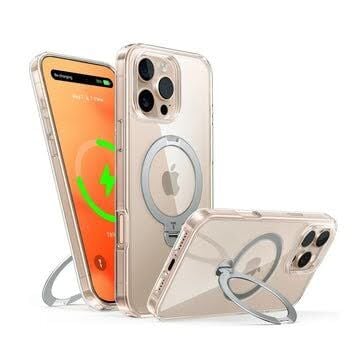
Your iPhone 15 represents a significant investment — one that's perpetually at risk every time it slips from your hand, tumbles off a table, or takes an unexpected dive onto concrete. Studies suggest that most smartphone owners will drop their device at least once within the first year, and with repair costs climbing ever higher, a cracked screen or damaged frame can quickly turn a moment of carelessness into a costly headache. The challenge isn't finding a case — it's finding one that delivers genuine drop protection in a market flooded with flashy designs and vague durability claims. How do you cut through the noise and identify a case that truly shields your device? This guide is built for tech-savvy consumers who want real answers. We'll break down the material science behind impact resistance, explore how compounds like TPU and polycarbonate actually work to absorb and disperse force, and examine the protection standards that separate marketing hype from proven performance. From understanding what makes certain materials superior to following a structured selection process, you'll walk away equipped to choose an iPhone 15 case that genuinely safeguards your investment.
The Science of Durability: Why iPhone 15 Case Materials Matter
When your iPhone 15 hits the ground, the outcome depends almost entirely on what stands between the device and the surface it strikes. This is where material engineering becomes the deciding factor — not brand logos, not color options, not slim-profile marketing. At its core, drop protection is a physics problem: kinetic energy from a fall must go somewhere, and the right case material ensures that energy is absorbed, redirected, or dissipated before it reaches your phone's glass and aluminum body.
Two concepts are central to understanding how cases protect against drops. The first is shock absorption — a material's ability to compress or deform on impact, converting destructive force into heat or distributed pressure. The second is force dispersion, which spreads the concentrated energy of a point impact across a wider surface area, preventing any single spot from bearing the full brunt of a fall. Materials that excel at one or both of these functions form the backbone of genuinely protective cases.
Not all materials perform equally under stress. Some offer excellent flexibility but lack structural rigidity; others resist deformation but can crack under sudden force. The most effective iPhone 15 cases leverage specific polymers and composites — particularly Thermoplastic Polyurethane (TPU) and Polycarbonate (PC) — engineered to balance these competing demands. Understanding how these materials behave under impact conditions is the first step toward making a selection grounded in science rather than speculation. The sections ahead will examine each material in detail, revealing why their combination often delivers the strongest defense against real-world drops.
Decoding Key Materials: TPU and PC Corners for Maximum Protection
Understanding TPU Material: Flexibility and Shock Absorption
Thermoplastic Polyurethane, commonly known as TPU, is a rubber-like polymer that has become the go-to material for protective iPhone 15 cases — and for good reason. Its defining characteristic is elasticity: TPU can stretch and compress under sudden force, then return to its original shape without permanent deformation. This flexibility is precisely what makes it so effective at cushioning drops. When your phone hits the ground, a TPU case acts like a shock absorber, deforming momentarily to slow the transfer of kinetic energy before it reaches the device's frame or screen. Beyond impact performance, TPU offers natural scratch resistance and a slightly textured grip that reduces the likelihood of drops in the first place. It also resists yellowing better than silicone alternatives over time. In most iPhone 15 cases, TPU forms the primary body shell — wrapping around the back and sides to create a continuous, energy-absorbing barrier that handles everyday tumbles with reliable consistency.
The Role of PC Corners in Reinforcing Drop Protection
Polycarbonate, or PC, brings a fundamentally different strength to the table: rigid structural resistance. Unlike TPU's flexibility, PC is a hard, impact-resistant thermoplastic that excels at deflecting force rather than absorbing it through deformation. This rigidity makes it ideal for reinforcing the most vulnerable zones of an iPhone 15 case — the corners. Corner impacts account for the majority of screen cracks and frame damage because they concentrate enormous force on a small contact point. By integrating PC bumpers or inserts at each corner, case manufacturers create reinforced zones that spread and redirect that concentrated energy outward along the case's edges rather than allowing it to channel inward toward the device. This strategic placement means the PC doesn't need to cover the entire case; it simply fortifies the areas where catastrophic failure is most likely. When paired with a TPU body, PC corners create a hybrid defense system where flexibility and rigidity work in tandem — the TPU absorbs the initial shock while the PC prevents structural collapse at critical impact points.
Assessing Drop Protection: Features and Standards to Verify
Marketing language like "ultra-protective" or "military-tough" means nothing without verifiable standards behind it. The most credible benchmark in drop protection is MIL-STD-810G (and its updated variant, MIL-STD-810H), a U.S. military specification that tests equipment survival across a range of environmental stresses, including repeated drops from specific heights onto hard surfaces. When a case manufacturer claims compliance with this standard, it typically means the case has been tested — often by a third-party lab — to withstand drops from at least four feet onto steel or concrete across multiple angles. Look for cases that explicitly cite this certification rather than those that use vague language like "military-grade material," which can refer to the raw substance without any actual drop testing.
Beyond certifications, several physical design features serve as reliable indicators of genuine protection. Raised edges around the screen and camera module are essential — even a millimeter of lip can prevent direct contact with flat surfaces during a face-down fall, saving your display from catastrophic cracks. Air cushion technology, where small pockets of air are engineered into the case's corners, provides an additional energy-absorbing layer that compresses on impact before the rigid PC reinforcement engages. Precise button and port coverage also matters more than most buyers realize; gaps or loose-fitting cutouts create weak points where force can concentrate and transfer directly to the phone's frame.
These features don't operate in isolation. Raised bezels work best when paired with a flexible TPU body that prevents the case from popping off during impact. Air cushion pockets are most effective when backed by rigid PC corner inserts that maintain structural integrity under extreme force. Evaluating a case means looking at how these elements integrate as a system — not just checking boxes on a feature list. When materials and design features reinforce each other, the result is layered protection that handles real-world drops far more reliably than any single feature could achieve alone.
Step-by-Step Guide to Choosing Your iPhone 15 Case
Selecting the right protective case doesn't have to feel like guesswork. By following a structured approach, you can narrow your options quickly and land on a case that matches both your lifestyle and your protection requirements. Here's how to work through the decision methodically.
Start by honestly analyzing your daily risk factors. Someone who works on construction sites or spends time outdoors faces fundamentally different drop scenarios than someone who primarily moves between a desk and a couch. Think about the surfaces your phone is most likely to hit — carpet, hardwood, tile, asphalt — and how frequently you're handling it in situations where a slip is probable, like walking while texting or juggling bags. This risk profile directly determines how much protection you actually need and prevents you from either overspending on unnecessary bulk or underprotecting against real threats.
Next, prioritize the material combination based on that risk assessment. For moderate everyday use, a TPU-bodied case with integrated PC corner reinforcements offers the best balance of slim design and proven impact resistance — brands like TORRAS have built their iPhone 15 case lines around this hybrid approach, combining flexible TPU shells with reinforced PC corners to deliver MIL-STD-810G-certified protection without excessive bulk. If your environment involves frequent drops onto hard surfaces, step up to a full hybrid or rugged case where thicker TPU layers and extended PC structural elements provide additional energy absorption across the entire frame, not just the corners.
Once you've identified your material priorities, verify that any case you're considering carries a certified drop protection rating. Look specifically for MIL-STD-810G or MIL-STD-810H compliance tested by an independent lab — not just referenced in marketing copy. Cases that publish their specific test parameters, such as drop height and number of impacts, give you far more confidence than those hiding behind ambiguous claims.
Then compare case types within your shortlist. Hybrid cases combine a hard outer shell with a soft inner liner and suit most users who want protection without excessive bulk. Rugged cases add features like built-in screen protectors, port covers, and multi-layer construction for extreme durability, though they trade slimness for maximum defense. Align your choice with how much bulk you're willing to carry daily — the best case is one you'll actually keep on your phone.
Finally, invest time reading both expert reviews and real-world user feedback. Professional reviews often test drop performance under controlled conditions, while user reviews reveal how a case holds up over months of daily wear — whether the TPU yellows, whether the PC corners crack after repeated impacts, and whether the fit loosens over time. Prioritize reviews that mention long-term durability rather than just initial impressions, since a case that performs well on day one but degrades within weeks offers false security.
Maintenance Tips for Prolonging Case Durability and Protection
Even the best iPhone 15 case loses its protective edge without basic upkeep. Dirt, grit, and debris trapped between the case and your phone act like fine sandpaper, gradually wearing down interior surfaces and compromising the snug fit that keeps protection consistent. Clean your case every two to three weeks by removing it from the phone, wiping the interior and exterior with a damp microfiber cloth, and letting it dry completely before reassembling. For TPU surfaces, a mild soap solution removes oils that accelerate yellowing and material degradation.
Equally important is routine inspection of high-stress zones. Pay close attention to the PC corner reinforcements — hairline cracks or chips in these areas drastically reduce their ability to deflect impact energy during a fall. Check that raised bezels around the screen and camera haven't worn flush with the glass, as even slight erosion eliminates the protective gap that prevents surface contact. If you notice the case fitting more loosely than when it was new, the TPU has likely stretched beyond its effective tolerance, meaning shock absorption is diminished. As a general rule, replace your case every twelve to eighteen months under normal use, or immediately after any significant drop that visibly deforms the material. A case that has already absorbed a major impact has done its job — continuing to rely on compromised materials puts your iPhone 15 at unnecessary risk.
Make an Informed Choice to Protect Your iPhone 15
Choosing an iPhone 15 case for superior drop protection ultimately comes down to understanding what happens at the material level when your device hits the ground. TPU provides the flexible, energy-absorbing foundation that cushions impacts, while PC corner reinforcements deliver the rigid structural resistance needed to prevent catastrophic damage at the most vulnerable contact points. Together, these materials create a layered defense system that outperforms any single-material design. But materials alone aren't enough — verifying protection through certified standards like MIL-STD-810G, inspecting physical features such as raised bezels and air cushion pockets, and evaluating how all these elements integrate as a cohesive system separates genuinely protective cases from those riding on marketing claims alone. By following a structured selection process — assessing your personal risk profile, prioritizing proven material combinations, demanding certified ratings, and consulting long-term user feedback — you move from guesswork to informed decision-making. Your iPhone 15 is too valuable to protect with assumptions. Armed with the knowledge of how drop protection actually works, you're now equipped to choose a case that doesn't just look protective but performs when it matters most.

(0) comments
We welcome your comments
Log In
Post a comment as Guest
Keep it Clean. Please avoid obscene, vulgar, lewd, racist or sexually-oriented language.
PLEASE TURN OFF YOUR CAPS LOCK.
Don't Threaten. Threats of harming another person will not be tolerated.
Be Truthful. Don't knowingly lie about anyone or anything.
Be Nice. No racism, sexism or any sort of -ism that is degrading to another person.
Be Proactive. Use the 'Report' link on each comment to let us know of abusive posts.
Share with Us. We'd love to hear eyewitness accounts, the history behind an article.