
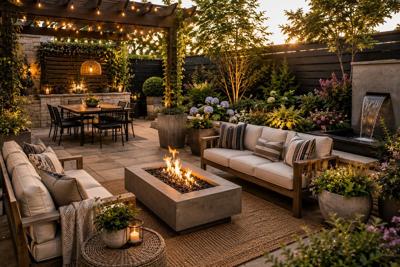

A patio should never feel like the forgotten slab behind the house. Done well, it becomes one of the most valuable rooms of the home, just without the ceiling, the walls, or the mysterious drawer full of batteries that may or may not work.
The best patios make outdoor living feel effortless. They offer a place to dine, lounge, entertain, read, drink coffee, open a bottle of wine, or simply sit outside pretending you are not checking your email. With the right layout, materials, furniture, lighting, and planting, even a modest patio can feel polished and surprisingly luxurious.
These patio design ideas are meant to help homeowners turn an underused outdoor space into something more intentional, comfortable, and beautiful. The goal is not to decorate for show. The goal is to create a patio people actually want to use.
Create a Fire Pit Patio for Cozy Evenings
A fire pit patio is one of the easiest ways to make an outdoor space feel like a destination. It gives people a reason to gather, linger, and stay outside long after dinner. Add comfortable chairs, a few side tables, warm lighting, and suddenly the backyard feels less like “the area behind the house” and more like a private outdoor lounge.
Fire pits work especially well in patios designed for conversation. Arrange seating in a circle or semi-circle so guests can face one another. Choose chairs that are comfortable enough for long evenings, not the kind that look chic for twelve minutes and then make everyone quietly resent the host.
Safety should be part of the design from the beginning. The U.S. Fire Administration recommends using outdoor fireplaces and fire pits at least 10 feet away from the home or anything that can burn. Keep fire features away from low branches, fences, furniture, and covered structures, and always follow local rules and manufacturer instructions.
For homeowners still planning the bones of the space, FINE’s 7 Patio Design Mistakes to Avoid is a helpful companion before anything permanent goes into the ground.
Add a Bench Beneath a Tree
Not every patio needs to be large to feel special. Sometimes the most charming outdoor moment is a simple bench beneath a mature tree. It creates shade, intimacy, and a natural focal point without requiring a full remodel.
This idea works beautifully for smaller yards, side patios, or garden corners. A bench can sit beneath a tree, against a garden wall, or near a pathway. Add a stone or gravel base so the area feels intentional instead of like the bench was temporarily dropped there and never moved.
For a more polished look, frame the bench with planters, low shrubs, lanterns, or flowering perennials. If the tree offers good shade, this can become the best reading spot in the yard. If the tree drops leaves, seeds, fruit, or mysterious sticky things, choose outdoor fabrics and finishes that can be cleaned without a full emotional collapse.
A tree-side bench also connects nicely to a more wildlife-friendly garden. The National Wildlife Federation recommends native blooming trees, shrubs, and wildflowers to help provide nectar and pollen for pollinators. FINE’s When a Garden Feels Alive: How Birds Elevate Outdoor Living offers more inspiration for making the outdoor space feel alive and layered.
Build a Covered Patio for All-Weather Comfort
A covered patio can make outdoor living much more practical. It offers shade during hot afternoons, protection from light rain, and a more defined sense of architecture. It also makes the patio feel like a true extension of the home rather than an exposed outdoor afterthought.
Covered patios can take many forms, including pergolas, pavilions, roof extensions, shade sails, and freestanding structures. The right choice depends on the home’s style, climate, budget, and how the patio will be used. A full roof may be best for outdoor dining, while a pergola can add structure and filtered light without making the space feel enclosed.
If you cook outdoors often, a covered patio can support a more complete entertaining setup. Add a dining table, prep surface, outdoor-rated lighting, and comfortable seating. Just be careful with grills and fire features under covered areas. Ventilation, clearance, materials, and local building codes matter.
For more outdoor dining inspiration, see FINE’s Tips for Creating an Outdoor Dining Area.
Turn a Sunny Patio Into a Garden Lounge
A sunny patio can become one of the most beautiful spaces in the home when it is designed with plants, shade, and seating in mind. Instead of treating the patio and garden as separate areas, let them work together. This creates a softer, more layered outdoor room.
Use large planters, climbing vines, ornamental grasses, citrus trees, herbs, flowering shrubs, or sculptural succulents to bring the garden onto the patio. The key is to group plants intentionally. A few oversized planters usually look more expensive than a dozen small pots scattered around like they are waiting for instructions.
For sunny spaces, choose plants that actually want the light. Tropical plants, Mediterranean herbs, native perennials, and drought-tolerant options may all work depending on the climate. Water needs, heat exposure, and maintenance should guide the plant list, not just whatever looked pretty at the nursery while you were feeling optimistic.
If runoff is an issue near the patio, consider landscaping that manages water more thoughtfully. The U.S. Environmental Protection Agency notes that rain gardens can help reduce or prevent polluted stormwater runoff from roofs, patios, lawns, and driveways. For related inspiration, read FINE’s Eco-Friendly Landscaping Solutions.
Use a Trellis or Pergola for Filtered Light
A trellis or pergola is a smart choice when you want shade without completely blocking the sun. It creates structure, adds height, and makes the patio feel more designed. It also gives climbing plants somewhere to go besides “wildly across everything you own.”
Filtered light can make a patio feel beautiful throughout the day. Morning sun through a pergola feels soft and inviting. Late-afternoon light across a trellis can create gorgeous shadows and a warm glow. It is one of those design details that looks expensive because it changes the atmosphere of the space.
Climbing plants can add romance and privacy, but choose them carefully. Some vines are polite guests. Others behave like they are trying to take the property by force. Match the plant to the structure, climate, and level of maintenance you are willing to handle.
A pergola can also help define an outdoor living zone. Place it over a dining table, lounge area, or garden seating space. Add string lights, outdoor curtains, or lanterns for a more finished look.
Design a Rustic Patio With Better Materials
A rustic patio can be warm, relaxed, and deeply inviting when it is done with restraint. The look works best when natural materials lead the design: wood, stone, terracotta, rattan, linen, gravel, weathered metal, and lots of greenery.
The mistake is confusing rustic with random. A patio filled with mismatched chairs, tired cushions, and one lonely lantern does not feel rustic. It feels like the yard is holding a garage sale. Instead, choose a tight palette and repeat materials so the space feels intentional.
Rustic patios are especially beautiful when they include texture. Think woven chairs, stone pavers, clay planters, climbing vines, and a wood dining table. Add white cushions, soft throws, and warm lighting to keep the space fresh instead of heavy.
If you are upgrading on a budget, focus on the pieces that make the biggest visual difference: seating, planters, lighting, and an outdoor rug. FINE’s Outdoor Living: How Outdoor Rugs Can Enhance Your Patio Experience explains how rugs can define a seating zone and make a patio feel more finished.
Keep a Minimalist Patio Warm, Not Empty
Minimalist patios can be stunning, but they need warmth. Without texture, greenery, and comfortable furniture, minimalism can quickly become “we forgot to finish decorating.” The goal is calm, not clinical.
A minimalist patio works best with clean lines, fewer materials, and a restrained color palette. Choose furniture with simple silhouettes, add one or two sculptural planters, and keep accessories edited. Every item should earn its place, preferably without looking like it came from a furniture showroom where no one has ever laughed.
Texture is what keeps a minimalist patio from feeling cold. Use stone, wood, woven details, linen-like outdoor fabrics, matte ceramic planters, or soft landscape lighting. Greenery also matters. Even a minimalist outdoor space needs plants to soften the architecture.
This style is especially useful for poolside patios, modern homes, and small outdoor spaces where clutter can take over quickly. For a broader backyard design approach, see FINE’s 5 Best Ways to Relax in Your Backyard.
Create a Patio That Fits the Way You Live
The best patio design ideas are not just beautiful. They are useful. A fire pit patio should invite conversation. A covered patio should make outdoor dining easier. A garden lounge should feel calming. A minimalist patio should make the space feel serene, not unfinished.
Before choosing a design, think about how the patio will actually be used. Do you entertain? Cook outside? Read in the shade? Host family dinners? Sit near the pool? Grow plants? Watch the sunset? A patio designed around real life will always feel better than one designed only for a photo.
Good outdoor design is not about adding everything. It is about choosing the right things. With thoughtful seating, shade, lighting, materials, plants, and flow, a patio can become one of the most loved spaces in the home.
And unlike the formal dining room, people may actually use it.

(0) comments
We welcome your comments
Log In
Post a comment as Guest
Keep it Clean. Please avoid obscene, vulgar, lewd, racist or sexually-oriented language.
PLEASE TURN OFF YOUR CAPS LOCK.
Don't Threaten. Threats of harming another person will not be tolerated.
Be Truthful. Don't knowingly lie about anyone or anything.
Be Nice. No racism, sexism or any sort of -ism that is degrading to another person.
Be Proactive. Use the 'Report' link on each comment to let us know of abusive posts.
Share with Us. We'd love to hear eyewitness accounts, the history behind an article.