
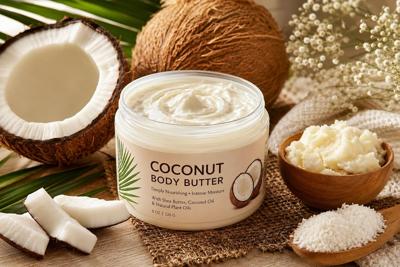

Coconut body butter may sound like a beauty throwback, but that does not mean it has lost its place on a well-styled bathroom shelf. A rich body butter can still be a beautiful thing when skin is dry, dull, tight, or generally behaving like it has been personally offended by weather, shaving, travel, or one overly ambitious hot shower.
What has changed is the way smart shoppers should read the label. In the older beauty era, coconut was often treated like a magic word. Today, the better question is not whether the jar says “natural.” It is whether the formula actually helps support the skin barrier, hold in moisture, and leave skin feeling soft instead of greasy, overly scented, or slightly betrayed.
A good coconut body butter can still absolutely earn its place. It just needs a better formula and a little less marketing theater.
Coconut Body Butter Is Not the Same Thing as Coconut Oil
Here is the distinction that matters: coconut oil is one ingredient, while coconut body butter is a full formula. Coconut oil may be part of the story, but it should not be expected to do all the work by itself.
A body butter is usually made to be richer, denser, and longer-lasting than a lotion. It often combines oils, butters, humectants, and barrier-friendly ingredients to help soften skin and reduce moisture loss. In plain English, it is meant to do more than smell like vacation.
That is why the ingredient list matters more than the coconut story splashed across the front of the jar.
What a Good Coconut Body Butter Should Actually Do
A well-made coconut body butter should help skin feel softer, smoother, and more comfortable, especially in dry zones like arms, legs, elbows, knees, and hands. It should add richness without turning your skin into an oil slick and should leave behind moisture that lasts longer than the time it takes to brush your hair and forget you even applied it.
The best versions also feel balanced. They are rich, but not suffocating. Comforting, but not cloying. Luxurious, but still practical enough to earn a regular place in your routine instead of becoming one more pretty jar with commitment issues.
A good body butter should make skin feel cared for, not coated. That distinction matters more than many brands would like to admit.
Ingredients Worth Looking For
Shea Butter
If coconut gets the attention, shea butter usually does the heavy lifting. Shea is one of the most useful ingredients in a body butter because it helps create that plush, deeply moisturizing texture people actually want from the category.
It is especially helpful in formulas designed for dry or rough skin because it gives the product body, softness, and staying power. A coconut body butter with shea often has a better chance of feeling like a real moisturizer and not just a scented novelty pretending to be skin care.
Glycerin
Glycerin is not glamorous, but it is wildly useful. It is one of those quiet workhorse ingredients that helps draw water into the skin, which is exactly what you want if your body butter is supposed to do more than sit on the surface looking expensive.
If you want a body butter that feels rich and actually performs well, glycerin is a very good sign. It helps bring balance to richer formulas so they feel nourishing rather than merely heavy.
Aloe
Aloe can be a smart addition in a body butter, especially if skin tends to feel easily irritated, over-shaved, sun-stressed, or generally dramatic. It adds a soothing element without overpowering the formula or trying too hard to become the star of the show.
It is not the main reason to buy a body butter, but it is certainly a welcome detail when paired with richer emollients and oils.
Cocoa Butter and Mango Butter
These ingredients bring the kind of richness that makes a body butter feel like a body butter instead of an ambitious lotion. Cocoa butter tends to feel dense and comforting, while mango butter often has a softer, smoother feel that many people love in modern formulas.
When a product combines coconut with other nourishing butters, the result usually feels more complete. It suggests the brand thought beyond scent and gave at least a little attention to performance.
Barrier-Friendly Extras
Modern body care is much more focused on the skin barrier than it used to be, and frankly, that is a welcome improvement. Ingredients like ceramides, niacinamide, fatty acids, and other supportive moisturizers can elevate a body butter from basic to beautifully functional.
Not every coconut body butter needs all of them, but if a formula includes a few ingredients that go beyond the usual butter-and-fragrance routine, that is usually a good sign.
What to Be Careful About
Heavy Fragrance
This is the part many pretty body products hope you will politely ignore. A body butter can smell heavenly and still be a poor fit for sensitive skin. Coconut-scented formulas are often pushed hard into dessert territory, and not every person wants to walk around smelling like a toasted pastry with excellent branding.
If your skin is reactive, dry, or easily annoyed, heavy fragrance can be a problem. The American Academy of Dermatology recommends choosing fragrance-free products when skin is dry or sensitive, especially if irritation is already an issue.
There is nothing luxurious about a body butter that leaves your skin irritated just because it smelled charming in the jar.
“Natural” as a Selling Trick
“Natural” is one of those beauty words that sounds reassuring while doing very little real work. It does not automatically mean safer, gentler, smarter, or more effective. A product can be full of botanical ingredients and still be irritating, overly perfumed, or simply not very good.
The FDA notes that cosmetic allergens, including fragrance ingredients, can trigger reactions in some people. The smarter move is to stop letting the front label do all the introductions. Turn the jar around. Read the ingredient list. That is where the real personality lives.
If a brand is selling tropical fantasy and vague purity claims but the formula is overloaded with irritants or fluff, the problem is not coconut. The problem is the performance.
Too Many Promises
A body butter should moisturize. It may help improve the feel of dry, rough, or dull skin. It can absolutely make your body-care routine feel more elevated. What it should not do is behave like a miracle cure for every skin issue you have ever had plus a few emotional ones.
If a formula claims it will erase every sign of dryness, aging, rough texture, stress, and bad decisions by next Thursday, it may be time to lower the candlelight and ask better questions.
How to Choose the Right One for Your Skin
If your skin is dry, a thicker, richer formula is usually your best bet. Look for a dense texture with ingredients like shea butter, glycerin, aloe, and nourishing plant oils. This is the kind of product that tends to feel especially welcome after bathing, when skin is more ready to soak up moisture and hold onto it.
For more help building a routine around dry skin, see our guide to skin care for people with dry skin.
If your skin is sensitive, simplicity matters. A shorter ingredient list and less fragrance are often better choices than anything trying too hard to feel exotic or indulgent. Sensitive skin rarely enjoys a product having a full identity crisis on the label.
If your skin is acne-prone on the chest or back, you may not want to use a heavy butter everywhere. There is nothing wrong with keeping richer formulas for the arms, legs, feet, and hands while using something lighter on areas that clog more easily. Your body care does not need to be one-size-fits-all just because the jar is pretty.
A Modern Body Butter Worth Knowing
For readers who love the idea of a rich, comforting body butter but want something that feels a little more current, Roots and Leaves Magnesium Body Butter makes sense as a modern example. Its formula includes several of the lush, texture-rich ingredients body butter shoppers tend to love, including shea butter, cocoa butter, mango butter, and plant oils, which gives it a natural place in this conversation.
What makes it a tasteful mention here is that it reflects where body care has gone. It is less about one trendy ingredient carrying the whole story and more about the overall feel of the formula. Richer, more intentional, and a little more grown up. That is a much better direction for this category than simply tossing “coconut” on the label and hoping everyone gets emotionally invested.
It also fits nicely into a modern evening routine for anyone who likes body care to feel comforting, substantial, and just indulgent enough to justify lingering in the bathroom a minute longer.
The Bottom Line
Coconut body butter is not out of style. It just needs a smarter conversation around it. The best one is not the one shouting the loudest about being natural. It is the one with a rich, balanced formula that helps skin feel soft, comfortable, and properly moisturized without turning your daily routine into a fragrance gamble.
That is the real update this topic needed. Less hype. Better ingredients. Better standards. And a much better chance that the jar on your counter is there because it works, not because it smells like a beach vacation and good intentions.
You May Also Enjoy
Glow Naturally: The Beauty Secrets of Himalayan Pink Bath Salt

(0) comments
We welcome your comments
Log In
Post a comment as Guest
Keep it Clean. Please avoid obscene, vulgar, lewd, racist or sexually-oriented language.
PLEASE TURN OFF YOUR CAPS LOCK.
Don't Threaten. Threats of harming another person will not be tolerated.
Be Truthful. Don't knowingly lie about anyone or anything.
Be Nice. No racism, sexism or any sort of -ism that is degrading to another person.
Be Proactive. Use the 'Report' link on each comment to let us know of abusive posts.
Share with Us. We'd love to hear eyewitness accounts, the history behind an article.