
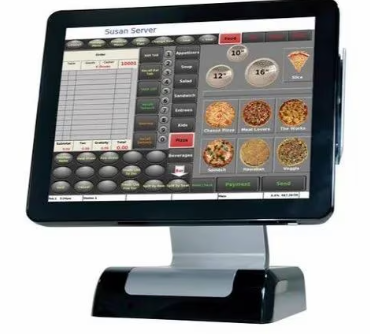
Modern commerce has reached a point where operational clarity is non-negotiable. Every transaction, every record and every data point feeds into how a business grows, protects margins and prepares for scale.
Manual billing once worked well for smaller businesses, but it now falls short of the speed and expectations of modern commerce. Now, electronic Point-of-Sale (PoS) systems have evolved precisely to remove friction across billing, reconciliation and payment acceptance.
Beyond replacing handwritten entries, electronic PoS systems have matured into connected retail engines that link inventory, payments, settlement visibility and customer-facing convenience in a single flow. Look at the seven practical and strategic differences that matter when teams evaluate electronic PoS and manual billing.
7 essential differences that separate electronic PoS systems from manual billing
From how transactions are recorded to how data flows across teams, the two systems operate on fundamentally different principles that shape efficiency and decision-making.
Operational speed and error reduction
Manual billing depends entirely on the person behind the counter. A small distraction can lead to incorrect totals, missed items or calculation mistakes that undermine both customer trust and revenue accuracy. Over time, these micro-errors create significant financial leakage.
An electronic PoS system eliminates manual calculations through automated item selection, tax application, discount logic and instant bill generation. This ensures consistent accuracy across shifts, stores and teams.
Cashiers spend less time working through arithmetic and more time improving customer flow, which becomes particularly valuable during peak hours.
Real-time inventory awareness
Manual billing provides no visibility into stock levels until someone physically audits the shelves. This delay can trigger unavailable items being billed, overordering or missing reorder points that leave frontline teams unprepared.
Electronic PoS systems update inventory instantly each time a product is billed or returned. Teams know what is running low, what is selling fast and what requires immediate replenishment.
This supports better demand planning and reduces the operational risk of stockouts, especially across multi-store formats where operational coordination matters.
Unified payment acceptance and faster settlement tracking
Manual billing usually separates the billing slip from the payment itself. This forces teams to reconcile cash, UPI payments and cards manually at day-end, often leading to mismatches or settlement delays that take time to identify and correct.
Electronic PoS solutions integrate billing with digital payments, including cards, UPI, wallets and EMI. Each transaction is recorded with its payment mode, timestamp and reference, dramatically reducing reconciliation effort.
Merchants gain faster clarity on receivables, settlement timelines and transaction-level details, which helps financial teams close books smoothly and catch anomalies early.
Structured tax compliance and GST-aligned billing
Tax compliance becomes complicated when invoices are handwritten or generated without a structured format. Missing fields, incorrect GST calculations or varying invoice formats introduce compliance risk that can escalate during audits.
An electronic PoS automatically applies the correct GST slabs. It also generates compliant invoices with required details such as HSN codes, tax breakdowns and digital bill copies.
Teams no longer worry about inconsistent formats or last-minute corrections. The system maintains a clean digital trail, supporting audit readiness and reducing the administrative load on finance teams.
Centralised reporting and multi-store visibility
Manual billing forces decision-makers to rely on daily paper summaries or verbal updates. When stores operate across several locations, gathering performance insights becomes slow and often inaccurate. This limits the ability to make timely decisions.
Electronic PoS systems unify store reporting into a single dashboard. You can monitor revenue, payment modes, best-selling items, peak hours and operational trends in real time.
This central visibility enhances planning, resource allocation and strategic intervention. Even small pattern shifts become visible early, enabling better forecasting and stronger retail agility.
Better customer experience through digital receipts and faster queues
Manual billing often means slower queues, handwriting misinterpretations and paper slips that customers can easily lose. For modern shoppers used to fast checkouts, manual processes create unnecessary waits.
Electronic PoS systems speed up checkout with faster item scanning, digital receipts and ready integrations that support smoother customer interactions. Whether customers prefer printed receipts, SMS copies or email bills, the system manages each format instantly. This reduces queue time and creates a more premium in-store checkout experience.
Scalability, security and reduced data loss risk
Scaling a business dependent on manual billing introduces risk. Paper invoices can be misplaced, damaged or incorrectly stored. Data backups do not exist, and historical insights are scattered across files with no unified structure.
Electronic PoS systems store data securely in the cloud with role-based access, digital backups and reliable retrieval. As the business grows, new counters and stores can be onboarded with the same standardised workflows.
Training also becomes easier because merchants work with consistent screens, billing flows and menus across the organisation.
Choosing the system that supports future-ready growth
The difference between electronic PoS and manual billing stretches far beyond the checkout counter. One relies on human effort and memory, the other builds a dependable digital structure around every transaction.
For teams working to improve accuracy, streamline reconciliation and unlock real-time visibility, the electronic approach creates measurable impact across operations, finance and customer experience.
Digital billing has become a strategic foundation for businesses preparing to scale confidently across locations, formats and channels. If your organisation is evaluating modern payment infrastructure, providers such as Pine Labs deliver a dependable, future-ready foundation that supports growth across every touchpoint.

(0) comments
We welcome your comments
Log In
Post a comment as Guest
Keep it Clean. Please avoid obscene, vulgar, lewd, racist or sexually-oriented language.
PLEASE TURN OFF YOUR CAPS LOCK.
Don't Threaten. Threats of harming another person will not be tolerated.
Be Truthful. Don't knowingly lie about anyone or anything.
Be Nice. No racism, sexism or any sort of -ism that is degrading to another person.
Be Proactive. Use the 'Report' link on each comment to let us know of abusive posts.
Share with Us. We'd love to hear eyewitness accounts, the history behind an article.