
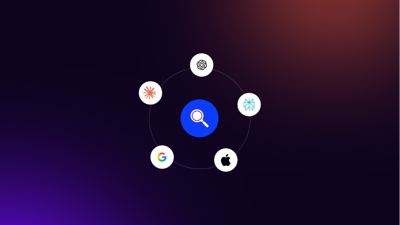

Search used to feel wonderfully straightforward. You typed in a question, scanned a page of links, clicked a few promising options, and decided for yourself which source seemed smartest. That model has not disappeared, but it has clearly evolved. Increasingly, people are getting direct, conversational answers from AI-powered tools before they ever reach the traditional list of blue links.
That shift matters because visibility online is no longer just about where a website ranks. It is also about whether a brand, publication, expert, or business is being pulled into the answer itself. In other words, the internet is moving from a world of search results to a world of synthesized responses, and that changes the game for everyone trying to be found.
Why search feels different now
Google’s own guidance now addresses how websites appear in AI features such as AI Overviews and AI Mode, which is a fairly direct sign that this is no longer a fringe experiment. Google has also said that AI Overviews have increased usage for the types of queries where they appear, while encouraging site owners to focus on content that is helpful, reliable, and created for people first rather than engineered purely for rankings. :contentReference[oaicite:1]{index=1}
OpenAI has made a similar push with ChatGPT search, which is designed to give fast answers with links to web sources inside a conversational interface. That means users are increasingly trained to expect a neatly packaged answer first and a deeper click journey second. The habit of “search, scan, click, compare” is being replaced by “ask, read, refine, follow up.” :contentReference[oaicite:2]{index=2}
What brands are really losing when visibility slips
For years, digital visibility was measured in familiar ways: rankings, click-throughs, and traffic volume. Those still matter, but they no longer tell the whole story. A business can rank reasonably well and still feel less visible if fewer people are visiting the site because an AI system has already summarized the answer above it.
That creates a new kind of anxiety for brands. They are not only asking whether they rank. They are asking whether they are mentioned, cited, trusted, and surfaced inside the response layer itself. That is a subtler kind of competition, and in many ways a more consequential one. A brand that is absent from the answer may be technically indexed and still feel invisible.
Visibility is becoming a trust signal
One of the more interesting consequences of AI search is that presence starts to look a lot like credibility. When a brand, publication, or expert source appears repeatedly in strong contextual positions, it can shape perception before a user ever visits a page. Being included in the answer often feels, to the user, like a quiet endorsement.
That is why this shift is not just about traffic loss or gain. It is about reputation. Brands increasingly need to be understandable to machines and persuasive to humans at the same time. The strongest digital presence now comes from content that is clear, well-structured, useful, and authoritative enough to be referenced rather than ignored.
What smart companies are doing differently
The smartest businesses are not treating AI search as some completely separate universe. They are refining the basics that should have mattered all along: better source quality, clearer topical authority, stronger original insight, cleaner structure, and more consistent signals of expertise. Google’s own documentation continues to emphasize people-first content and crawlable, descriptive pages rather than gimmicks designed to manipulate visibility. :contentReference[oaicite:3]{index=3}
That may sound less dramatic than many AI-era sales pitches, but it is probably the point. The web is rewarding substance again, just through new interfaces. A vague article padded with generic phrasing does not become more valuable because it contains AI buzzwords. If anything, thin content looks even weaker when the answer engines have more ways to compare sources quickly.
Why this matters for publishers and digital magazines
For publishers, this moment is especially important. A strong publication is no longer competing only for a click. It is competing to be the source that gets remembered, cited, surfaced, and trusted when AI tools assemble an answer. That makes editorial quality more valuable, not less.
For magazines like FINE, the opportunity is not to chase robotic copy or flatten every story into keyword bait. It is to publish the kind of clear, well-reported, distinctive material that gives both readers and machines a reason to pay attention. In a noisier digital environment, recognizable point of view becomes an asset. So does authority. So does clean structure. A publication that consistently explains trends well may earn fewer accidental clicks and more meaningful visibility.
The future of discovery will feel more conversational
As AI tools become more deeply woven into search, discovery will likely keep moving toward dialogue. Users will ask longer questions, refine them in real time, and expect answers that synthesize context instead of forcing them to assemble it all themselves. Google’s AI search updates and OpenAI’s search features both point in that direction. :contentReference[oaicite:4]{index=4}
That does not mean websites stop mattering. It means their role changes. Sites become the evidence behind the answer, the source of nuance, the place users go when they want depth, confidence, or a stronger sense of who is worth trusting. The winners in that environment will not be the loudest publishers or the most aggressively optimized brands. They will be the clearest, most useful, and most consistently credible.
Final thought
AI is not killing search so much as rearranging it. The old metrics still matter, but they are no longer sufficient on their own. Visibility now lives in more places: rankings, citations, summaries, mentions, brand recall, and the quality of the source behind the answer.
For businesses, brands, and publishers alike, that means the question is no longer just how to rank. It is how to remain visible and worth referencing in a digital world that increasingly wants to answer first and send traffic second. That may sound disruptive, but it is also clarifying. The internet still rewards usefulness. It is just getting choosier about how it finds it.


(0) comments
We welcome your comments
Log In
Post a comment as Guest
Keep it Clean. Please avoid obscene, vulgar, lewd, racist or sexually-oriented language.
PLEASE TURN OFF YOUR CAPS LOCK.
Don't Threaten. Threats of harming another person will not be tolerated.
Be Truthful. Don't knowingly lie about anyone or anything.
Be Nice. No racism, sexism or any sort of -ism that is degrading to another person.
Be Proactive. Use the 'Report' link on each comment to let us know of abusive posts.
Share with Us. We'd love to hear eyewitness accounts, the history behind an article.