
Productivity apps compete by cramming in more features. Extra dashboards, integration with twenty other services, and detailed time analytics nobody actually checks. Every Wisey review highlights the same thing: it went the other direction—stripping productivity down to a small set of essential tools: tracking habits, running a focus timer, blocking distracting apps, and serving up short video lessons.
People are getting tired of productivity systems that require a manual to understand. This app bets on a simpler idea: doing a few things every day beats setting up elaborate systems you'll abandon in two weeks.
The core tools
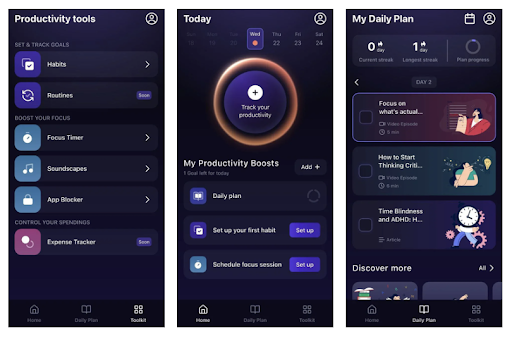
Habit tracking functions as a digital checklist. Users add targets—drinking water, exercising daily, reading before bed—and check them off each day. Visual feedback creates progress visibility without elaborate dashboards.
The focus timer implements 25 minutes of work and 5 minutes of rest by default. Both intervals adjust through simple sliders. Users extend work sessions, lengthen breaks, and set round numbers. A circular timer displays remaining time.
Five soundscape options provide background audio: deep focus for intense tasks, study mode for retention, relax for recovery, light work for easier activities, and noise for concentration.
Why simplification works — Wisey’s design logic
Wisey's simplified approach avoids a common problem: productivity tools becoming another task to manage. Setting up complex systems, maintaining workflows, and analyzing reports—these consume time meant for actual work.
The stripped-down design means less setup friction. Users begin tracking habits immediately without configuring preferences or learning software terminology. The focus timer starts with one tap. Video lessons play with one click.
Cross-platform availability—iOS, Android, web—keeps Wisey accessible regardless of device. Subscription pricing varies by region, with all tiers including habit plans, progress tracking, exercises, video lessons, and web library access.
The doing-less philosophy — and why every Wisey review mentions it
Wisey operates on a straightforward premise: showing up daily with simple actions produces better results than sporadic attempts at running complex systems. You track habits. You use a basic timer. You don't wrestle with yourself to ignore Instagram—you just make Instagram temporarily unavailable.
This clicks particularly well if you've ever set up an intricate productivity system, used it for three days, then felt guilty about the abandoned dashboards collecting digital dust. Wisey skips that cycle entirely. Less to configure means less to maintain, which means less to abandon when motivation dips.
Five-minute video lessons match this logic. They're short enough that "I don't have time" stops being an excuse. Watch one while your coffee brews. Over weeks, that adds up to actual knowledge without ever blocking out "learning time" on your calendar.
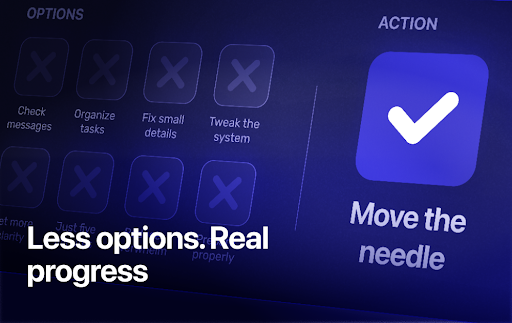
The whole structure suggests something counterintuitive: sometimes you get more done by aggressively cutting options. Make fewer decisions. Spend less time tweaking settings. Keep more mental bandwidth for actual work. That's the core takeaway from any Wisey review: "doing less" means dropping everything except what demonstrably moves things forward.


(0) comments
We welcome your comments
Log In
Post a comment as Guest
Keep it Clean. Please avoid obscene, vulgar, lewd, racist or sexually-oriented language.
PLEASE TURN OFF YOUR CAPS LOCK.
Don't Threaten. Threats of harming another person will not be tolerated.
Be Truthful. Don't knowingly lie about anyone or anything.
Be Nice. No racism, sexism or any sort of -ism that is degrading to another person.
Be Proactive. Use the 'Report' link on each comment to let us know of abusive posts.
Share with Us. We'd love to hear eyewitness accounts, the history behind an article.