

You’re four lengths into the Saturday mow when the first fat raindrop lands on your forearm. Seconds later, you’re sprinting the mower back to the shed, leaving neat stripes across one side of the lawn and shaggy, uncut grass across the other.
Between the cutting, the watering, and the feeding, your lawn claims a generous slice of every weekend. And in a country where the weather can turn three times before lunch, even the best-laid plans end up rained off.
The good news is you can now hand each of these chores to an automated system. Here’s how to set it up, so you can enjoy your weekends again.
Automatic Mowing on a Set Schedule
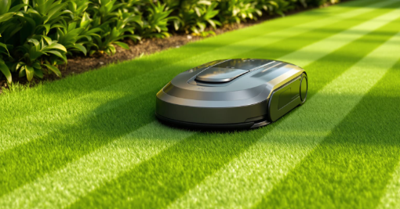
A robotic mower is the easiest place to start, since mowing is the job you repeat most often between April and October. You’ll map your garden once, either by laying a boundary wire around the edges of the lawn or by walking a wire-free GPS model along the perimeter.
After that, you can choose the cutting days and hours in an app, and the lawn will be trimmed a few millimetres at a time on that schedule. Light, frequent cuts encourage the grass to produce side shoots, which gives you a thicker, denser lawn.
And because the clippings are so fine, they fall back into the grass as a natural mulch and return nitrogen to the soil. Your trips to the compost heap with an overflowing grass box will become a distant memory.
But before you finalise the schedule, make sure to restrict mowing to daylight hours. Hedgehogs forage across British gardens after dusk, and a mower running at night can cause them serious injury.
Watering Timed to Soil Moisture
With the cutting sorted, you can give up your evening post at the edge of the lawn, hose in one hand and a cooling cup of tea in the other.
Soil moisture sensors placed at root depth will give you a live reading of how much water the ground holds. You’ll set a threshold in the app, and the irrigation will only switch on when the reading drops below it.
Overwatering encourages shallow roots and soggy patches, so this one setting will keep your lawn healthy and your water bill down.
Schedule your cycles for early morning, too, as the grass will have the whole day to dry and fungal diseases like fusarium patch will struggle to take hold.
Hosepipe bans have become a regular feature of British summers, especially across the South East.
But these bans cover mains water only, so drip lines fed by a water butt and a small pump will keep your lawn going through a dry spell. Check your water company’s guidance before the next heatwave to be sure.
Feeding Delivered Through the Irrigation Lines
Once your watering runs on autopilot, you can send the lawn’s feed through the same pipes. A dosing unit fitted to the irrigation line will help you meter liquid fertiliser into the water in small, regular measures.
This steady supply produces even growth across your whole plot. A heavy dose of granules from a wobbly spreader, on the other hand, can scorch neat yellow stripes into the ground wherever your passes overlapped.
You’ll also need to match the feed to the calendar for the best results. A nitrogen-rich blend in spring will fuel fresh green growth, while a potassium-heavy formula in autumn will toughen the roots ahead of winter.
Weather-Based Adjustments to Every Task
In Britain, you can see sunshine, drizzle, and hail before you’ve finished breakfast. Linking your controller to a rain sensor or a local forecast will help you skip a watering cycle whenever a downpour is on its way.
You can also set the mower to pause when the ground is saturated. Clay soil is common across much of England, and wheels rolling over soft clay will leave ruts you’ll be staring at until midsummer.
Some robotic mowers offer growth-sensing schedules, too. Cutting time is increased automatically during the May growth surge and reduced as the grass slows down in autumn.
And with that, the mornings spent checking three different weather apps before deciding whether the lawn needs attention will be gone.
One App to Control Every Area
Most smart irrigation controllers and robotic mowers come with a phone app. You can use it to divide the lawn into zones, each with its own watering and mowing settings.
For example, if your patio sits in full sun all afternoon, you can give the grass beside it a longer watering cycle than the shady strip along the fence. And if the children play football in the back garden, you can schedule more frequent cuts there than on the front lawn.
Once each area is set, you can adjust it from anywhere with a phone signal. So, if a heatwave hits Britain while you’re on a sun lounger abroad in August, you can boost the watering before you’ve finished your first ice cream.
Alerts When Something Needs Your Attention
You’ll still want to keep a watchful eye on even a well-tuned setup, and phone alerts will help you do it.
With flow sensors on the irrigation line, you’ll receive a warning about a split pipe or a stuck valve before your water bill has a chance to climb.
You’ll get similar updates about the mower, too, whether it’s wedged beneath the garden bench, running low on charge, or being carried off by someone with no business touching it.
For extra peace of mind, switch on the PIN lock and GPS tracking; both will make a stolen mower far less tempting to keep.
A Healthy Lawn Underneath the Automation
You can set the mower and sprinklers to run like clockwork, but if the ground is in poor shape, you’ll simply be mowing and watering the same patchy lawn every week.
And however carefully you tune the schedule, a mossy, waterlogged patch of grass will stay exactly as it is.
Compacted clay leaves rainwater pooling on the surface long after a shower, so very little of it reaches the roots. And a thick layer of thatch traps moisture at ground level, giving moss the damp, sheltered spot it needs to spread across your lawn.
Scarifying, hollow-tine aeration, and overseeding are still hands-on jobs requiring specialist equipment and a trained eye. Spring and autumn are the best windows for this work.
Specialist teams offering professional lawn care systems will combine these treatments with a seasonal plan tailored to your garden. And once the foundation is healthy, you’ll find your automated schedule far easier to manage.
That frantic dash to the shed, with a half-striped lawn behind you, now belongs firmly to the past. So pour yourself a cold drink, pull up a garden chair, and make a sun lounger the only thing you drag across the lawn next summer.

(0) comments
We welcome your comments
Log In
Post a comment as Guest
Keep it Clean. Please avoid obscene, vulgar, lewd, racist or sexually-oriented language.
PLEASE TURN OFF YOUR CAPS LOCK.
Don't Threaten. Threats of harming another person will not be tolerated.
Be Truthful. Don't knowingly lie about anyone or anything.
Be Nice. No racism, sexism or any sort of -ism that is degrading to another person.
Be Proactive. Use the 'Report' link on each comment to let us know of abusive posts.
Share with Us. We'd love to hear eyewitness accounts, the history behind an article.