
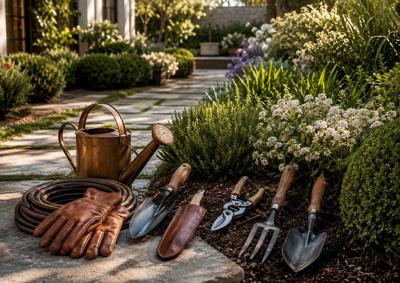
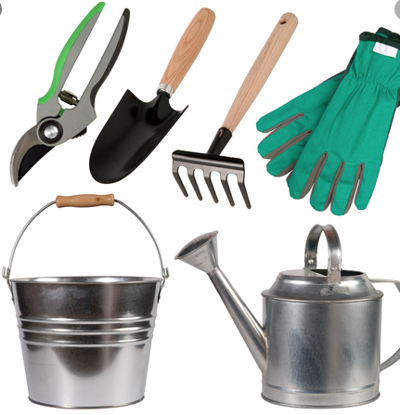
A beautiful garden may look effortless, but anyone who has spent an afternoon wrestling with compacted soil or trimming an unruly shrub knows better. Healthy, polished outdoor spaces require regular attention—and the right tools can make the difference between a satisfying morning in the garden and a weekend spent wondering why your back has declared war.
The good news is that you do not need every gadget displayed in the garden center. The most useful essential garden tools are the ones suited to your property, plants, physical comfort, and maintenance routine. A small container garden may require only a few dependable hand tools, while a landscaped yard with mature trees, planting beds, and lawn areas will need a broader collection.
Before filling a shed with equipment, start with these practical tools for planting, pruning, watering, weeding, and maintaining a beautiful outdoor space.
Choose Tools for the Garden You Actually Have
Garden tools should solve real problems rather than simply occupy wall space. Consider the size of your property, the type of soil, the plants you grow, and the tasks you perform most often.
A homeowner tending raised vegetable beds will rely heavily on a hand trowel, soil knife, garden fork, and watering wand. Someone maintaining mature shrubs may place greater value on quality pruners, loppers, and a pruning saw. A lawn mower is essential for a property with grass, but completely unnecessary in a drought-conscious landscape designed with gravel, native plants, and ground covers.
It is generally better to buy a smaller collection of durable, comfortable tools than a large assortment of inexpensive ones that bend, rust, or make every task more difficult.
Gardening Gloves That Protect Your Hands
A dependable pair of gloves belongs at the top of any list of essential garden tools. Gloves protect the hands from splinters, rough soil, blisters, thorns, insects, and irritating plant material.
Lightweight, breathable gloves work well for planting, weeding, and routine maintenance. Leather or reinforced gloves provide greater protection when handling thorny roses, branches, stones, or lumber. The correct size matters. Gloves that are too large reduce control, while tight gloves can restrict movement and become uncomfortable during longer projects.
Many gardeners benefit from owning two pairs: a flexible everyday pair and a heavier pair for demanding jobs.
A Hand Trowel and Soil Knife for Detailed Work
A strong hand trowel is useful for planting annuals, moving seedlings, digging small holes, loosening soil, and filling containers. Look for a solid connection between the blade and handle because weak joints are often the first part to bend or break.
A hori-hori, sometimes called a soil knife, can handle many of the same jobs while adding a serrated edge for cutting roots, opening bags of soil, dividing perennials, and removing stubborn weeds. Some blades include depth measurements that help when planting bulbs.
For gardeners with limited storage, a good soil knife may be one of the most versatile tools available. It is sharp, however, and should be stored in a sheath and kept away from children.
A Spade, Shovel, and Garden Fork for Soil Preparation
Although the terms are often used interchangeably, spades and shovels perform different jobs. A spade usually has a flatter blade that is helpful for edging beds, cutting into sod, dividing plants, and creating clean planting lines. A shovel has a curved or pointed blade designed for digging and moving loose material such as soil, compost, gravel, or mulch.
A garden fork loosens compacted ground, turns compost, aerates soil, and lifts established plants with less damage to their roots. Forks can be particularly effective in dense soil where a shovel alone becomes frustrating.
Choose a handle length that allows you to work without excessive bending. Fiberglass and metal handles are durable, while well-made wooden handles can feel comfortable and absorb some vibration. The best choice is the one that feels balanced when you lift it.
The Right Rake for Every Surface
One rake cannot perform every job particularly well. A rigid garden rake, sometimes called a bow rake, helps break up soil, level planting beds, distribute mulch, and remove stones. Its short metal tines are designed for heavier work.
A leaf rake has flexible tines and a wider head for gathering leaves, grass clippings, and lighter debris without damaging the lawn. Adjustable rakes can be useful in narrow beds and around shrubs where a full-width rake becomes awkward.
Homeowners with both landscaped beds and deciduous trees will generally find room for both styles among their essential garden tools.
Pruners, Loppers, and Saws for Healthier Plants
Pruning tools should be chosen according to the thickness and condition of the growth being cut. Bypass pruners use two blades that pass one another like scissors, creating a clean cut that works well on live stems, flowers, roses, and smaller branches.
Loppers have longer handles that provide additional reach and leverage for growth too thick for hand pruners. A pruning saw is intended for branches that cannot be cut safely or cleanly with loppers.
Avoid forcing a small tool through an oversized branch. Doing so can damage the plant, dull or bend the blade, and increase the possibility of injury. Follow the manufacturer’s stated cutting capacity and hire a qualified tree professional for high, heavy, unstable, or power-line-adjacent branches.
Pruners are also highly personal tools. Test the grip when possible and consider handle width, hand size, locking position, tool weight, and whether the model is designed for right- or left-handed use.
A Hoe or Stand-Up Weeder for Routine Control
Weeds are far easier to manage when they are small. A hoe allows gardeners to disturb young weeds at the soil surface while standing upright, reducing the amount of kneeling and hand-pulling required.
Different designs suit different conditions. A Dutch or push hoe moves through loose soil just beneath the surface, while a traditional draw hoe can cultivate soil and form planting rows. A narrow stand-up weeder may be more useful in established beds where plants are closely spaced.
The right tool depends on soil texture and garden layout. In tightly planted areas, careful hand-weeding may still be safer than swinging a wide blade near desirable roots.
Watering Tools That Put Water in the Right Place
A lightweight, kink-resistant hose with secure fittings is more pleasant to use than a heavy hose that twists itself into modern sculpture every time it leaves the reel. Add an adjustable nozzle for general cleaning and a watering wand for reaching containers or directing a softer flow around plant roots.
For larger beds, drip irrigation or soaker hoses can deliver water gradually near the root zone. This may reduce runoff and help keep unnecessary moisture away from foliage. Watering needs vary according to plant type, season, soil, exposure, and local restrictions, so irrigation should be adjusted rather than left on the same schedule throughout the year.
A hose reel or wall-mounted holder keeps walkways clear and protects the hose from unnecessary sun exposure, kinks, and vehicle damage.
A Wheelbarrow or Garden Cart for Heavy Work
Soil, mulch, plants, stones, compost, and garden waste become considerably less charming when they have to be carried one armful at a time.
A traditional single-wheel wheelbarrow is maneuverable on narrow paths but requires more balance. A two- or four-wheel garden cart is usually more stable and may be easier for moving heavy material across level ground.
Check the handle height, tire type, load capacity, turning radius, and storage requirements before choosing. A large cart is not especially helpful if it cannot fit through the garden gate or into the shed.
Lawn and Edging Tools for Properties With Grass
For lawns, select a mower that matches the size and terrain of the property. A compact electric mower may be sufficient for a modest, level lawn, while larger or sloped areas can require more power and traction.
An edging tool creates a crisp transition between grass, planting beds, paths, and driveways. Manual half-moon edgers offer control for smaller spaces, while powered edgers can save time on properties with long borders.
These tools should be treated as optional rather than universal. Many attractive landscapes replace traditional turf with native planting, permeable hardscape, meadow-style areas, or low-water ground covers.
Comfort-Focused Tools That Reduce Strain
Comfort is not an indulgence when garden work involves repetitive movement. Ergonomically designed hand tools can reduce awkward wrist positions, while padded handles and appropriately sized grips may improve control.
A kneeling pad protects the knees from hard or damp ground. A garden kneeler with handles can also provide support when standing back up. Telescoping handles extend reach, and lightweight tools can make longer tasks more manageable.
North Carolina State Extension notes that ergonomic trowels, cultivators, and weeders may be designed or adapted to reduce stress on the joints. Gardeners experiencing persistent pain, reduced grip strength, or mobility concerns should choose tools around their physical needs rather than assuming discomfort is simply part of the hobby.
How to Choose Garden Tools That Last
The most dependable essential garden tools feel sturdy without being unnecessarily heavy. Examine the connection between the working head and handle, test moving parts, and avoid blades that flex too easily.
Useful quality indicators include replaceable blades, springs, and handles; rust-resistant finishes; securely fastened components; comfortable grips; and readily available replacement parts. A warranty can add value, but repairable construction may matter even more over time.
Storage should also influence the purchase. Long-handled tools need enough vertical or wall space, while battery-powered equipment requires a dry location and proper charging practices. Buying a tool that cannot be safely stored is an excellent way to turn a useful item into permanent patio décor.
Clean, Sharpen, and Store Tools Properly
Even well-made tools deteriorate when they are put away wet and covered in soil. Remove dirt and plant residue after use, allow tools to dry, and store them in a protected location. Cutting blades should be kept sharp because dull tools require more force and can leave ragged cuts.
The University of California Master Gardeners recommends cleaning shovels, forks, hoes, pruners, saws, and other tools after use. The University of Minnesota Extension also advises removing visible debris before disinfecting equipment. Sanitizing pruning tools is particularly important when moving between plants that may be diseased.
Inspect wooden handles for cracks or splinters, tighten loose hardware, lubricate moving joints when appropriate, and replace damaged blades rather than continuing to force them through plants. Garden tools do not need to look pristine, but they should remain clean, safe, and capable of doing their jobs.
A Better Garden Begins With a Smarter Tool Collection
A polished landscape does not require an overflowing shed. Start with gloves, a trowel or soil knife, a suitable digging tool, a rake, pruners, a watering system, and a practical way to move heavy materials. Add specialized equipment only when the garden gives you a reason.
The best essential garden tools are comfortable enough to use regularly, durable enough to maintain, and properly matched to the work. With those basics in place, caring for an outdoor space becomes faster, safer, and considerably more enjoyable—which leaves more time to sit in the garden and admire all that suspiciously effortless beauty.


(0) comments
We welcome your comments
Log In
Post a comment as Guest
Keep it Clean. Please avoid obscene, vulgar, lewd, racist or sexually-oriented language.
PLEASE TURN OFF YOUR CAPS LOCK.
Don't Threaten. Threats of harming another person will not be tolerated.
Be Truthful. Don't knowingly lie about anyone or anything.
Be Nice. No racism, sexism or any sort of -ism that is degrading to another person.
Be Proactive. Use the 'Report' link on each comment to let us know of abusive posts.
Share with Us. We'd love to hear eyewitness accounts, the history behind an article.