
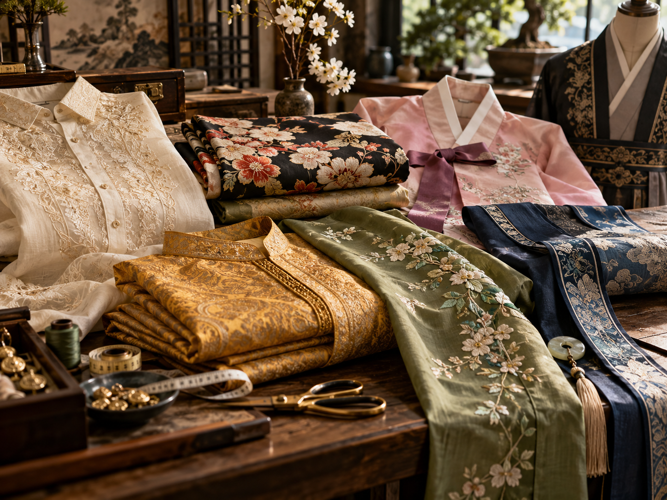

There is something special about the clothes we choose for life's most memorable occasions. A wedding, a family celebration, or a cultural festival often calls for something beyond the ordinary. Across Asia, these moments are frequently marked by garments that have been worn for generations, each carrying its own history, craftsmanship, and sense of occasion. From the flowing robes of China to the beautifully embroidered formalwear of the Philippines, traditional Asian menswear offers a fascinating perspective on what it means to dress elegantly.
While modern fashion often focuses on the newest trends, traditional clothing tells a different story. Its beauty lies not only in the fabrics and silhouettes but also in the cultural traditions that have shaped its design. These garments have evolved alongside the people who wear them, adapting to changing lifestyles without completely abandoning their origins. And although some are now reserved primarily for celebrations, their influence continues to reach contemporary menswear, reminding us that good style isn't always about following fashion. Sometimes, it is about knowing where you come from.
When Clothing Becomes Part of a Celebration
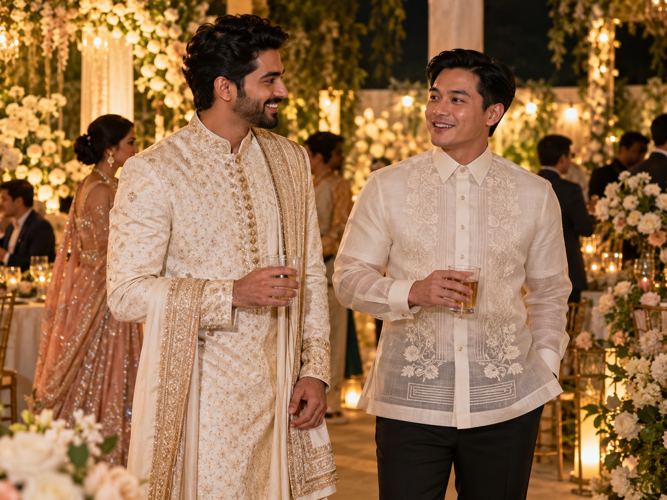
In India, few garments capture the spirit of celebration quite like the kurta pajama. Walk into a traditional wedding or a festive family gathering, and you'll notice how naturally the outfit fits the occasion. A simple cotton kurta might be perfectly suited for an afternoon celebration, while silk, brocade, and intricate embroidery can turn the same familiar silhouette into something suitable for an elaborate evening wedding. The beauty of the kurta pajama lies in that versatility. It can be understated or extravagant, traditional or contemporary, without losing the relaxed elegance that makes it so appealing.
The outfit itself is deceptively simple. A long tunic, usually falling somewhere around the knees, is paired with comfortable trousers that may be loose or more closely fitted. But the details make all the difference. Delicate embroidery around the collar, beautifully finished buttons, rich fabric textures, or a carefully chosen Nehru jacket can transform the entire appearance. Traditional footwear such as mojari or jutti shoes adds another layer of character. Indian designers continue to reinterpret the kurta through modern cuts, contemporary colors, and experimental fabrics, making it just as relevant to younger generations as it has been to those before them. This balance between comfort and personal expression also echoes the philosophy behind effortless style and choosing clothes that genuinely suit your life.
Travel to the Philippines, and formal dressing takes a remarkably different form. Here, the Barong Tagalog offers an elegant alternative to the conventional suit. Often worn for weddings, official ceremonies, and important celebrations, this beautifully embroidered shirt is traditionally worn untucked over an undershirt and paired with tailored trousers. Unlike the heavier fabrics associated with Western formalwear, the barong is lightweight, breathable, and particularly suited to the country's tropical climate. Its refined appearance comes from the quality of its fabric and embroidery rather than elaborate construction.

Some of the finest traditional barongs are woven from piña, a delicate textile made using fibers extracted from pineapple leaves. Producing this fabric requires considerable skill, and the finished garment often features intricate floral or geometric embroidery. The craftsmanship can be extraordinary, turning a seemingly simple shirt into something worthy of a special occasion. The Philippine Folklife Museum Foundation explores the garment's history, traditional textiles, and cultural significance. What makes the Barong Tagalog so distinctive is its ability to look formal without appearing overly structured. It demonstrates that true sophistication can be wonderfully light, comfortable, and deeply connected to local traditions.
The Quiet Beauty of East Asian Elegance
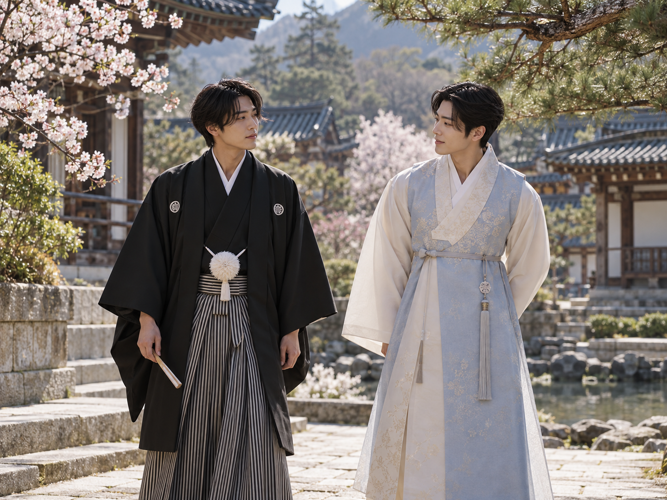
Not every culture approaches elegant clothing through decoration or elaborate detailing. In Japan, the kimono offers an entirely different interpretation of sophistication, one built around proportion, simplicity, and the beauty of fabric. Its recognizable T-shaped construction, overlapping panels, and carefully tied obi sash have remained important elements of Japanese dress for centuries. Although the silhouette appears straightforward, the way a kimono is worn requires careful arrangement, and even subtle differences in fabric, pattern, and accessories can influence its overall appearance.
Men's kimono are often associated with restrained shades of black, navy, charcoal, and earthy brown, allowing the quality of the textile to take center stage. For formal occasions, a kimono may be accompanied by a haori jacket and traditional pleated hakama trousers, creating a dignified silhouette. The Victoria and Albert Museum's exploration of kimono history reveals the remarkable artistry behind Japanese textile traditions, including the cultural meanings expressed through decorative motifs, colors, and patterns. Even today, kimono remain significant at weddings, traditional ceremonies, and cultural celebrations, while lighter cotton yukata are commonly associated with summer festivals.

There is something refreshing about the kimono's approach to elegance. It doesn't rely on the fitted silhouettes or structured shoulders that dominate much of Western menswear. Instead, its beauty comes from the way fabric falls around the body, how each layer is arranged, and the attention given to seemingly small details. In a fashion industry that constantly searches for new shapes and ideas, the kimono reminds us that a design doesn't have to change dramatically to remain interesting.
South Korea's Hanbok shares that appreciation for graceful silhouettes, although its visual character is distinctly different. Traditional men's Hanbok typically consists of a jeogori, or upper jacket, worn with generously cut baji trousers. Depending on the occasion, the outfit may include a vest or an outer robe known as a durumagi. The balance between the shorter upper garment and flowing trousers creates a silhouette that feels relaxed yet carefully considered. Color plays an equally important role, with combinations ranging from gentle ivory and muted blue to richer shades of burgundy and green.
For many Korean families, Hanbok remains closely associated with meaningful celebrations, including weddings, Seollal, and Chuseok. Its continued presence during these occasions gives the garment an emotional significance that goes beyond appearance. The National Folk Museum of Korea documents the traditional components of men's Hanbok, including the different forms of jackets, trousers, and outerwear worn throughout Korean history. Today, designers are also experimenting with simplified silhouettes and contemporary fabrics, introducing traditional elements into clothing that feels more practical for modern life. The result is a beautiful example of how cultural heritage can remain visible without preventing fashion from evolving.
China's Fashion Heritage Is More Than One Silhouette
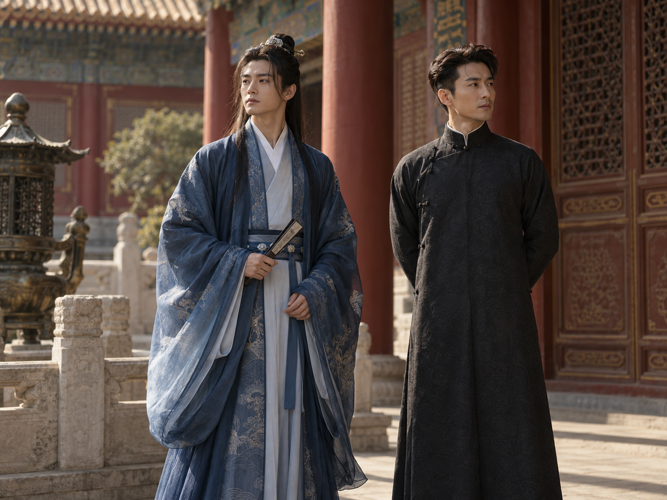
China's traditional menswear offers another fascinating perspective on the relationship between clothing and history. With centuries of changing dynasties, social customs, and artistic influences, Chinese dress cannot be represented by a single garment. Hanfu and Changshan are two recognizable examples, each reflecting different periods and approaches to style.
Hanfu refers broadly to the historical clothing traditions of the Han Chinese people. Its many forms have included flowing robes, overlapping collars, wide sleeves, and layered garments secured with fabric sashes. Depending on the historical period and occasion, designs could range from relatively simple everyday clothing to elaborate ceremonial outfits featuring silk and intricate decoration. What makes many Hanfu styles particularly striking is their movement. Rather than fitting closely against the body, the garments create elegance through flowing proportions and carefully arranged layers.

The Changshan presents a contrasting appearance. Associated especially with later periods of Chinese fashion, this traditional long gown generally features a straighter silhouette, standing collar, and distinctive fastenings. Compared with the flowing construction of many Hanfu styles, its appearance can feel more restrained and tailored. Both garments demonstrate how traditional Chinese menswear has changed across different historical periods rather than remaining fixed in one form.
In recent years, renewed interest in Hanfu has brought historical Chinese clothing into contemporary cultural conversations. Younger generations have embraced both historically informed and modern interpretations, wearing them for festivals, photography, celebrations, and social gatherings. This growing enthusiasm reflects more than an appreciation for beautiful fabrics. For many wearers, traditional clothing provides an opportunity to explore cultural identity, craftsmanship, and history in a personal way. Rather than being confined to museums or historical dramas, these garments are finding new places in modern life.
Vietnam's Ao Dai and the Elegance of Cultural Continuity
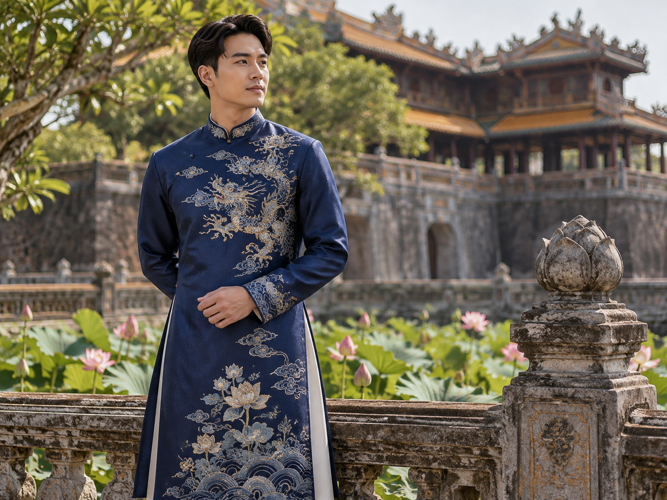
Vietnam's Ao Dai offers another compelling example of how a garment can move between everyday life, formal tradition, and modern cultural identity. Although the Ao Dai is internationally recognized through women's fashion, men's versions have an equally important place in Vietnamese clothing history. Traditionally, the men's garment features a long tunic worn over trousers, creating an elongated silhouette that is both graceful and dignified. Its construction is generally straighter and more relaxed than the fitted contemporary versions commonly associated with women's Ao Dai.
Historically, different forms of the Ao Dai were worn by Vietnamese men in everyday and ceremonial settings. Over time, Western-style clothing became increasingly common, and traditional men's Ao Dai gradually became less visible in daily wardrobes. Yet the garment never completely disappeared. It continues to be worn for weddings, Lunar New Year celebrations, cultural events, and other meaningful occasions, while renewed interest in historical Vietnamese clothing has encouraged designers and cultural enthusiasts to revisit traditional styles.
The appeal of men's Ao Dai lies in its understated presence. Rich silk, subtle woven patterns, and thoughtfully chosen colors can create an outfit that feels ceremonial without requiring elaborate accessories. Deep blue, burgundy, ivory, and gold are among the colors that can give the garment a particularly distinguished appearance. Its flowing panels also add a sense of movement, creating a silhouette that stands apart from conventional modern formalwear.
Perhaps the most interesting part of the Ao Dai's story is what it reveals about the changing role of traditional clothing. A garment doesn't necessarily lose its cultural importance when it is no longer worn every day. In some cases, it becomes more closely associated with the occasions people remember most. For Vietnamese men who choose an Ao Dai for a wedding or traditional celebration, the garment can represent a connection to family, heritage, and cultural continuity.
What Traditional Clothing Reveals About Modern Style

Looking at these six traditions together, it becomes clear that there has never been one universal definition of elegant menswear. India's kurta pajama celebrates comfort and versatility, while the Filipino Barong Tagalog finds sophistication in delicate textiles and embroidery. Japan's kimono favors restraint and careful arrangement, and Korea's Hanbok creates beauty through proportion and color. Chinese Hanfu and Changshan demonstrate the diversity of historical fashion, while Vietnam's Ao Dai shows how a familiar silhouette can retain its significance through changing generations.
What makes these garments particularly relevant today is their relationship with craftsmanship. In an age when clothing can be produced quickly and trends disappear almost as soon as they arrive, traditional textile techniques offer a different perspective on value. Hand embroidery, fine weaving, natural fibers, and carefully constructed garments represent skills that often require years of experience. The finest examples are appreciated not simply for how they look but also for the knowledge and attention invested in making them. That appreciation for longevity and thoughtful production also connects with the ideas explored in The New Rules of Sustainable Fashion.
There is also a broader lesson here for anyone interested in building a thoughtful wardrobe. Modern menswear often emphasizes versatility, minimalism, and buying fewer, better pieces. Traditional clothing introduces another consideration: the meaning attached to what we wear. A garment may only come out of the wardrobe for a handful of occasions each year, yet those occasions can make it one of the most significant pieces someone owns. An outfit worn at a wedding or passed down through a family may hold a value that has little to do with its original price. This is another way of understanding the appeal of building a timeless wardrobe, where personal significance can be just as important as versatility.
Contemporary designers continue finding inspiration in historical silhouettes, embroidery techniques, and traditional textiles. The challenge is to reinterpret these elements thoughtfully while respecting their cultural origins. When done well, traditional influences can enrich modern fashion without reducing meaningful garments to passing trends. The result is a more interesting understanding of style, one that allows heritage and contemporary design to exist alongside each other.
The FINE Take
The lasting appeal of traditional Asian menswear isn't simply that these garments are beautiful. It is that they continue to mean something to the people who wear them. A kurta chosen for a family wedding, a Hanbok worn during a holiday gathering, or a Barong Tagalog reserved for a significant celebration becomes part of the memories associated with that occasion. The fabric, color, and craftsmanship matter, but so do the personal connections that develop around the garment.
Fashion will always evolve, and there is plenty to admire about contemporary design. Yet these clothing traditions remind us that elegance doesn't have to begin with something new. Sometimes, the most memorable style comes from garments that have been refined over generations, carrying stories that reach far beyond the moment in which they are worn.
After all, the finest clothes do more than make an impression. They give us something worth remembering.
(0) comments
We welcome your comments
Log In
Post a comment as Guest
Keep it Clean. Please avoid obscene, vulgar, lewd, racist or sexually-oriented language.
PLEASE TURN OFF YOUR CAPS LOCK.
Don't Threaten. Threats of harming another person will not be tolerated.
Be Truthful. Don't knowingly lie about anyone or anything.
Be Nice. No racism, sexism or any sort of -ism that is degrading to another person.
Be Proactive. Use the 'Report' link on each comment to let us know of abusive posts.
Share with Us. We'd love to hear eyewitness accounts, the history behind an article.