
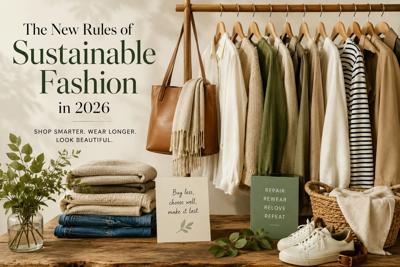
Sustainable fashion used to arrive wrapped in a fairly predictable package: organic cotton T-shirts, earthy colors, sensible shoes, and the occasional dress that looked as though it had strong opinions about composting.
Thankfully, the conversation has grown up.
Today, sustainable fashion is not defined by one fabric, one certification, or a closet filled with beige basics. It is a broader way of thinking about clothing—how much we buy, how often we wear it, how well it was made, and what happens when we are finished with it.
The goal is not to create a perfectly virtuous wardrobe overnight. That sounds exhausting, expensive, and suspiciously like another reason to shop. A smarter approach is to make better decisions one garment at a time while keeping personal style firmly intact.
Start With the Clothes Already in Your Closet
The most sustainable garment is often the one you already own.
Before replacing half your wardrobe with products carrying attractive green labels, take an honest look at what is already hanging in front of you. A dress that feels outdated may need different shoes. A blazer that never looks quite right may need tailoring. A neglected silk scarf might become the detail that rescues five otherwise ordinary outfits.
This does not mean forcing yourself to wear clothes you dislike simply because throwing them away feels wasteful. It means giving worthwhile pieces another chance before buying replacements.
Start by separating your wardrobe into four practical groups: clothes you regularly wear, pieces that need repair or tailoring, items suitable for resale or donation, and things that have genuinely reached the end of their useful lives.
You may discover that your closet does not need a dramatic overhaul. It may simply need better organization and a tailor who can perform small miracles.
Buy Less and Expect More
One of the simplest principles of sustainable fashion is also the least glamorous: buy fewer things.
That does not mean never enjoying fashion again. It means becoming more demanding about what earns a place in your wardrobe.
Before buying something, consider whether it works with at least three pieces you already own. Check the seams, lining, buttons, zipper, fabric weight, and care requirements. Think about whether the silhouette suits your actual lifestyle rather than the imaginary one in which you attend garden parties every Tuesday.
Price alone does not guarantee quality, and an expensive label does not automatically make a garment sustainable. However, well-constructed clothing that is worn repeatedly generally offers more value than a cheap item purchased for one photograph and forgotten.
Cost per wear provides a useful reality check. A $300 jacket worn 100 times costs $3 per wear. A $40 trend piece worn once costs exactly $40 per wear—and possibly a small amount of closet-related resentment.
Look Beyond the Organic Cotton Label
Organic cotton remains an important option, but the modern conversation around materials is more complicated than choosing between “natural” and “synthetic.”
Cotton, linen, wool, silk, regenerated cellulose fibers, recycled materials, and newer plant-based textiles all come with different environmental considerations. Farming practices, water use, chemical processing, energy consumption, durability, transportation, and end-of-life disposal can all affect the complete picture.
Regenerative agriculture is gaining attention because it looks beyond reducing harm and considers how farming can improve soil health, biodiversity, and ecosystem resilience. Fashion companies are increasingly examining their wool and cotton supply chains at the farm level rather than treating raw materials as anonymous commodities.
Consumers do not need a degree in textile engineering to shop intelligently. Look for brands that explain where materials come from, identify suppliers, publish measurable goals, and report progress instead of relying on vague language.
“Made with recycled fibers” may sound impressive, but it does not reveal the percentage of recycled content, the product’s durability, or whether it can be recycled again. Details matter.
Learn to Recognize Greenwashing
Words such as “conscious,” “responsible,” “natural,” and “planet friendly” are persuasive, but they are not always meaningful.
Greenwashing occurs when environmental marketing is stronger than the environmental action behind it. A brand may release a small capsule collection made with lower-impact fabric while continuing to produce enormous quantities of disposable clothing elsewhere. Another may highlight recycled packaging while saying little about labor, production volume, or factory conditions.
Harper’s Bazaar recently noted how difficult it can be to separate meaningful sustainability efforts from the growing number of broad environmental claims made by fashion companies.
When evaluating a brand, look for specifics:
- Does it disclose where its clothing is made?
- Does it provide percentages rather than general claims?
- Are goals tied to firm dates?
- Does it report setbacks as well as successes?
- Does it discuss wages, working conditions, and traceability?
- Does it produce clothing designed to last?
No company will be perfect. Transparency, however, is far more useful than a green leaf printed beside the checkout button.
Make Resale Part of Your Shopping Routine
Luxury resale has transformed secondhand shopping from a treasure hunt conducted under questionable fluorescent lighting into a polished global marketplace.
Authenticated resale platforms, designer consignment boutiques, vintage stores, and brand-operated resale programs make it easier to purchase quality clothing and accessories without relying entirely on new production.
Resale is especially useful for handbags, coats, jewelry, occasionwear, denim, and designer pieces that were made well enough to survive more than one owner. It can also make luxury craftsmanship accessible at a lower price.
That said, buying secondhand is not a free pass to overconsume. A closet overflowing with resale purchases is still overflowing. The point is to find pieces you will use, not to turn every online consignment notification into a personal emergency.
For more inspiration, read FINE Magazine’s guide to starting a designer collection with vintage pieces.
Repair Is Becoming Part of Modern Luxury
For years, repair was treated as something people did only when they could not afford a replacement. Now it is being recognized for what it often is: respect for quality.
A good tailor can adjust a hem, replace a lining, reshape a jacket, repair a seam, or make an older garment feel current again. Cobblers can restore soles, heels, leather, and hardware. Handbag specialists can repair stitching and refresh worn finishes.
Fashion brands and independent services are also expanding repair programs as interest grows in clothing longevity and circular fashion. Vogue Business recently examined how repair is moving beyond a niche service, although labor costs and logistics still make widespread adoption challenging.
Repair makes the most sense when a garment fits your style, was constructed well, or carries personal meaning. Not every stretched-out T-shirt needs a heroic intervention, but a beautifully made coat deserves more than one loose button before being declared deceased.
Use Take-Back Programs With Realistic Expectations
Brand take-back programs may collect clothing for resale, donation, repair, upcycling, or textile recycling. They can be useful, but the phrase “take-back” does not tell you what happens after a garment enters the bin.
Before participating, look for an explanation of how collected items are sorted and where they go. Some established programs provide detailed pathways for resale and fiber recovery. Eileen Fisher, for example, has built a long-running circular program that routes returned garments through resale, donation, upcycling, and textile-to-textile recycling.
Other programs may disclose very little. When information is missing, donating wearable clothing directly to a reputable local organization or selling it through a consignment platform may be the clearer choice.
Take Better Care of What You Buy
Clothing longevity does not end at the cash register. Care can determine whether a garment lasts one season or many years.
Read labels before washing, use cold water when appropriate, avoid unnecessary high heat, and wash clothing only when it actually needs cleaning. Airing out a garment, spot-treating a mark, steaming wrinkles, or brushing a coat may be enough between washes.
Store knitwear folded rather than hanging, use supportive hangers for jackets, keep leather conditioned, and protect clothing from moisture, direct sunlight, and moths. Shoes benefit from rotation because materials need time to dry and recover between wears.
These habits are not particularly dramatic, but neither is discovering that your favorite sweater has become doll-sized.
Build Around Personal Style Instead of Constant Trends
A sustainable wardrobe should not feel like a uniform imposed by someone else’s capsule-closet checklist.
The strongest wardrobes are built around repeatable combinations and a clear sense of personal style. That may include tailored trousers, silk blouses, excellent denim, dramatic jewelry, printed dresses, sharp suits, or a collection of beautifully made shoes.
Trends can still be enjoyable. The difference is choosing the ones that genuinely suit you rather than treating every seasonal forecast as a mandatory shopping assignment.
When a trend appeals to you, try it first through accessories, resale, rental, or a piece that works with your existing wardrobe. This reduces the chance that an impulse buy will spend six months staring accusingly from the back of the closet.
FINE Magazine’s guide to taking your outfits to the next level offers additional ideas for using fit, fabric, accessories, and finishing details to improve what you already own.
Remember That Sustainable Fashion Is Not a Finish Line
There is no perfectly sustainable closet. Clothing requires materials, labor, energy, transportation, and eventually some form of disposal. Even repair and resale do not automatically erase the effects of continued overproduction or excessive consumption. Vogue Business has raised similar questions about whether circular programs genuinely reduce new purchases or simply create another reason to shop.
That should not discourage thoughtful choices. It should make them more realistic.
Wear clothing longer. Repair what deserves saving. Shop secondhand when it makes sense. Ask brands better questions. Choose pieces that fit well, feel good, and work with your life. Most importantly, stop treating clothing as disposable.
The new rules of sustainable fashion are not really about achieving perfection. They are about slowing down long enough to recognize quality—and having the confidence to wear it more than once.


(0) comments
We welcome your comments
Log In
Post a comment as Guest
Keep it Clean. Please avoid obscene, vulgar, lewd, racist or sexually-oriented language.
PLEASE TURN OFF YOUR CAPS LOCK.
Don't Threaten. Threats of harming another person will not be tolerated.
Be Truthful. Don't knowingly lie about anyone or anything.
Be Nice. No racism, sexism or any sort of -ism that is degrading to another person.
Be Proactive. Use the 'Report' link on each comment to let us know of abusive posts.
Share with Us. We'd love to hear eyewitness accounts, the history behind an article.