

Some backyards have beautiful patios, expensive furniture, and impressive landscaping, yet something about them still feels unfinished. The pergola sits too far from the house. The dining area catches the strongest afternoon sun. A lovely stone pathway leads somewhere nobody particularly wants to go.
Then there are outdoor spaces that seem to get everything right. The terrace flows naturally from the living room, greenery softens the architecture, and every feature feels as though it belongs. Nothing competes for attention, yet everything has a purpose.
The difference often comes down to decisions made long before construction begins.
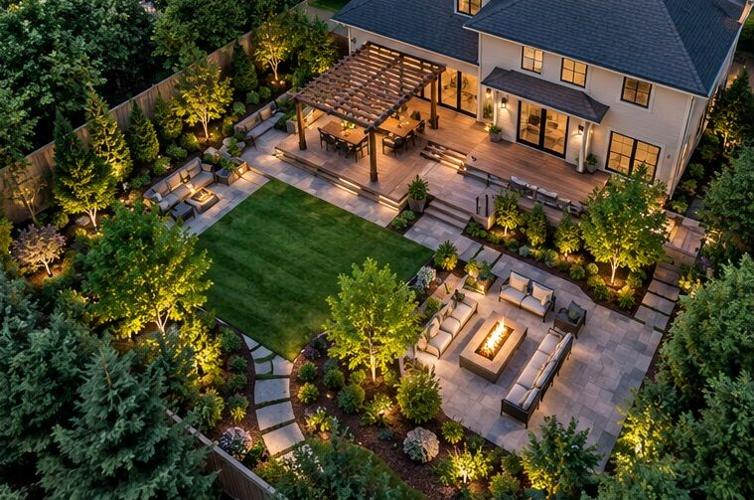
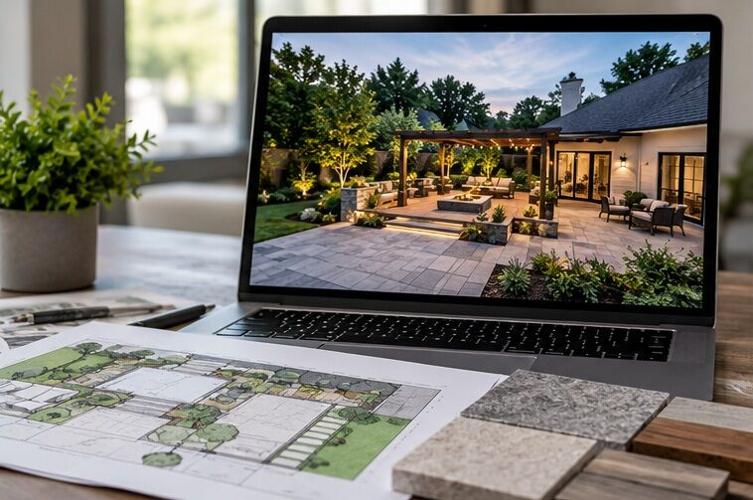
Landscape renderings allow designers and homeowners to see how patios, decks, pergolas, walkways, planting, and lighting will work together before anything is built. More than attractive digital pictures, they offer an opportunity to refine proportions, rethink awkward layouts, and create outdoor spaces that are as comfortable to live in as they are beautiful to look at.
A Beautiful Backyard Begins With the Bigger Picture
When homeowners begin imagining an outdoor renovation, their attention naturally goes to the exciting details. Perhaps it's a covered dining terrace, a modern pergola, or a deck overlooking the garden. These features can transform a property, but designing them independently rarely produces the most cohesive result.
A successful landscape begins with understanding the property itself. Its dimensions, natural slopes, existing trees, architectural character, sunlight, and surrounding views all influence what belongs where.
This is where landscape renderings become particularly valuable. Instead of relying solely on traditional plans or material samples, homeowners can explore a three-dimensional representation of the proposed outdoor space. They can see how a pergola frames the garden, whether a patio feels proportionate to the house, and how pathways connect different areas.
The University of Minnesota Extension emphasizes the importance of developing a landscape site plan that accounts for existing land features, proposed structures, and long-term objectives. Although its guidance focuses on shoreland properties, the underlying principle applies to residential landscape projects more broadly: understanding the site before making changes can help prevent costly mistakes.
The aim is not simply to fit more features into the available space. It is to discover how those features can make the entire property feel more inviting.
Making Patios, Pergolas, and Decks Feel Like They Belong
One of the most common outdoor design mistakes is treating structures as separate additions rather than connected parts of the landscape.

A patio might be beautifully finished in natural stone, but if reaching it requires crossing an awkward stretch of lawn, it may never become the gathering place the homeowner imagined. Similarly, a pergola can look striking in photographs but offer little practical comfort if it is positioned without considering the sun.
Thoughtful design considers how each structure relates to the next.
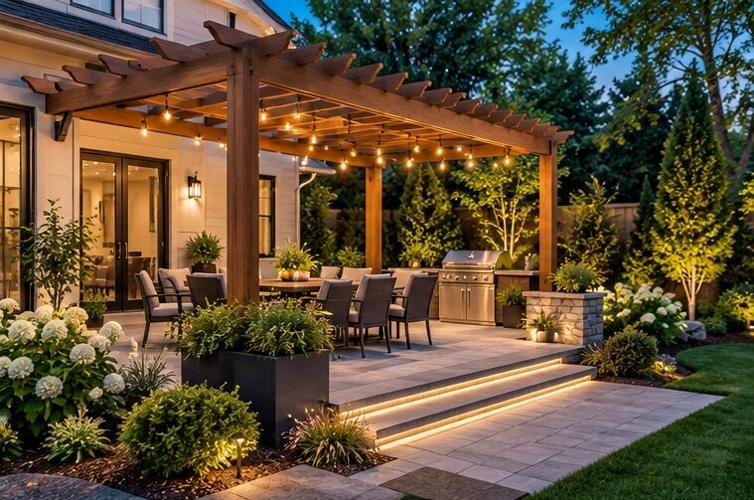
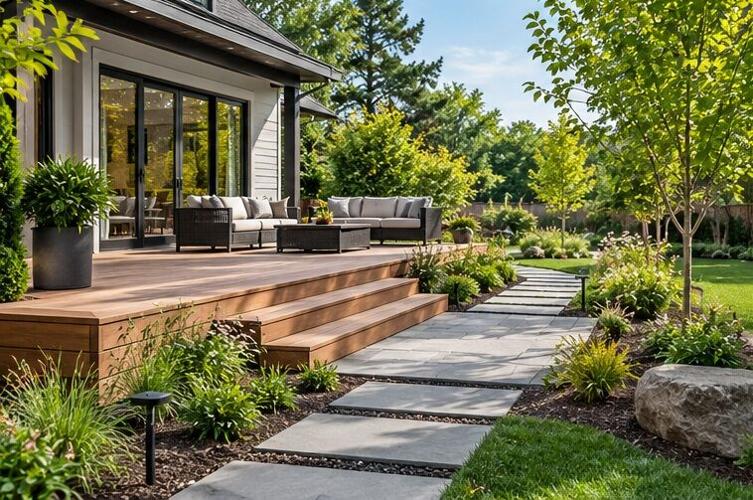
A deck can act as a natural extension of an interior living space, particularly when its proportions and materials complement the home. A pergola might introduce architectural definition to a seating area without closing it off from the garden. A patio could become the central gathering place, with pathways leading naturally toward quieter corners.
The relationship between the house and garden is especially important. As explored in FINE Magazine's feature on designing a custom home for indoor-outdoor living, thoughtful connections between interior rooms and exterior spaces can make a property feel more comfortable, functional, and expansive.
A well-developed rendering brings these relationships into focus. Instead of asking whether a pergola looks beautiful on its own, homeowners can consider a more meaningful question: Does it make the entire outdoor space better?
Designing Around the Way You Actually Live
An outdoor space should not require a special occasion to be enjoyed. The most successful gardens and terraces become part of everyday life, whether that means morning coffee, relaxed family dinners, or a quiet hour outdoors after work.
Before selecting materials or approving a layout, it helps to imagine how a typical day might unfold.
For someone who loves entertaining, the relationship between the kitchen and outdoor dining area deserves attention. A generous terrace is less convenient when food and drinks must travel around the entire house to reach it. Families may prefer clear sightlines between seating areas and open lawn, while homeowners seeking privacy might prioritize a sheltered garden retreat.
Landscape renderings make these possibilities easier to evaluate because furniture, circulation paths, and outdoor structures can be considered together.
A dining table that appears perfectly sized on a floor plan may leave too little room once chairs are pulled out. A fire pit may look inviting but interrupt the natural movement between the patio and garden.
For homeowners incorporating a permanent fire feature, FINE's guide to fire pit installation explains why location, surrounding materials, seating arrangements, and safety considerations deserve attention early in the planning process.
These decisions may seem minor on paper, but they have a lasting influence on how comfortably the finished space functions.
Materials, Planting, and Lighting Complete the Picture
Outdoor structures establish the framework of a landscape, but materials and planting give it character.
Consider a contemporary home with clean architectural lines. A pergola with slender metal supports, understated paving, and ornamental grasses may create a restrained, elegant atmosphere. A traditional home might feel more comfortable with timber detailing, natural stone, and layered garden beds.
Neither approach is inherently better. The important consideration is whether the elements share a consistent visual language.
Modern rendering software allows designers to explore different finishes, colors, textures, and planting arrangements before making final selections. A dark pergola can be compared with a natural timber version. Large-format pavers can be tested against more traditional stone. Trees and shrubs can be positioned to soften architectural edges or frame views.
Planting should also be considered as something that changes over time. A newly planted tree may look modest in a rendering but eventually cast significant shade or obscure a view. Designers should account for mature plant sizes rather than judging the landscape only by its appearance on installation day.
Lighting introduces another important dimension.
A garden that looks beautiful at noon should still feel welcoming after sunset. Subtle pathway lighting, carefully positioned uplights, and warm illumination around gathering areas can give the landscape a completely different personality in the evening.
For inspiration, FINE Magazine's guide to transforming patios with backyard string lights explores how lighting can define outdoor gathering areas and create a more inviting atmosphere.
Daytime and nighttime renderings can help homeowners understand how the same space will feel throughout the day.
The Details That Beautiful Renderings Should Never Ignore
It is easy to become captivated by a convincing three-dimensional image. The sunlight looks perfect, the plants are lush, and every chair is positioned exactly where it should be.

Real gardens, however, must deal with rain, changing seasons, maintenance, and the occasional less-than-perfect weather forecast.
This is why a good design process should look beyond appearances.
Drainage is particularly important when adding patios, retaining walls, decks, and other hardscape features. New surfaces can change how rainwater moves across a property. Without appropriate planning, an attractive terrace could create unwanted pooling or direct runoff toward the house.
Sun exposure deserves equal attention. A pergola that provides comfortable morning shade may offer little protection during the hottest part of the afternoon. Exploring different sun positions can help designers choose better locations and adjust the structure's orientation.
Sustainability can also be incorporated from the earliest design stages.
The U.S. Environmental Protection Agency's WaterSense landscaping guidance recommends considering local climate, sunlight, soil conditions, and plant water requirements when developing a landscape. Choosing regionally appropriate plants and grouping those with similar irrigation needs can help reduce unnecessary watering while maintaining a healthy and attractive garden.
These decisions may not be the most glamorous part of outdoor design, but they often determine how well the finished space performs.
It is also worth remembering that a photorealistic rendering is not a substitute for construction drawings, engineering assessments, drainage plans, or permit approvals. Visualizations communicate the design intent; qualified professionals must confirm that the proposed structures can be built safely and appropriately.
Why Making Changes on Screen Is Better Than Making Them on Site
One of the greatest advantages of landscape renderings is the freedom to experiment before committing to construction.
Perhaps the original design includes a large patio extending across most of the backyard. Once viewed in three dimensions, however, it becomes clear that the hardscaping overwhelms the garden. Reducing its footprint may create a more attractive balance between architecture and greenery.
Or a homeowner might discover that a freestanding pergola would work better closer to the house, where it could provide shade for an outdoor dining area.
Changes like these are generally easier to explore during the design process than after foundations have been poured or paving installed.
Visualizations also improve communication among homeowners, designers, landscape contractors, and other specialists. Instead of imagining different interpretations of the same plan, everyone can discuss a shared visual direction.
Before approving a design, homeowners should ask to see the proposed outdoor space from several perspectives, including views from inside the house. It is also sensible to review furniture clearances, major material choices, planting maturity, and lighting.
And if a rendering looks almost suspiciously perfect, ask how closely it reflects actual site measurements and conditions. The most useful design is not necessarily the most dramatic image. It is the one that can be translated into a practical, buildable landscape.
The Best Outdoor Design Feels Effortless

A beautifully designed landscape rarely announces how much planning went into it. Guests notice the comfortable seating, the welcoming terrace, the gentle lighting, and the way the garden seems to unfold naturally around the house.
They are less likely to notice the carefully calculated proportions, the positioning of pathways, or the adjustments made to accommodate the afternoon sun.
That is precisely the point.
Landscape renderings give homeowners an opportunity to make those important decisions before construction begins, balancing architectural beauty with everyday comfort and long-term practicality.
Because the real luxury of a well-designed outdoor space is not simply having an impressive patio, an elaborate pergola, or a picture-perfect garden. It is having a place where everything works together so naturally that you can stop thinking about the design and simply enjoy being outside.

(0) comments
We welcome your comments
Log In
Post a comment as Guest
Keep it Clean. Please avoid obscene, vulgar, lewd, racist or sexually-oriented language.
PLEASE TURN OFF YOUR CAPS LOCK.
Don't Threaten. Threats of harming another person will not be tolerated.
Be Truthful. Don't knowingly lie about anyone or anything.
Be Nice. No racism, sexism or any sort of -ism that is degrading to another person.
Be Proactive. Use the 'Report' link on each comment to let us know of abusive posts.
Share with Us. We'd love to hear eyewitness accounts, the history behind an article.