
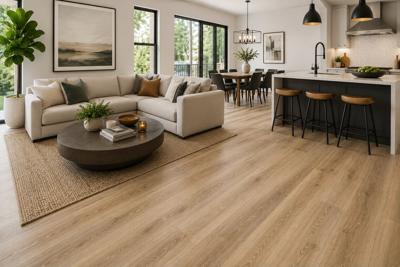

Beautiful flooring can change the mood of an entire home. Pale oak can make a coastal living room feel lighter; limestone-look porcelain can give a kitchen an easy elegance; and a well-chosen wood floor adds warmth that no rug can quite imitate. But the most important flooring decisions often happen before the first plank or tile is installed.
For San Diego homeowners, the right choice must look good under generous natural light, stand up to daily traffic, and work with the home's construction. Here is how to shop for new floors without discovering the expensive details after the contract is signed.
Start With How You Actually Live
Before falling for a wide-plank sample, think about the room's busiest hour. Is the kitchen a gathering place? Do sandy shoes enter through the patio? Does the dog run the same route from the sofa to the back door? A floor that looks stunning in a showroom may demand more attention than you want to give it.
Consider the home's age, whether the floor sits over a concrete slab or wood subfloor, and how rooms connect. If you're renovating several spaces, decide whether one consistent material will create a calmer look or whether bathrooms and entryways need something more water-tolerant.
Choose the Material, Not Just the Color
Engineered hardwood offers genuine wood character with a layered construction that can suit many California homes. It still needs moisture assessment, an appropriate installation system, and sensible care. Solid hardwood remains a beautiful option where site conditions and installation allow.
Luxury vinyl plank and tile have come a long way aesthetically. Quality products can mimic wood or stone while offering practical wear and water resistance. But a floor labeled waterproof does not make the subfloor beneath it waterproof. Compare construction, wear layer, sunlight limitations, and warranty terms rather than choosing by color alone. For a closer look at its everyday advantages, see why luxury vinyl has become a popular design upgrade.
Porcelain tile earns its place in bathrooms, kitchens, and indoor-outdoor-inspired interiors, especially when durability and easy cleaning matter. Natural stone delivers unmistakable texture and variation, but some varieties need more maintenance and sealing. Consider slip resistance, grout, and the feel of the surface underfoot before committing.
See the Sample in Your Own Light
A showroom sample is only the beginning. Borrow several full-size samples and look at them in the actual room, alongside cabinetry, upholstery, and wall colors. Morning coastal light, late-afternoon sunshine, and evening lamps can make the same plank look remarkably different.
Look at texture as closely as tone. Deep grain and heavily beveled edges can catch dust; very dark finishes can make crumbs and pet hair more noticeable. The best choice isn't always the most dramatic sample. It's the one that settles naturally into the room.
Ask What Is Happening Beneath the Floor
This is where smart flooring projects separate themselves from costly ones. Before installation, ask how the crew will check the subfloor for moisture, levelness, damage, and suitability for the selected material. Concrete slabs may need testing or preparation; wood subfloors may need repairs or fastening. The necessary method depends on the product and site conditions.
Wood can expand and contract as moisture changes, so ask which environmental and acclimation requirements apply to your specific product. The National Wood Flooring Association emphasizes moisture control and finish-appropriate maintenance. Taking the time to get the foundation right is less exciting than selecting a finish, but far more valuable.
Get a Quote That Includes the Unglamorous Details
The price printed beside a flooring sample is not the price of a finished room. A complete proposal should spell out materials, quantities, labor, old-floor removal, disposal, subfloor preparation, underlayment or moisture protection where needed, baseboards, thresholds, stairs, and transitions to other rooms.
Ask what is excluded, what could trigger a change order, and whether any extra material will be left for future repairs. Compare bids using the same scope and product specifications. If one estimate is dramatically lower, find out what it omits before congratulating yourself on a bargain.
Protect Yourself Before the First Payment
For California projects, verify the contractor's license and status through the Contractors State License Board. Ask who will actually perform the installation, whether they carry appropriate insurance, and who is responsible for corrections if problems appear later.
A clear written contract should identify the exact flooring, installation method, scope, schedule, warranty responsibilities, and payment milestones. California generally limits home-improvement down payments to $1,000 or 10 percent of the contract amount, whichever is less, subject to limited exceptions. The CSLB recommends getting multiple written bids and never letting payments get ahead of completed work.
Make Room for the Installation Process
Good flooring installation is disruptive, even when everything goes to plan. Ask whether furniture must be moved, how dust will be contained, whether doors need trimming, and when the rooms can safely be used again. Adhesives, finishes, and certain installation systems can require waiting or curing time; the product instructions should set the schedule.
If you're replacing older vinyl flooring, pause before anyone sands, scrapes, or tears it out. Some older flooring materials can contain asbestos. The U.S. Environmental Protection Agency recommends assessment by a properly trained professional when suspect materials could be disturbed during renovation.
Remember That Healthy Materials Matter, Too
Beautiful floors shouldn't come at the expense of indoor comfort. Ask about emissions from flooring, adhesives, finishes, and underlayments, and how rooms will be ventilated after installation. The EPA recognizes third-party low-emission certifications such as FloorScore and GREENGUARD Gold among ways to identify qualifying hard-surface flooring products.
Also read the care instructions before buying. Some floors tolerate damp mopping; others need very little moisture. If easy maintenance is part of your luxury wish list, treat the cleaning requirements as a deciding factor, not a footnote.
Buy the Floor You Will Still Love Years From Now
The most successful floors support the way a household lives. They feel right underfoot, connect rooms gracefully, stand up to ordinary messes, and don't demand constant worry. FINE's look at luxury flooring choices that shape a home's character offers more inspiration for balancing material and mood.
Choose the finish for its beauty, certainly. Then ask the less glamorous questions about moisture, installation, warranty coverage, and the complete cost. A truly great floor should still feel like a great decision long after the renovation dust has disappeared.

(0) comments
We welcome your comments
Log In
Post a comment as Guest
Keep it Clean. Please avoid obscene, vulgar, lewd, racist or sexually-oriented language.
PLEASE TURN OFF YOUR CAPS LOCK.
Don't Threaten. Threats of harming another person will not be tolerated.
Be Truthful. Don't knowingly lie about anyone or anything.
Be Nice. No racism, sexism or any sort of -ism that is degrading to another person.
Be Proactive. Use the 'Report' link on each comment to let us know of abusive posts.
Share with Us. We'd love to hear eyewitness accounts, the history behind an article.