
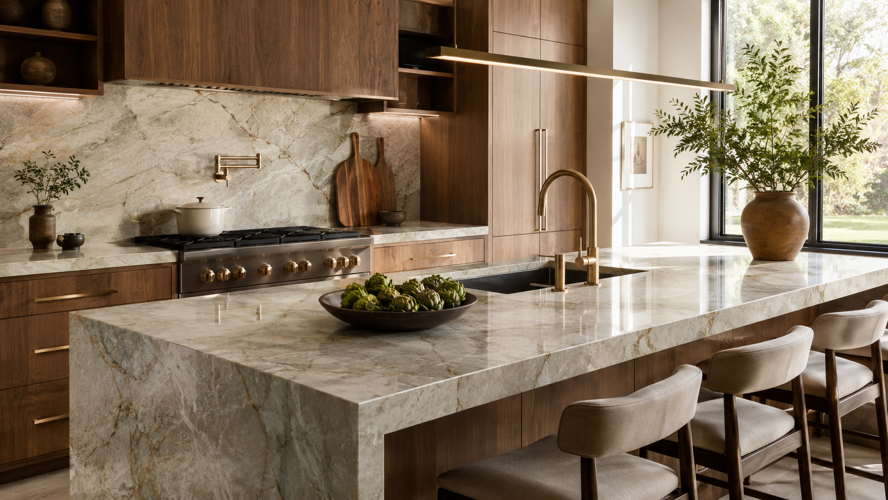
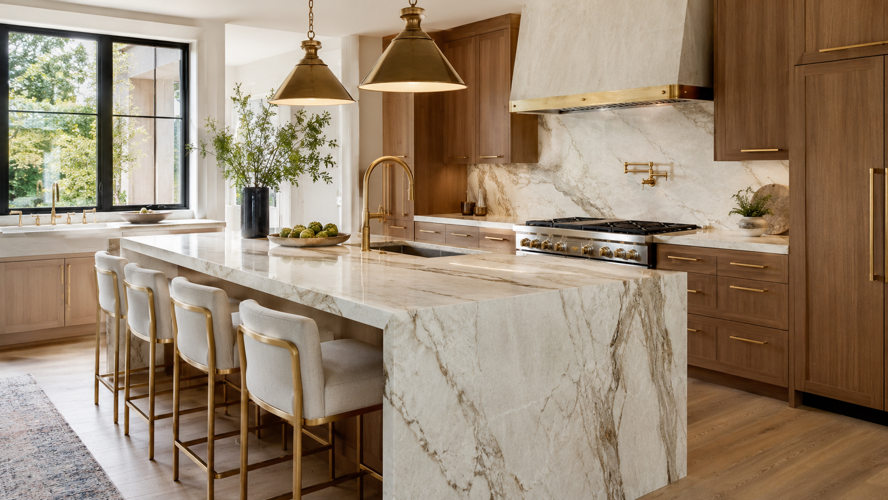
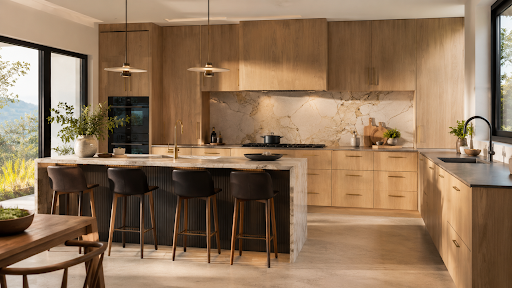
The kitchen has officially outgrown its reputation as a purely functional room. Today, it is part command center, part entertaining space, part wellness zone, and part personal design statement. It still needs to handle coffee, school lunches, dinner prep, late-night snacks, and the occasional “why is everyone standing in here?” gathering, but now it is expected to do all of that with style.
The biggest shift is not one single color, cabinet style, or appliance. It is a move away from flat, overly perfect kitchens and toward spaces that feel warmer, smarter, more layered, and more personal. The best kitchens are not trying to look like everyone else’s. They are designed around how people actually live.
For homeowners considering a larger update, this connects naturally with the kind of practical, lifestyle-first planning covered in FINE’s guide to kitchen remodeling ideas that make everyday living feel easier. A beautiful kitchen matters, but a kitchen that works beautifully is the real luxury.
What Is Defining Modern Kitchen Design?
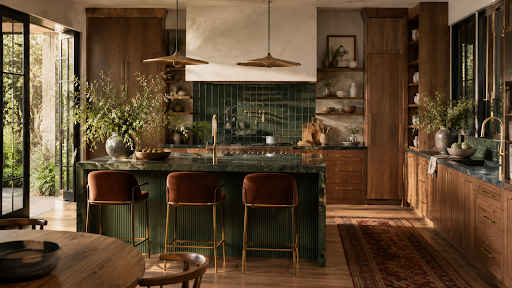
Modern kitchen design is being shaped by personalization, smart technology, natural materials, hidden storage, wellness-minded features, and warmer color palettes. Homeowners are looking for kitchens that feel beautiful but not fragile, modern but not cold, and efficient without looking like a showroom.
A strong modern kitchen usually includes:
- Warmer colors instead of stark all-white palettes
- Natural wood cabinetry and textured finishes
- Statement backsplashes that act like design features
- Smart appliances and connected lighting
- Better storage for small appliances and everyday clutter
- Durable, low-maintenance surfaces
- Layouts that support cooking, hosting, working, and gathering
The result is a kitchen that feels less like a passing trend and more like a well-dressed room that happens to make excellent coffee.
The End of the Cookie-Cutter Kitchen
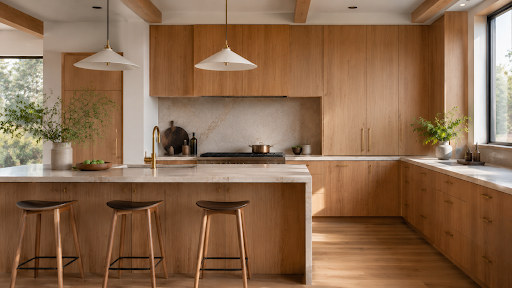
The days of sterile, all-white kitchens are fading. Clean white cabinetry will always have a place, but homeowners are looking for depth, texture, and individuality. The new kitchen is more collected than copied.
That shift is showing up through mixed materials, layered surfaces, richer colors, custom tilework, and design details that feel personal. Mosaic, tile, and surface design company Artaic reflects this broader movement toward kitchens with more character. As Ariel Schuster, Director of Design at Artaic, noted in the original design conversation, “There is a shift towards layered textures, metallic finishes, and deeper color palettes like oxblood, earthy greens, and warm neutrals.”
That idea feels especially relevant now. Homeowners are no longer afraid of color or texture. They are using them strategically: a deep green island, a bronze-toned faucet, a warm walnut cabinet wall, or a handmade tile backsplash that brings the entire room together.
This is where modern kitchen design feels more human. It is not about abandoning elegance. It is about making elegance feel lived-in.
Statement Backsplashes Are Becoming the New Feature Wall
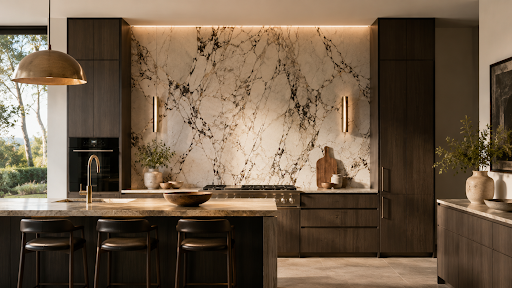
The backsplash is no longer an afterthought. It is one of the most expressive parts of the kitchen.
Instead of small, quiet tile that disappears into the background, homeowners are choosing large-format slabs, handmade tile, patterned mosaics, mirrored finishes, glazed ceramics, and stone surfaces that run from counter to ceiling. The look feels more intentional and more architectural.
Nemo Tile + Stone has been part of this conversation as homeowners and designers embrace bolder materials. Kiara Perdomo, Director of Product Development at Nemo Tile + Stone, previously described the rise of “bold, statement backsplashes” that add personality and sophistication to the kitchen.
A backsplash can now do the work of artwork, especially in kitchens with simple cabinetry. A richly veined stone slab behind the range, a handmade tile wall behind open shelving, or a dramatic full-height backsplash can instantly make the kitchen feel custom.
The key is balance. If the backsplash is bold, the surrounding finishes should support it rather than compete with it.
Warm Earth Tones Are Replacing Cold Minimalism
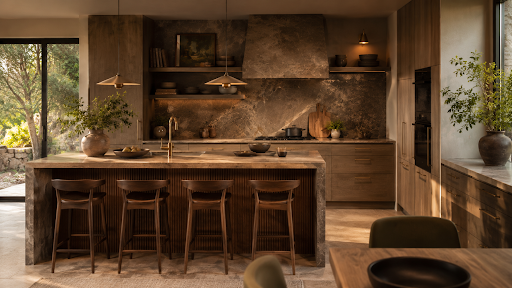
Cool gray and flat white kitchens are giving way to warmer, more grounded palettes. Think chocolate brown, clay, caramel, olive, mushroom, terracotta, deep green, warm cream, and natural beige. These colors make the kitchen feel calmer and more connected to the rest of the home.
This warmer direction also works beautifully with professional-grade appliances and design-forward cooking spaces. BlueStar has long been associated with color-forward, performance-focused kitchen appliances, and its design perspective fits the current mood. Shae Wilder, Director of Design Relations at BlueStar, previously noted a resurgence of kitchens leaning toward warmer colors, including “rich browns, deep greens, and warm neutrals.”
That palette makes sense for the moment. After years of bright white kitchens, homeowners want rooms that feel comforting, layered, and livable. A kitchen should still feel clean, but it does not need to feel clinical.
Warm kitchen colors also pair beautifully with the materials homeowners are already gravitating toward: wood, stone, brass, bronze, matte black accents, and textured tile. The effect is polished without becoming precious.
Natural Wood Cabinetry Feels Fresh Again
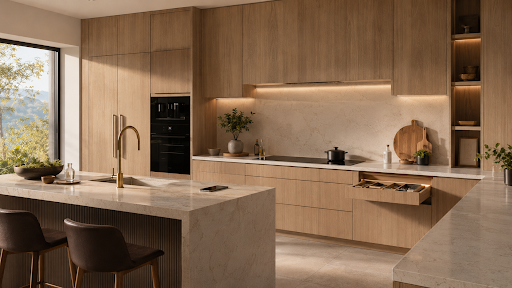
Natural wood is one of the strongest kitchen design stories right now. White oak, walnut, ash, maple, and warm-stained woods are appearing in cabinetry, islands, shelving, pantry doors, and built-in breakfast stations.
The appeal is easy to understand. Wood brings warmth without needing too much decoration. It softens stone, balances metal finishes, and makes smart appliances feel less cold. It also ages better than many trend-driven painted finishes.
The most current versions are clean-lined rather than rustic. Slab-front wood cabinets, reeded wood details, mixed wood-and-painted cabinetry, and furniture-style islands all feel refined without becoming stiff.
This is where modern kitchen design becomes more flexible. Homeowners can keep the layout streamlined while still creating warmth and personality through material choices. Walnut can feel rich and tailored, white oak can keep a room light and relaxed, and darker woods can bring a more dramatic, architectural mood.
For readers thinking beyond cabinetry, FINE’s guide to high-end kitchen upgrades for custom modern homes offers another useful look at how premium surfaces, appliances, and finishes can elevate the entire space.
Smart Kitchens Are Getting Quieter and More Useful
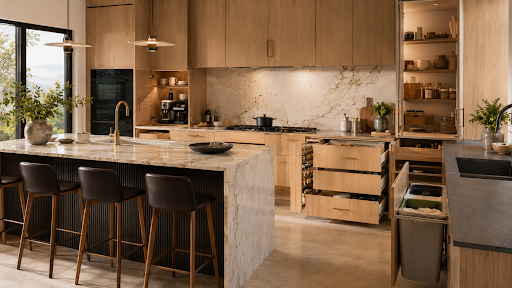
The smartest kitchen is not the one with the most gadgets. It is the one where technology quietly makes daily life easier.
Smart kitchen innovations are moving beyond novelty. Homeowners are looking for connected features that solve real problems: lighting that adjusts throughout the day, appliances that can be monitored from a phone, ovens with guided cooking, refrigerators with better food management, induction cooktops with faster control, and faucets that reduce mess during prep.
Useful smart kitchen features include:
- Wi-Fi-enabled ovens and ranges
- App-controlled lighting scenes
- Induction cooktops with precise heat control
- Touchless or voice-activated faucets
- Smart refrigerators with food-management tools
- Built-in charging drawers
- Under-cabinet lighting with dimming controls
- Ventilation systems that adjust to cooking activity
The best part is that many of these features can be integrated without making the kitchen look overly technical. Panel-ready appliances, hidden outlets, charging drawers, and discreet lighting controls help keep the room elegant.
In other words, the future of kitchen technology is less “look at my gadget” and more “why is this suddenly so easy?”
Hidden Storage Is the New Luxury
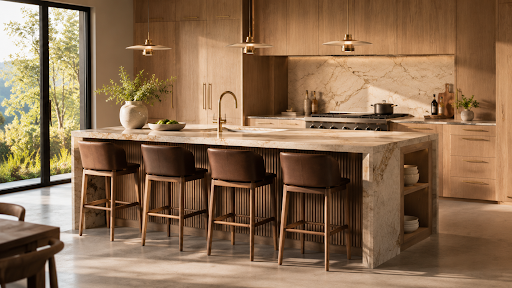
A beautiful kitchen loses its charm quickly when every small appliance lives on the counter. That is why hidden storage has become one of the most important design priorities.
Homeowners want kitchens that can handle real life: coffee makers, air fryers, mixers, kids’ snacks, water bottles, supplements, pet bowls, school papers, and the mysterious collection of charging cords that seems to multiply overnight.
Some of the most useful storage ideas include:
- Appliance garages
- Deep drawers instead of lower cabinets
- Pull-out spice storage
- Built-in recycling and trash centers
- Walk-in or butler’s pantries
- Coffee and breakfast stations
- Charging drawers
- Tall pantry cabinets with roll-out shelving
The butler’s pantry is also having a major moment. Even when space is limited, homeowners are carving out secondary prep and storage zones to keep the main kitchen cleaner and calmer. A small pantry with enclosed cabinetry, a prep counter, and space for everyday appliances can make the entire kitchen work better.
The point is not to hide life completely. It is to give everything a place, so the kitchen can go from breakfast rush to dinner party without looking like it lost a small war in between.
Wellness Is Entering the Kitchen
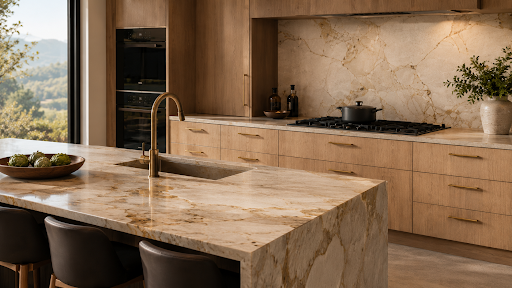
Wellness design is no longer limited to bathrooms and bedrooms. It is becoming part of the kitchen, too.
That does not mean every kitchen needs to look like a spa. It means the room should support healthier, easier routines. Better lighting, improved ventilation, cleaner materials, organized food storage, filtered water, and comfortable prep zones all contribute to a kitchen that feels good to use.
This may show up through better range ventilation, low-VOC finishes, filtered water, more natural light, easy-to-clean surfaces, and ergonomic cabinet or appliance placement. Steam cooking and healthier cooking appliance options are also becoming part of the conversation for homeowners who want the kitchen to support daily routines instead of complicating them.
A well-designed kitchen should not make cooking feel like a performance. It should make the everyday work of feeding yourself and the people you love feel smoother.
This is also where natural light becomes part of the design conversation. Kitchens that feel connected to the outdoors, use daylight well, and offer layered evening lighting tend to feel more livable throughout the day.
The Island Is Becoming More Thoughtful

For years, the oversized island was the trophy piece of the kitchen. Now, homeowners are being more selective. Bigger is not always better.
A kitchen island still matters, but the best ones are designed with proportion and purpose in mind. Some homes need a generous island with seating, storage, and prep space. Others work better with a smaller island, a furniture-style worktable, or a more open layout that improves flow.
The strongest kitchen islands now do more than fill the center of the room. They offer comfortable seating, useful storage, enough clearance for movement, and a surface that works for prep, dining, homework, and entertaining. Statement lighting above the island can also help make the kitchen feel finished, especially in open-concept homes where the kitchen connects directly to the living or dining space.
The goal is not to create the biggest island possible. It is to create the island people naturally gather around without blocking the cook, the dishwasher, or the person trying to sneak one more appetizer.
Materials Are Getting More Durable and More Beautiful
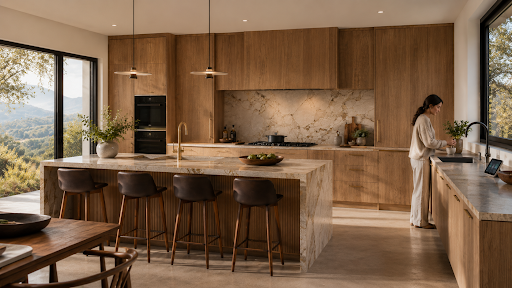
Homeowners want kitchens that look refined but can also survive daily use. That is why durable materials are especially important.
Quartz, quartzite, porcelain slabs, sealed natural stone, engineered surfaces, durable tile, and high-performance cabinet finishes are all popular because they offer beauty without constant worry. The luxury is not only in how the kitchen looks on installation day. It is in how well it holds up after years of cooking, hosting, spills, and busy mornings.
For homeowners choosing fixtures and finishes, FINE’s guide to luxury kitchen sinks is a useful reminder that the most practical pieces in the room can still contribute to the overall design.
This is also where sustainability becomes more practical. Long-lasting materials are often the better investment because they reduce the need for frequent replacement. Homeowners are paying closer attention to quality, maintenance, and lifecycle, not just the first impression.
How to Make a Kitchen Feel Current Without Over-Remodeling

Not every kitchen needs to be taken down to the studs. Some of the most effective updates are smaller, more focused, and easier to live through.
A kitchen can feel more current with:
- New cabinet hardware
- Updated lighting
- A stronger backsplash
- Fresh paint or warmer wall color
- A new faucet
- Better under-cabinet lighting
- Improved storage inserts
- A refreshed island color
- A new sink or workstation sink
- A few high-impact appliance upgrades
FINE’s guide to home renovation ideas that make your house feel fresh again makes the same point across the home: thoughtful updates can change the way a space feels without requiring a complete rebuild.
The best kitchen updates are not always the loudest. Sometimes the room simply needs better lighting, warmer finishes, smarter storage, and one design moment that gives the space personality.
The FINE Take
The future of kitchen design is not about chasing one perfect look. It is about creating a kitchen that feels personal, intelligent, warm, and genuinely livable.
The strongest kitchens combine beauty with ease: a bold backsplash, warm cabinetry, smart appliances that stay quietly in the background, storage that hides the mess, and materials that can handle real life. The all-white showroom kitchen had its moment. Now, the kitchen is becoming something better: a room with soul, function, and enough style to make everyone linger a little longer.
A great kitchen does not need to shout. It just needs to work beautifully, feel considered, and make daily life at home a little more enjoyable.


(0) comments
We welcome your comments
Log In
Post a comment as Guest
Keep it Clean. Please avoid obscene, vulgar, lewd, racist or sexually-oriented language.
PLEASE TURN OFF YOUR CAPS LOCK.
Don't Threaten. Threats of harming another person will not be tolerated.
Be Truthful. Don't knowingly lie about anyone or anything.
Be Nice. No racism, sexism or any sort of -ism that is degrading to another person.
Be Proactive. Use the 'Report' link on each comment to let us know of abusive posts.
Share with Us. We'd love to hear eyewitness accounts, the history behind an article.