
The dorm bedding has been ordered, the mini fridge has somehow become a major design decision, and the car is rapidly filling with enough belongings to suggest your child is relocating permanently rather than heading to college.
Somewhere in the middle of all that preparation is the conversation most families would rather not make awkward: safety.
Not the obvious version about locking doors and avoiding dark alleys. College safety today is more nuanced than that. It is about rideshares after midnight, dating apps, unlocked dorm rooms, phones dying at exactly the wrong moment, parties where plans change, and having the confidence to leave when something simply feels off.
The most useful conversation is not designed to frighten students. It is designed to make good judgment feel automatic.
The 1 A.M. Problem Nobody Talks About on Campus Tours
College brochures are very good at showing ivy-covered buildings, polished residence halls, and students laughing over coffee in beautifully landscaped courtyards. They are less likely to show the reality of a student leaving the library at 1 a.m., realizing the shuttle has stopped running, and deciding whether the ten-minute walk home feels perfectly fine or suddenly does not.
Students should know which campus escort programs, late-night transportation options, and security services are available before they need them. Families can also review reported crime and safety information through the U.S. Department of Education Campus Safety and Security database. There is nothing glamorous about saving the campus security number in a phone, but it is significantly more useful than searching for it while standing alone in a parking structure.
Your Dorm Door Is Not as Secure as You Think
Residence halls have an odd way of making students feel safer than they actually are. There are key cards, resident assistants, people constantly moving through the halls, and enough social activity to create the impression that everyone belongs there. That does not mean everyone does. Lock the door when leaving, even briefly, and resist the very collegiate habit of propping open an exterior entrance for whoever happens to be walking behind you.
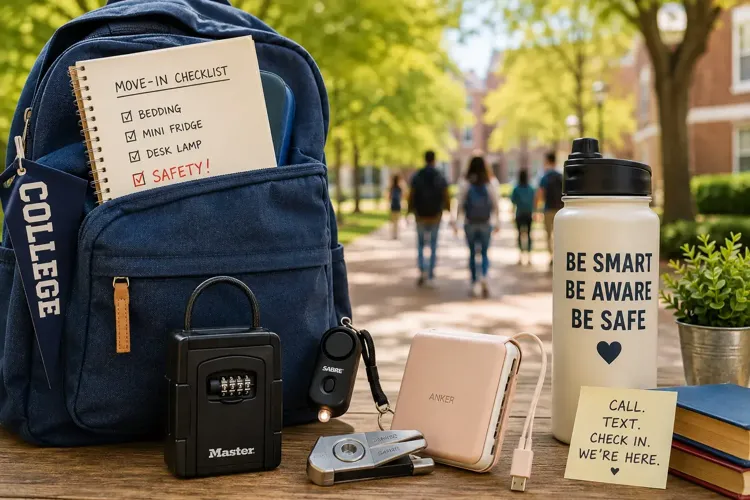
For another layer of security, the SABRE Compact Travel Door Lock is small enough to tuck into a nightstand and works on compatible inward-opening doors without permanent installation. We particularly like that it has a life after freshman year: the same little device can move into a first apartment, hotel room, vacation rental, or carry-on. If parents are buying dorm gear, products that remain useful after May automatically earn extra credit.
The Phone Is Probably Their Most Important Safety Tool
A smartphone is now part map, part wallet, part transportation service, and part emergency lifeline. It can share a location with a roommate, verify a rideshare, receive campus alerts, provide directions home, and call for help. None of which is especially useful when the battery is sitting at two percent because someone forgot to charge it after eight hours of TikTok, texting, Spotify, and occasionally attending class.
This is why an Anker Nano Power Bank 10K makes our list. The current model combines a 10,000mAh battery with a retractable USB-C cable, eliminating at least one cord a student can lose. A backup battery may not inspire the same enthusiasm as new headphones, but when dinner unexpectedly becomes a midnight ride home, having a working phone moves very quickly from convenient to important.
Dating Apps Changed the College Safety Conversation
College dating has always involved a certain amount of parental imagination best left unexplored, but apps have changed how quickly students can meet people completely outside their social circle. The old advice to "be careful who you go out with" is no longer quite enough. A first meeting should be somewhere public, someone trusted should know where the student is going, and getting home should never depend entirely on the person they just met.
The same applies to parties and nights that change direction without much warning. Students should know how they are getting home, keep an eye on their own drinks, verify rideshare information before getting into the car, and pay attention when the internal voice saying this feels weird starts getting louder. Independence does not mean staying in an uncomfortable situation simply because leaving might feel impolite.
Personal Safety Should Feel Practical, Not Paranoid

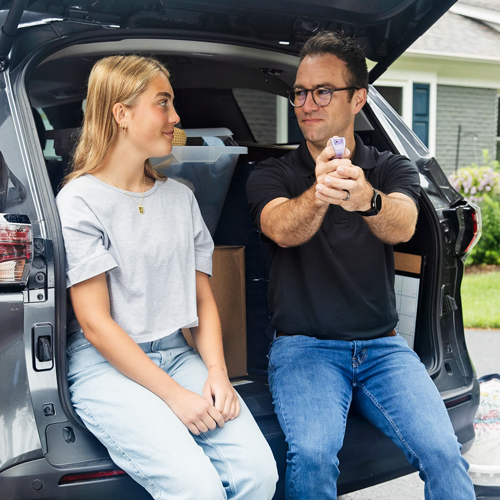
Not every student wants to carry pepper spray, and some campuses restrict it. A personal alarm is a less complicated option. The SABRE Personal Alarm with LED Light produces a 130 dB alarm and can clip to keys or a bag. That last detail matters. The finest safety device in the world is fairly useless underneath three notebooks, yesterday's sweatshirt, and a crushed granola bar.
Students considering pepper spray or gel should check both local rules and individual campus policies before carrying it. And whatever personal-safety product they choose, they should know how it works before they need it. Safety equipment is not the place for the traditional college approach of ignoring the instructions and assuming everything will somehow become obvious at the critical moment.
What We’d Actually Send to College
Parents can buy an astonishing amount of so-called dorm gear, much of which will be abandoned in a drawer by October. Safety products should earn their limited space. Our short list starts with the SABRE Compact Travel Door Lock for the room, the SABRE Personal Alarm with LED Light for the backpack, and the Anker Nano Power Bank 10K for the phone. Three small items, three completely different problems, and none requires turning the dorm into a command center.
We would add one more: the Master Lock 5900D Portable Personal Safe. Dorm rooms are shared spaces, often with people a student met approximately twelve minutes before moving in. The compact combination safe is designed for small valuables such as cash, jewelry, passports, and phones, with a cable that can secure it around a fixed object. It is less dramatic than a high-tech security system, but considerably more sophisticated than hiding valuables underneath a pile of laundry and hoping for the best.
The Most Important Safety Rule Costs Nothing
Parents can buy the alarm, the door lock, the charger, and the safe. The most valuable thing to send to college, however, may be an agreement: If you feel unsafe, call. No lecture first. No interrogation about why you went to that party, got into that car, stayed out that late, or ended up somewhere you should not have been. Get somewhere safe first. The analysis can happen tomorrow.
That may be the difference between a student asking for help and trying to solve a bad situation alone because they are more frightened of the parental reaction. College should be exciting, occasionally messy, and full of the independence students have been waiting years to claim. A few smart products and good habits can provide backup, but confidence comes from knowing when to trust your instincts—and knowing someone will answer the phone at 1 a.m.


(0) comments
We welcome your comments
Log In
Post a comment as Guest
Keep it Clean. Please avoid obscene, vulgar, lewd, racist or sexually-oriented language.
PLEASE TURN OFF YOUR CAPS LOCK.
Don't Threaten. Threats of harming another person will not be tolerated.
Be Truthful. Don't knowingly lie about anyone or anything.
Be Nice. No racism, sexism or any sort of -ism that is degrading to another person.
Be Proactive. Use the 'Report' link on each comment to let us know of abusive posts.
Share with Us. We'd love to hear eyewitness accounts, the history behind an article.