

Ted light therapy (the clinical name is photobiomodulation) only works when the LEDs are within 2-6 inches of your bare skin. That's how light penetrates tissue. Get past 6 inches, and the intensity drops off fast. Past 12 inches, you're lighting up the air.
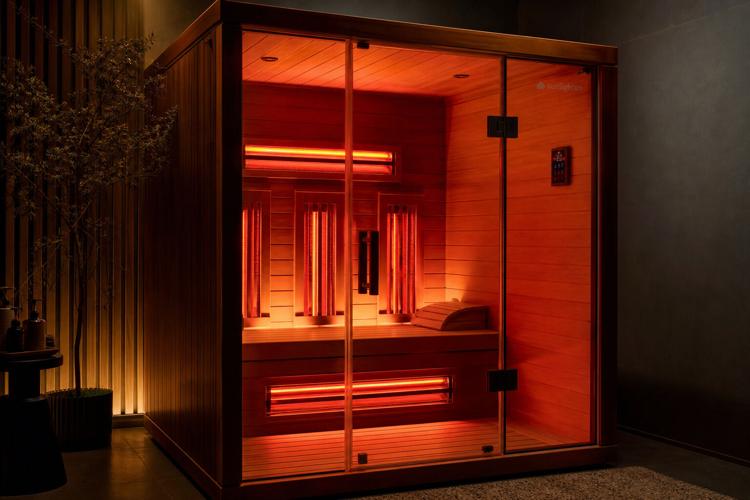
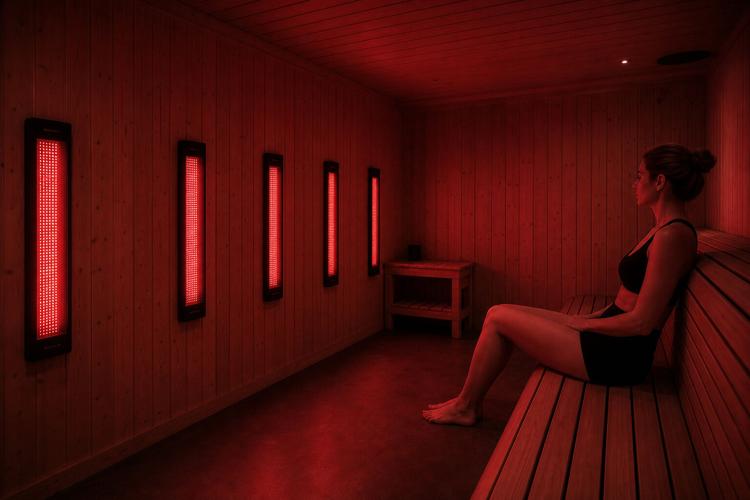
Almost every "red light sauna" on the market mounts those red light panels on the walls. That puts them 18-24 inches away from your body. Which means the red light feature is mostly ambient red light decoration.
I used to do separate sessions — 45 minutes under a red light panel, then 45 minutes in a sauna. It worked, but it ate up an hour and a half every time. When I started looking for a combined unit, I kept seeing the same problem: beautiful saunas with red light panels that were way too far from the body to matter.
Then I stumbled on SaunaCloud through a Reddit thread, talked to founder Christopher Kiggins, and realized someone had designed around this problem. That conversation changed what I was looking for, and it's the lens I'm using for every sauna in this roundup.
Key takeaways
- Red light therapy requires LEDs within 2-6 inches of bare skin to be clinically effective; most wall-mounted sauna panels sit 18-24 inches away, rendering the red light feature ineffective
- The Atlas One by SaunaCloud positions bench-level LEDs within 1-4 inches of the body when lying down — it's the only model in this roundup that meets clinical photobiomodulation distance standards
- Far infrared heat and red light therapy deliver separate benefits (cardiovascular stimulation, detoxification, cellular repair, deeper sleep), and combining them in one 30-minute session is a genuine time-saving win
What to Look For — The Buying Guide Nobody Actually Writes
Here's what matters when you're shopping for a sauna that actually delivers on its promises — starting with the most fundamental choice.
Heating Type: Infrared vs. Traditional vs. Steam
This is the first decision, and according to Benny Rehwald, founder of Topture, it's "the most critical." Here's how they break down:
- Infrared saunas heat your body directly using infrared radiation. They hit 140-170°F, warm up faster (15-30 minutes), and feel less oppressive than traditional saunas. You're heating the person, not the room.
- Traditional dry saunas use heated rocks or electric elements to warm the air. They run 190-230°F, take 20-40 minutes to heat, and deliver that intense dry heat experience.
- Steam saunas pour water over hot rocks to create humidity. Same high heat, but wet.
For home use, infrared is usually the practical winner — it's faster, uses less power, and the lower temps feel more manageable for daily sessions. But if you want that classic Finnish blast of dry heat, traditional is the only way.
Full-Spectrum vs. Far-Only Infrared
Infrared heaters come in two flavors:
- Far infrared is the longest wavelength. It penetrates deep into tissue, promotes muscle relaxation, and drives sweating for detoxification.
- Full-spectrum adds near and mid infrared wavelengths. Near infrared targets skin regeneration. Mid infrared hits soft tissues and circulation.
The Red Light Proximity Rule
Red light therapy (660nm and 850nm wavelengths) stimulates collagen production, improves skin tone and texture, and supports cellular repair. Red light therapy (660nm and 850nm wavelengths) behaves like light — it follows the inverse square law. Double the distance, and you get one-quarter the intensity.
Clinical photobiomodulation research for 660nm and 850nm wavelengths says the sweet spot is 2-6 inches from bare skin. At 12 inches, you've lost most of the therapeutic effect. At 18-24 inches (where most wall-mounted panels live), what you're feeling is heat from the sauna, not cellular repair from the red light.
This is why bench-level placement matters. If the red light LEDs are positioned to hit your body within 1-4 inches — like when you're lying down on the 40-inch deep lower platform below them, you're getting photobiomodulation. If they're on the walls or ceiling, you're getting ambient red light and not much else.
Build Quality and Materials
Sauna materials matter for three reasons: durability, air quality, and off-gassing.
- Solid Western Red Cedar is the gold standard. It's naturally resistant to bacteria, mold, and warping. Kiln-dried clear-grade cedar won't off-gas VOCs the way cheaper materials can.
- Thermowood (heat-treated wood) is another premium option. It's rot-resistant, durable, and used in high-end Finnish saunas.
- MDF, poplar veneers, and particle board are budget options. They work fine initially but can warp over time and may off-gas in the heat.
Hand-built North American construction typically comes with better warranties and easier customer support. Mass-produced imports are cheaper but may not last as long.
EMF Safety
Every electrical device emits electromagnetic fields. For something you'll sit in regularly with bare skin, this matters.
Experts recommend EMF levels between 1-3 milligauss (mG) . Many mass-market brands like Sunlighten, Dynamic Saunas, and Equinox run 3-10+ mG. The Atlas One averages 0.20 mG — well below the concern threshold, with zero ELF (extremely low frequency) emissions because all wiring is shielded and grounded throughout.
Electrical Requirements — The Hidden Gotcha
Most home saunas require a dedicated circuit — meaning that breaker serves only the sauna. Common requirements:
- Most infrared saunas: 20-30A at 240V
- Larger or higher-heat models: 30-40A at 240V
- Homes with panel capacity under 200A may need a costly service upgrade ($500-$1,500 depending on your electrical setup)
Budget and Size Spectrum
Here's the landscape at a glance:
- Portable blankets (~$600-800): Far infrared only, no red light. Good for travel or apartments. Folds to 20 pounds.
- Compact cabins (~$1,500): Far-only, tight single-person fit. Gets hot fast. No effective red light.
- Full-size units ($3,000+): Combined infrared and red light therapy, better materials, better heat distribution. This is where you get actual red light — but only if the LEDs are positioned correctly.
Red Light vs. Infrared Heat — What Each Actually Does
Before we get to the models, let's be clear about what you're getting from each therapy. They work through distinct mechanisms, and understanding that helps you decide what matters.

Red light boosts cellular energy by stimulating mitochondria to produce more ATP.
Red light therapy (660nm/850nm) is photobiomodulation. The light penetrates your cells and stimulates the mitochondria — the energy factories in your cells, to produce more ATP. That extra cellular energy supports:
- Collagen production (better skin tone and texture)
- Faster cellular repair (recovery from workouts, inflammation reduction)
- Improved skin turnover
The catch: it only works at close range. Those LEDs need to be nearly touching your skin to deliver enough photons for cellular effect.
Far infrared heat is a different mechanism entirely. The heat penetrates tissue, raises your core temperature, and triggers a cascade of physiological responses:
- Your heart rate increases comparably to moderate aerobic exercise — a "passive cardio" effect that improves circulation and can lower resting blood pressure over time
- You sweat, and that sweat can contain heavy metals and lipid-soluble toxins at concentrations reported 7 times higher than conventional sweat
- The heat activates your parasympathetic nervous system, lowering cortisol and shifting you into rest-and-digest mode
- After the session, your core temperature drops, which mimics the body's natural sleep-onset signal — this is why regular sauna users often report deeper, slower-wave sleep
The combined effect: Cardiovascular benefit + cellular repair + stress reduction + better sleep. In one 30-minute session. That's the real-world win — and it's why I went from two separate 45-minute sessions to one combined session.
Atlas One by SaunaCloud — Best Integrated Red Light Infrared Sauna
The Atlas One is the only sauna in this roundup that solves the red light proximity problem — here's how its design makes that possible.
Why Bench-Level Red Light Changes Everything
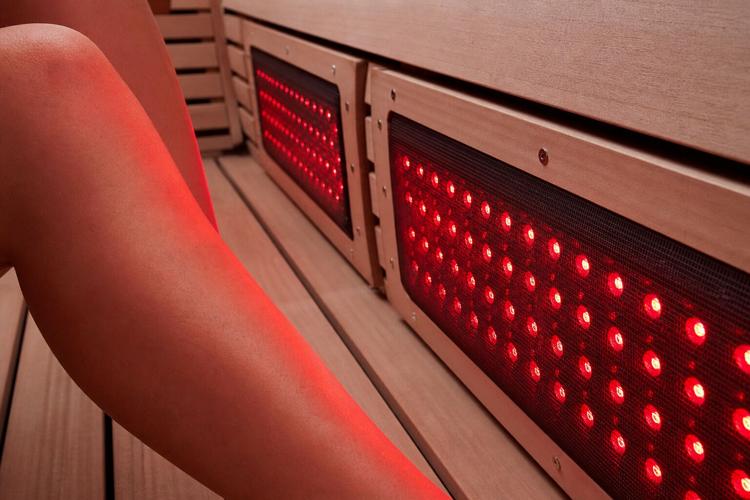
The Atlas One positions its red light LEDs in the bench and lower platform, not on the walls. When you lie down on the 40-inch deep lower platform, the LEDs are within 1-4 inches of your body. That's the clinical sweet spot.
When you're sitting on the 22-inch bench, the LEDs are still within effective range for your back and legs. The Atlas One's bench-level LEDs within 1-4 inches of the body when lying down is the only model in this roundup that solves the proximity problem. Wall-mounted panels at 18-24 inches? The Atlas One's bench-level design isn't an incremental improvement — it's the difference between getting red light therapy and getting red light decoration.

Bench-level LEDs keep red light within the 2-6 inch therapeutic range.
VantaWave Far Infrared
The heat comes from VantaWave far infrared heaters tuned to 7.9 microns — a wavelength that penetrates tissue to mobilize heavy metals and lipid-soluble toxins, flushing them through sweat. Heater surface temperature hits 190°F, with total output of 6kW. The VantaWave far infrared penetrates tissue to mobilize heavy metals and lipid-soluble toxins, flushing them through sweat at concentrations 7× higher than conventional perspiration.
Build Quality: Solid Wood, No Shortcuts
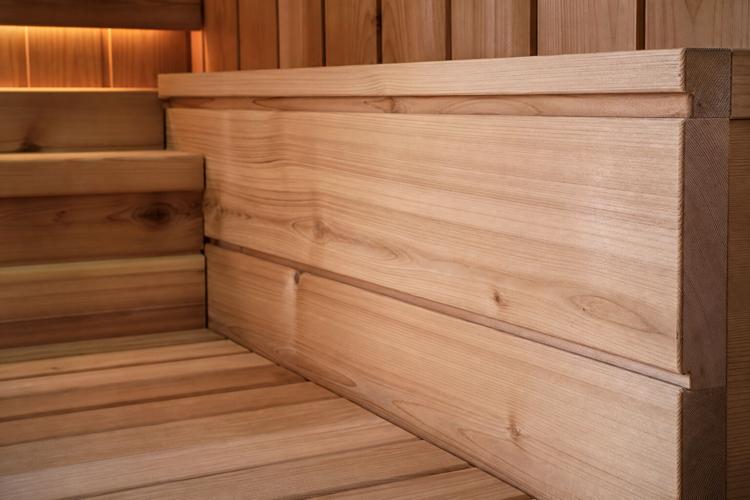
The Atlas One uses clear-grade Western Red Canadian Cedar, solid planks (no veneers, no plywood). Each board is hand-selected for grain and color, then kiln-dried. Western Red Cedar is naturally resistant to bacteria, mold, and warping — so it handles the heat and moisture better than cheaper woods.
Every unit is hand-built in US and Canadian warehouses. The electrical components are built to North American code. This isn't a flat-pack import.
Ultra-Low EMF
Average EMF output is 0.20 mG — below the 1-3 mG recommended ceiling, and a fraction of the 3-10+ mG you'll find in many mass-market brands. All wiring is shielded and grounded throughout. Zero ELF emissions.
Electrical Requirements
Be prepared: this is not plug-and-play. The Atlas One requires:
- 240V, 30-amp dedicated circuit
- 10-gauge copper wiring, hardwired
- GFCI protection (required by code)
- Recommended: an indoor-rated spa disconnect
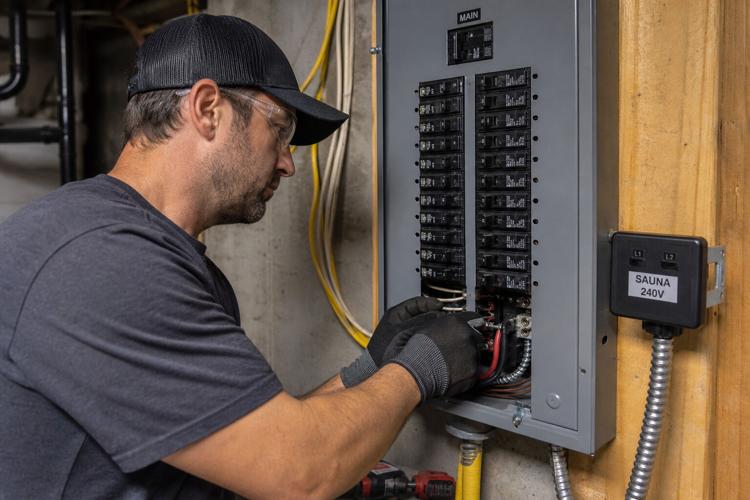
Full electrical plans come with every order. You need an electrician. If your home panel is under 200A, budget for a potential service upgrade.
Design and Dimensions
The Atlas One is a single-person unit. The 22-inch bench lets you sit upright. The 40-inch deep lower platform lets you lie flat for full-body red light exposure. Total weight: 725 pounds. Walls are 5.75 inches thick with full insulation, so outdoor placement works.
Exterior panels are vertical black cedar — weather-resistant and modern-looking. It ships via ground freight with a liftgate truck, and the carrier calls to schedule delivery. Lead time is 7-11 weeks from design approval. That's a wait, but it reflects the hand-built nature.
Smart Features
iOS/Android app with Wi-Fi controller. You can monitor and control temperature, session length, and red light settings from your phone.
Warranty
Limited lifetime coverage on the structure, heaters, red light system, and electrical components. Commercial installations get 1 year. That's a strong warranty, and it reflects the company's confidence in the build.
What Users Say
I've read a lot of testimonials and talked to a few owners. The consistent themes:
- I used to do red light and sauna separately — 45 minutes each. The Atlas One gives me both in one 30-minute session.
- Nothing compares to lying on the Atlas One bench with LEDs just inches from your body.
- Build quality is incredible — SaunaCloud walked us through everything from electrical plans to final setup.
The Verdict on Atlas One
If your primary goal is combined red light therapy and infrared heat, this is the only model in the roundup that delivers both effectively. The proximity problem is real, and the Atlas One solves it. You pay more, you wait longer, and you need an electrician. But you get a hand-built sauna with clinical-grade red light placement, ultra-low EMF, solid cedar construction, and a lifetime warranty.
Best for: Anyone who wants actual red light therapy integrated with infrared heat and has the budget and timeline to make it work.
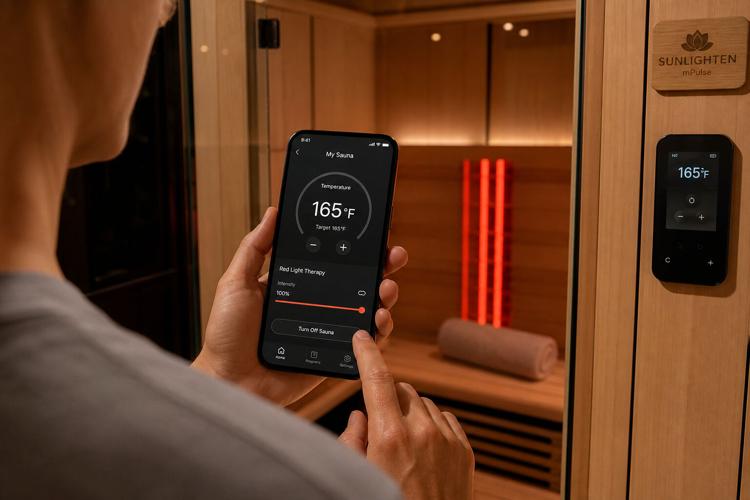
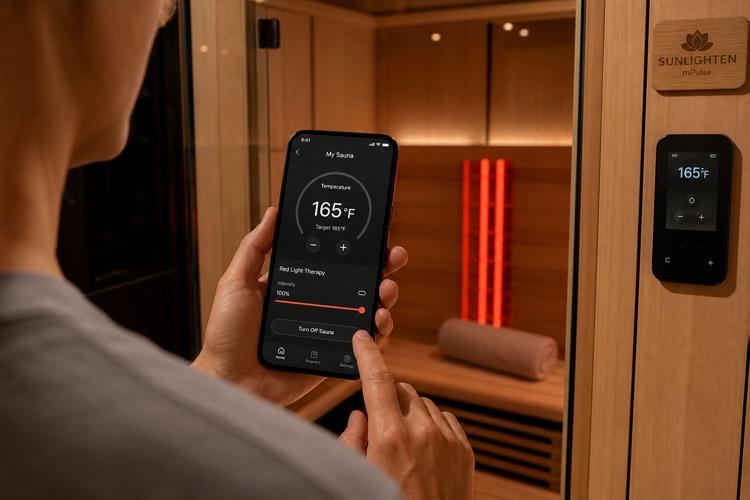
Sunlighten mPulse Believe — Best for Smart Features and Customization
The mPulse Believe packs impressive technology and customization options, but its red light placement raises the same proximity concern.

Wi-Fi enabled controls let you monitor and adjust your session from your phone.
What Makes It Good
The mPulse Believe uses SoloCarbon heating technology, which independently emits near, mid, and far infrared wavelengths. That gives you targeted heating at different tissue depths.
The built-in 10.1-inch Android touchscreen runs seven pre-programmed wellness routines — Muscle Recovery, Heart Health, Detoxification, and others. You can customize intensity via PulseIQ controls. It's like having a wellness coach built into the sauna.

Wall-mounted panels at 18-24 inches deliver ambient glow, not therapy.
Construction is eco-certified kiln-dried wood. The Celliant fabric heaters enhance infrared reflection, which the brand claims makes the heat more efficient. Ultra-low EMF and VOC technology passed third-party safety testing. Assembly is tool-free with a magnetic system — easy.
The Red Light Caveat
Here's the issue: the medical-grade red light therapy is recessed into the ceiling panels. That means the LEDs are mounted above you, not near you.
Remember the proximity rule? Ceiling-mounted red light at any normal sauna distance is likely too far for clinical photobiomodulation. You'll get the infrared heat (which works fine from any distance), but the red light component probably isn't delivering meaningful cellular effects.
Best for: Tech-focused users who want pre-set wellness programs and customization, and who prioritize smart features over red light efficacy.
Redwood Outdoors Haven — Best Traditional Finnish Experience
If your priority is authentic dry heat rather than combined therapy, the Haven delivers a classic Finnish sauna experience with premium construction.
What Makes It Good
The Haven delivers both humid and dry heat up to 195°F. It comes in 3-person and 4-person Sanctuary models. The 6kW Harvia KIP heater holds 40 pounds of rocks — enough to generate proper steam when you pour water on them.
Humidity runs 15-25% in dry mode. Heat-up time is 30-45 minutes to reach 160-190°F. Construction is FSC-certified Canadian Thermowood with tempered glass. With proper care, the Haven should last 15-20+ years.
Assembly is a straightforward interlocking install — doable in a day with two people, but you need a dedicated 240V line and a licensed electrician.
The Trade-Off
There is no red light therapy included. This is a pure traditional sauna. If you want the combined therapy, this isn't it. But if you want extreme heat and proven longevity, the Haven is the best-built option in this category.
Best for: Traditional sauna purists who want the highest heat tolerance and don't need red light.
Equinox — Best Full-Spectrum Infrared for Deeper Sweat
The Equinox runs full-spectrum infrared (near, mid, and far wavelengths) through a heating system that covers all three bands. It reaches 165-170°F in about 30 minutes.
What Makes It Good
Eco-certified kiln-dried wood with nontoxic materials. Built-in Bluetooth sound system and medical-grade chromotherapy lights. Assembly requires no power tools, screws, or nails — two people can complete it in a couple of hours.
Requires a dedicated 20A circuit. Simple, clean, functional.

Solid Western Red Cedar resists mold and warping, ensuring durability and air quality.
What Users Report
Some users report a deeper, more productive sweat with full-spectrum versus far-only infrared.
The Trade-Off
No integrated red light therapy. This is a full-spectrum infrared sauna, not a combined unit. For heat and sweat, it's excellent. For red light, you'd need a separate panel.
Best for: Infrared sauna buyers who want full-spectrum heating and easy assembly, and who aren't looking for combined red light therapy.
Sun Home Luminar — Best Premium Outdoor-Friendly Infrared
The Luminar is built for outdoor placement. Its aerospace-grade aluminum exterior maintains consistent heat in cooler months — a real advantage if you're putting a sauna on a patio or deck.
What Makes It Good
Full-spectrum heaters along the front glass. Far infrared heaters throughout the cabin and floor. Max temperature: 170°F. Bluetooth surround sound, built-in speakers, chromotherapy lighting all controlled via mobile app.
Available in two-person and five-person configurations. A tester noted the two-person model fit three — so the dimensions might be generous.
The Assembly Reality
This is not a weekend DIY project. Assembly is intensive, and the brand recommends hiring a contractor for inexperienced users. The tester who set one up reported needing a contractor and a three-day storage period during assembly planning. Budget for professional installation.
The Trade-Off
No bench-level red light therapy. The Luminar is an excellent outdoor infrared sauna with premium materials and smart features. But if red light is your priority, the LEDs aren't positioned for clinical effectiveness.
Best for: Outdoor placement with premium materials and cold-weather performance.
Dynamic Saunas Compact — Best Budget Infrared (~$1,500)
At about one-third the cost of premium models, the Dynamic Saunas compact is a legitimate entry point for far infrared heat.
What Makes It Good
Far infrared only. Heats to 140°F in 15-30 minutes. Canadian Hemlock wood and tempered glass. Six carbon heating panels, interior and exterior LED controls, Bluetooth, and chromotherapy lights.
Assembly takes 45-60 minutes using buckles and clasps — simple. Compact footprint: 39 by 36 inches.

Most full-size saunas require a dedicated 240V circuit — plan for an electrician.
The Reality
It's a solo sauna. The listing says it can fit two, but it's tight. One person is comfortable. No red light therapy at all.
Best for: Budget-conscious buyers who want far infrared heat in a small footprint.
Higherdose Infrared Blanket — Best Portable Option (~$600-800)
If you travel, live in an apartment, or just want to try infrared heat before committing to a full cabin, the Higherdose blanket is worth considering.
What Makes It Good
Far infrared heat up to 175°F with eight temperature settings. Folds to about 20 pounds for storage. Some users report better sleep quality and reduced muscle soreness after regular use. One tester used it twice a month for a year at level 8 and reported better skin and faster recovery.
The Claims You Should Question
Higherdose claims the blanket's far infrared wavelengths combined with magnets and crystals promote "deep detoxification and relaxation."
The Trade-Offs
No red light therapy. Far infrared only. The carrying case and insert (which helps with comfort) are sold separately — an extra cost to factor in.
Best for: Travelers, apartment dwellers, and anyone wanting to try infrared heat without a permanent installation.
Redwood Outdoors Cabin Outdoor Sauna — Best Traditional Outdoor
This is the bigger cousin of the Haven — an outdoor traditional sauna built to last.
What Makes It Good
2-inch thick Thermowood for insulation. Finnish-made Harvia heater (upgradeable to 8kW with 130 pounds of stones for over $2,000 extra). Reaches up to 190°F in 30-40 minutes. Two-level seating for up to four people.
Durable, rot-resistant, properly built for outdoor exposure.
The Assembly Challenge
This takes at least a full day and requires DIY knowledge and tools. It's a real project, not an afternoon setup.
The Trade-Offs
No red light therapy. Traditional dry heat only.
Best for: Outdoor traditional sauna enthusiasts with DIY skills and space.

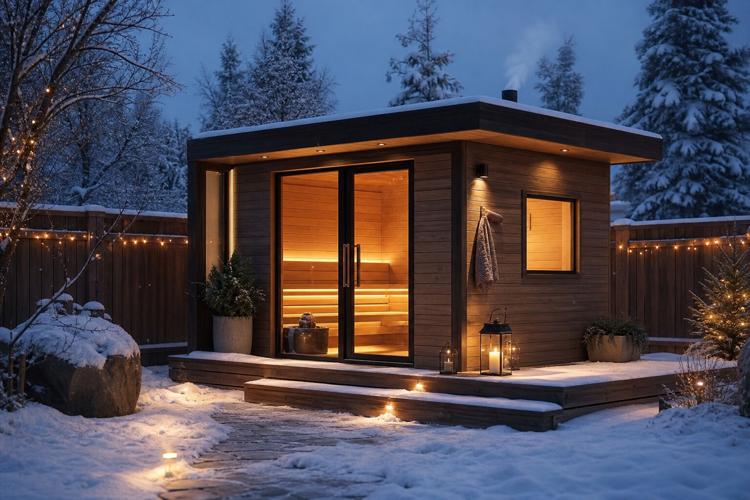
Outdoor saunas with insulated walls and weatherproof exteriors perform year-round.
Plunge Sauna Kit — Best High-Heat Traditional (230°F)
Plunge is known for cold plunges, but their sauna kit delivers serious heat — up to 230°F with a wall-mounted heater holding over 130 pounds of rounded olivine diabase stones.
What Makes It Good
App-controlled, so you can preheat from your phone. Modular tongue-and-groove design. High-quality cedar with a weatherproof roof. Features include flip-up benches, a built-in sliding vent, and a phone mount.
The Quirks
Requires a 240V/30A or 240V/50A outlet installed by an electrician — check which your unit needs. The bottom bench is narrower and feels noticeably cooler to sit on. A design quirk worth noting.
The Trade-Off
No red light therapy. Pure traditional heat. Pairs naturally with Plunge's cold tub for contrast therapy.
Best for: High-heat traditional sauna users who also want contrast therapy with cold plunging.
Final Verdict — Which Sauna Should You Buy?
For combined red light + infrared therapy (the primary intent): The Atlas One is the only model in this roundup that meets clinical red light proximity standards (<6 inches). It also has verified ultra-low EMF (0.20 mG), solid hand-selected Western Red Cedar construction, and a limited lifetime warranty. You'll wait 7-11 weeks and need an electrician. But you get actual red light therapy, not ambient red light.
For smart features and customization: The Sunlighten mPulse Believe is impressive — just understand that ceiling-mounted red light likely isn't delivering photobiomodulation.
For traditional dry sauna heat: The Redwood Outdoors Haven is the best-built traditional option, with 15-20+ year lifespan and proper Finnish heating.
For budget: The Dynamic Saunas Compact gives you far infrared heat at a fraction of the cost. No red light, but solid value.
For portability: The Higherdose blanket is the only option that travels. No red light, fair heat.
For high-heat traditional: The Plunge sauna gets hotter than anything else here and pairs naturally with cold therapy.
If you want true combined therapy — the time-saving, two-in-one session that delivers both benefits, the Atlas One is the investment. If you just want heat, there are cheaper options that work fine.
Frequently Asked Questions
Is the red light in an infrared sauna good?
Yes, but only if the LEDs are positioned within 2-6 inches of your bare skin. Most infrared saunas mount red light panels on walls 18-24 inches away, which means you're getting ambient red light decoration, not therapeutic photobiomodulation. The red light itself is beneficial for collagen production, cellular repair, and skin health — proximity is what makes it actually work.
What's the difference between far infrared and full-spectrum saunas?
Far infrared uses the longest wavelength to penetrate deep tissue for muscle relaxation and detoxification through sweat. Full-spectrum adds near infrared (targets skin regeneration) and mid infrared (hits soft tissues and circulation), giving you a broader range of physiological effects. Full-spectrum is typically more versatile, but many budget models are far infrared only.
How close do red light LEDs need to be to actually work?
Clinical research for 660nm and 850nm wavelengths shows the therapeutic sweet spot is 2-6 inches from bare skin. At 12 inches, you've lost most of the photon intensity needed for mitochondrial stimulation. Wall-mounted panels at 18-24 inches — which is standard in most combined saunas, deliver heat from the sauna, not meaningful photobiomodulation from the red light.
Why do most red light saunas have ineffective red light?
Because they mount the red light LED panels on the walls or ceiling, which puts them 18-24 inches from your body. Red light therapy follows the inverse square law — double the distance, you get one-quarter the intensity. At that range, the light has dissipated so much that it can't penetrate tissue for cellular repair. The fix is bench-level or floor-level placement that brings LEDs within the 2-6 inch clinical window.
Is a combined red light and infrared sauna worth the extra cost?
It's worth it only if the red light LEDs are positioned within inches of your body — typically on the bench or lower platform, not the walls or ceiling. When integrated properly, you get cardiovascular benefit, cellular repair, and stress reduction in one 30-minute session instead of two separate hour-long sessions. If the red light placement is wrong, you're paying extra for a feature that doesn't deliver therapeutic benefit.

(0) comments
We welcome your comments
Log In
Post a comment as Guest
Keep it Clean. Please avoid obscene, vulgar, lewd, racist or sexually-oriented language.
PLEASE TURN OFF YOUR CAPS LOCK.
Don't Threaten. Threats of harming another person will not be tolerated.
Be Truthful. Don't knowingly lie about anyone or anything.
Be Nice. No racism, sexism or any sort of -ism that is degrading to another person.
Be Proactive. Use the 'Report' link on each comment to let us know of abusive posts.
Share with Us. We'd love to hear eyewitness accounts, the history behind an article.