
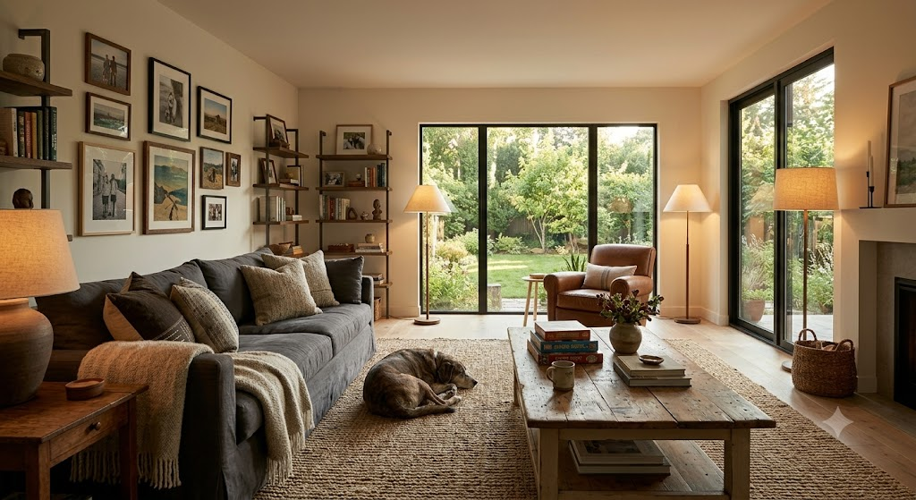
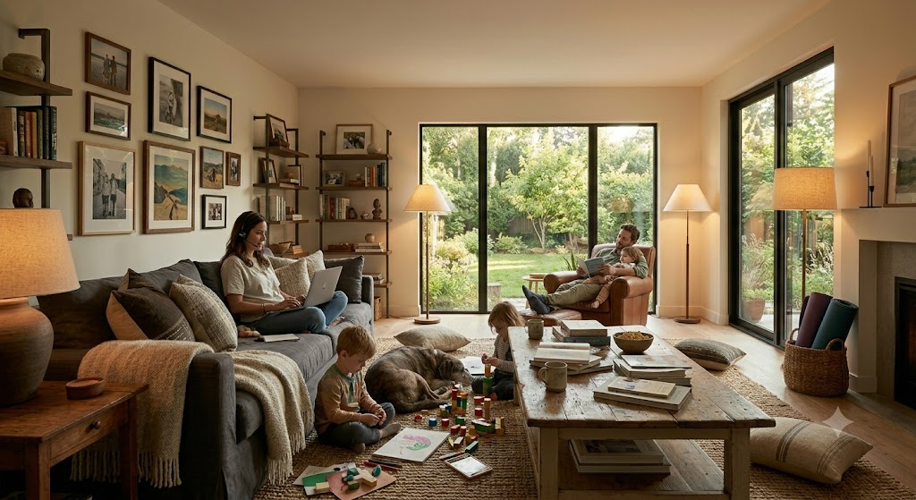

There is a funny thing about the best living rooms: they are rarely the ones that look the most expensive.
We have all walked into homes where everything is perfectly arranged. The sofa is beautiful, the pillows are lined up like they have been briefed before guests arrive, and every decorative object seems to know exactly where it belongs. The room photographs well. It may even earn compliments. And yet, after a few minutes, it can feel more like a showroom than a place where anyone actually lives.
Then there are the rooms that make people settle in without thinking about it. Someone takes the corner chair. Someone else leans into the sofa. A conversation stretches longer than expected. The dog has clearly selected the best seat in the house. The room does not need to announce that it is comfortable. It simply is.
That is the real art of living room design today. The best spaces are no longer built only around appearances. They are designed around the way people live, gather, rest, entertain, and reconnect at the end of the day. A beautiful living room still matters, of course, but beauty works best when it is supported by comfort, function, warmth, and personality.
The Living Room Is No Longer Just for Show

For years, the living room carried a certain pressure. It was the room meant for guests, special occasions, and furniture nobody was supposed to disturb. In many homes, it stayed almost too perfect, waiting for company while everyday life happened somewhere else.
That version of the living room feels increasingly outdated. Today, the living room is often the most flexible space in the home. It may host movie nights, family conversations, remote work, reading, coffee with friends, holiday gatherings, and quiet moments when everyone finally puts their phones down for five minutes. The room has to look good, but it also has to work hard.
That shift mirrors a broader movement in home design toward spaces that support real life. As FINE has covered in How Natural Light Is Shaping Modern Luxury Home Design, modern interiors are increasingly being shaped by comfort, wellness, function, and the way people actually move through a home. The living room may be the clearest example of that change.
Before choosing a sofa, paint color, rug, or coffee table, it helps to ask a more honest question: what actually happens in this room? A family that entertains often may need generous seating and easy flow. A couple who loves reading may care more about lamps, quiet corners, and soft textures. A busy household may need performance fabrics, smart storage, and surfaces that can survive snacks, pets, and everyday life.
The most comfortable living rooms are not designed around an imaginary lifestyle. They are designed around the one people are already living. That also means thinking carefully about movement through the room. A beautiful layout quickly becomes frustrating if people have to squeeze around furniture or constantly walk between seating and the television. Keeping primary walkways open allows the room to feel larger while making everyday living and entertaining far more comfortable. Often, removing one unnecessary chair creates a better room than adding another decorative piece.
Comfort Has Become a New Kind of Luxury
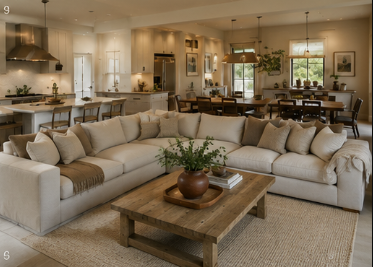
Luxury used to be closely tied to formality. Stiff chairs, polished surfaces, and rooms that felt almost too perfect were once considered signs of taste. Today, many homeowners want something different. They still want beauty, but they also want ease.
Comfort does not mean careless design. In fact, making a room feel effortless often requires more thought, not less. A well-scaled sofa creates the foundation, but the surrounding layout is what makes the room work. Designers often recommend choosing an area rug large enough for at least the front legs of the sofa and chairs to rest on it, helping define the seating area instead of leaving furniture floating around the room. Coffee tables generally work best when they sit within easy reach, usually about 14 to 18 inches from the seating, while side tables should be close enough that someone can set down a drink without performing a small stretching routine.
The American Society of Interior Designers has long emphasized the impact of design on human experience, and that idea applies beautifully to living rooms. A room is not successful simply because it looks finished. It is successful when it improves the way people feel and function inside it.
This is why deep seating, natural materials, textured fabrics, warm woods, and performance upholstery continue to make sense in modern homes. They allow a room to feel refined without becoming untouchable. The best living rooms give people permission to relax.
A few practical details make that comfort easier to achieve:
- Choose an area rug large enough to anchor the main seating group.
- Keep chairs close enough for natural conversation, not stranded across the room.
- Place coffee tables and side tables within comfortable reach.
- Leave clear walking paths so the room feels open, not crowded.
- Use storage pieces to hide everyday clutter without stripping the room of personality.
- Balance soft seating with structured pieces so the space feels polished, not sloppy.
These small choices may not be the first things people notice, but they are often the reason a room feels good.
Natural Light Does More Than Decorate the Room
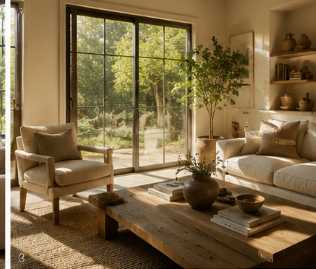
Some design features work so quietly that people underestimate them. Natural light is one of them.
A living room with good daylight immediately feels more open, calm, and welcoming. Sunlight softens edges, changes the mood of colors, and helps connect the indoors with the world outside. It can make a simple room feel more elegant and a large room feel more alive.
Not every home has dramatic windows or perfect exposure, but most living rooms can benefit from small adjustments. Heavy window coverings can be replaced with lighter treatments. Mirrors can be positioned to reflect daylight. Furniture can be arranged so it does not block windows. Wall colors and finishes can be selected to help the room feel brighter without making it look cold.
The U.S. Department of Energy’s guide to daylighting explains how windows and skylights bring sunlight into a home and can reduce the need for artificial lighting during the day. That may sound technical, but the everyday takeaway is simple: daylight should be planned, not treated as an accident.
A room that feels good in the morning, afternoon, and evening usually begins with understanding how light moves through it.
The Best Rooms Feel Layered, Not Decorated All at Once
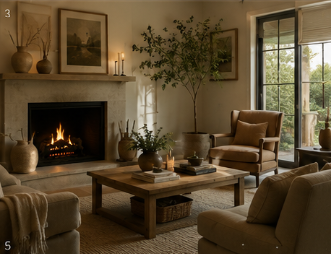
Think about the living rooms you remember most. Chances are, they were not memorable because every item matched. They probably felt collected, layered, and personal.
A textured rug beneath a comfortable sofa. Linen curtains that soften the afternoon light. A side table with books that have actually been read. A piece of art that means something. A vintage chair that brings a little character into an otherwise polished room. These details do not shout, but together they create depth.
Layering also helps prevent a room from feeling flat. Mixing smooth and textured fabrics, natural woods with metal accents, woven baskets beside polished ceramics, or vintage finds alongside contemporary furniture creates visual interest without overwhelming the space. It is these subtle contrasts that often make professionally designed interiors feel rich, welcoming, and effortlessly lived in.
That is where many living rooms go wrong. They are decorated quickly, often from one store, in one style, with one color palette. The result may be neat, but it can also feel predictable. Rooms become more interesting when they include contrast: old and new, soft and structured, polished and organic, formal and relaxed.
FINE’s recent look at Interior Color and Style Trends for Homes in 2026 points toward the same idea: homeowners are moving toward warmer palettes, nature-inspired tones, and interiors that feel calmer and more personal. In the living room, that does not mean chasing every trend. It means using color, texture, and materials to create a room that feels grounded.
The best living rooms rarely look like they were finished in one weekend. They feel like they evolved.
Lighting Is What Makes the Room Work After Sunset
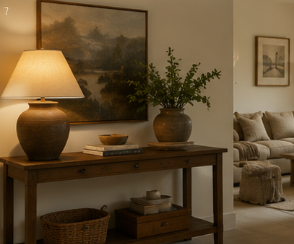
A living room can be beautiful during the day and disappointing at night. Usually, lighting is the reason.
One overhead fixture may technically light the room, but it rarely creates atmosphere. A comfortable living room needs layers of light rather than one source trying to do everything. Ambient lighting gives the space overall brightness, table lamps make conversation areas feel intimate, floor lamps create inviting reading corners, and accent lighting highlights artwork, shelving, fireplaces, or architectural details.
This is where design becomes less about decoration and more about mood. Table lamps soften corners. Floor lamps make a chair feel intentional. Dimmers allow the room to shift from lively entertaining to quiet evening comfort. Good lighting does not simply help people see the room. It helps them feel the room.
For homeowners thinking more broadly about technology and comfort, FINE’s piece on Smart Home Automation: The Next Standard in Luxury Living offers a useful reminder: the best home technology works quietly in the background. Lighting controls, smart dimmers, and integrated systems should make the room feel easier to live in, not more complicated.
A living room should not feel like a control panel. It should feel like a place where the house is quietly helping.
Personality Is What Keeps a Room From Feeling Generic
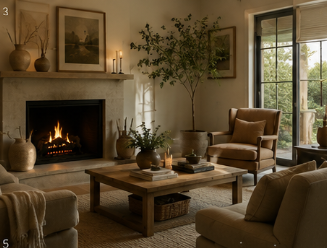
A living room without personality can still be attractive. It just may not be memorable.
The rooms people love tend to reveal something about the people who live there. Maybe it is artwork collected during travel, family photographs displayed with restraint, shelves filled with favorite books, or a coffee table that hints at someone’s interests. These details create emotional warmth. They tell guests they are not standing in a staged space; they are being welcomed into someone’s life.
Publications such as Architectural Digest often showcase living rooms that feel collected, expressive, and layered rather than perfectly matched. That is a useful reminder for homeowners: style does not have to mean sameness.
That does not mean every surface needs to be filled. In fact, too many accessories can make a room feel cluttered and restless. The key is choosing pieces with meaning rather than adding objects just to fill space.
Personal design is not about displaying everything. It is about selecting what matters. When a room contains a few pieces with history, humor, beauty, or memory attached to them, it becomes more than a designed space. It becomes a place with a point of view.
A comfortable living room is not measured by how many compliments it receives the day it is finished. It is measured by how often people choose to spend time there months and years later.
The FINE Take
A great living room should do more than look beautiful in photographs. It should support the rhythms of daily life, welcome people naturally, and offer comfort that feels unforced.
The most timeless living rooms are not the ones that follow every trend or feature the most expensive furniture. They are the ones that understand how people actually live. They make room for conversation, quiet, laughter, pets, books, guests, and the ordinary moments that give a home its character.
In the end, an effortlessly comfortable living room is not created by one perfect sofa, one ideal paint color, or one dramatic light fixture. It comes from the way all of those choices work together to make people feel at ease.
That kind of comfort never goes out of style.


(0) comments
We welcome your comments
Log In
Post a comment as Guest
Keep it Clean. Please avoid obscene, vulgar, lewd, racist or sexually-oriented language.
PLEASE TURN OFF YOUR CAPS LOCK.
Don't Threaten. Threats of harming another person will not be tolerated.
Be Truthful. Don't knowingly lie about anyone or anything.
Be Nice. No racism, sexism or any sort of -ism that is degrading to another person.
Be Proactive. Use the 'Report' link on each comment to let us know of abusive posts.
Share with Us. We'd love to hear eyewitness accounts, the history behind an article.