
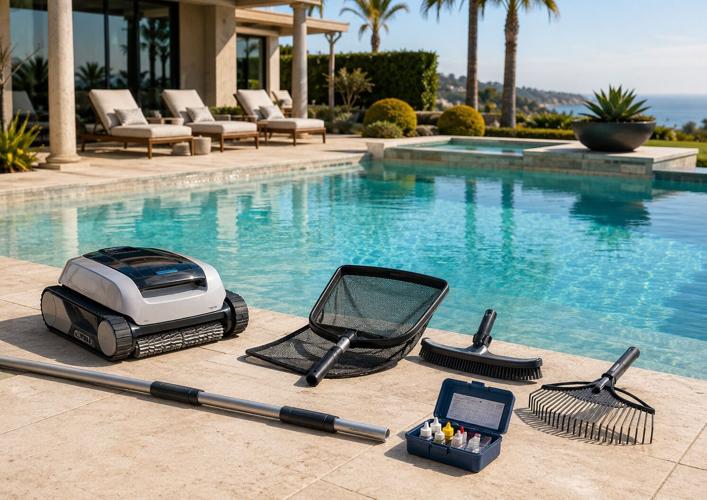
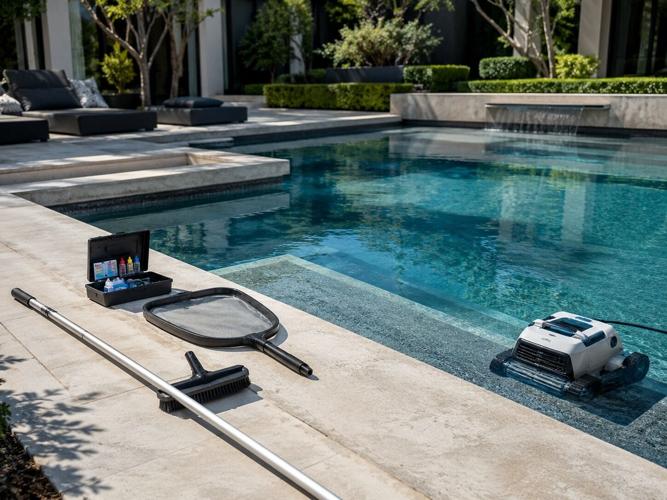

A beautiful pool may look effortless, but anyone who owns one knows there is usually a small army of tools hiding behind the scenes. Skimmers, brushes, test kits, vacuums, poles, baskets, hoses, and the occasional gadget that promises to make pool care feel less like a second career all have their place. The trick is knowing which tools actually help and which ones are just taking up space in the garage.
The right pool maintenance tools make it easier to keep water clear, surfaces clean, equipment working, and the backyard ready for actual enjoyment. You do not need every product in the pool aisle. You do need a practical setup that helps you skim, brush, test, vacuum, store supplies safely, and notice problems before they turn into a very expensive lecture from your pool.
Start With A Good Telescoping Pole
A telescoping pole is the quiet workhorse of pool maintenance. It connects to skimmer nets, brushes, vacuum heads, and other attachments, making it one of the first tools every pool owner should have. A flimsy pole can bend, wobble, or make every cleaning task feel more irritating than necessary, which is not the energy anyone wants near a pool.
Look for a sturdy pole that extends far enough to reach the deep end, steps, corners, and awkward areas without forcing you to perform a balancing act along the coping. Aluminum poles are common, lightweight, and easy to handle. A good pole is not glamorous, but it is the backbone of many other pool maintenance tools.
Use A Skimmer Net For Daily Debris
A skimmer net is one of the simplest and most useful tools for keeping a pool looking clean. It removes leaves, insects, flowers, grass, and whatever else the wind decides your pool needed. In a backyard with trees, landscaping, or nearby outdoor dining, a skimmer net may become the most-used tool in the collection.
There are two common styles: flat skimmer nets and deeper leaf rakes. A flat net works well for quick surface cleaning. A deeper leaf rake is better for collecting heavier debris from the floor or after storms. Regular skimming also reduces the burden on the filter and helps the pool look polished between deeper cleanings.
Keep A Pool Brush In Regular Rotation
Brushing is one of those pool tasks people like to skip until algae introduces itself. A pool brush helps remove buildup from walls, steps, benches, corners, and tile lines. These are the areas where algae, scale, and grime like to settle, especially when circulation is not perfect.
The right brush depends on the pool surface. Nylon brushes are generally used for more delicate surfaces such as vinyl, fiberglass, and painted pools. Stainless steel or mixed-bristle brushes may be used on some concrete or plaster pools, but homeowners should confirm what is safe for their specific surface. The wrong brush can damage a finish, which is an expensive way to learn a small lesson.
Have A Tile Brush For The Waterline
The waterline is where sunscreen, body oils, minerals, and debris tend to collect. A tile brush or dedicated waterline brush can help clean this area without using harsh products that may damage tile, stone, grout, or surrounding materials.
For luxury pools with glass tile, natural stone, or decorative coping, gentle care matters. The goal is to remove buildup without scratching or dulling the finish. A regular brush may be too awkward or aggressive for detail work, so a smaller tile brush is worth keeping nearby.
Choose The Right Vacuum Setup

Vacuuming removes dirt, sand, leaves, and debris that settle on the pool floor. Manual vacuums usually connect to a telescoping pole and hose. They require more effort, but they give the homeowner control over where to clean. This can be useful after storms, parties, or landscaping work.
Automatic cleaners can make routine cleaning easier. Suction-side cleaners, pressure-side cleaners, and robotic pool cleaners all work differently. Robotic cleaners are popular because they operate independently from the main pool pump in many setups and can help scrub floors and walls depending on the model. They are not magic, but they can make maintenance feel much less like a weekend punishment.
Do Not Skip The Pool Test Kit
Testing is not optional if you want clear, comfortable water. The Centers for Disease Control and Prevention recommends keeping pool pH in the proper range and maintaining adequate disinfectant levels. A test kit helps homeowners understand what the water actually needs before adding products.
Test strips are convenient and easy for quick checks. Liquid test kits may give more detailed results when used correctly. Digital testers can also be useful, though they need care and calibration. Whichever method you choose, the principle is the same: test first, treat second. Guessing is not pool care. It is chemistry-themed optimism.
Keep A Thermometer Handy
A pool thermometer may seem minor, but water temperature affects comfort, chemical demand, and how quickly algae can become a problem. Warmer water often needs closer attention, especially during summer, after heavy use, or when the pool is covered for long periods.
Thermometers can be floating, digital, or built into smart monitoring systems. The exact style matters less than the habit of paying attention. When water gets warmer, testing, circulation, and brushing become even more important.
Use A Filter-Cleaning Tool
The filter quietly does much of the heavy lifting in pool maintenance. Cartridge filters, sand filters, and DE filters all require different care, but every pool owner should understand the basic maintenance needs of the system they have.
For cartridge filters, a filter-cleaning hose attachment can help remove debris from pleats. Sand and DE systems may require backwashing or specific maintenance steps. A dirty filter can reduce circulation, strain equipment, and make the water harder to clear. Even the best pool maintenance tools cannot fully compensate for a neglected filter.
Empty Skimmer And Pump Baskets Regularly
Skimmer baskets and pump baskets catch debris before it reaches other parts of the system. When they are full, water flow can suffer. Poor flow makes filtration less effective and may put extra stress on the pump.
Homeowners should check baskets regularly, especially after wind, storms, heavy pool use, or landscaping work. This is one of the easiest maintenance tasks and also one of the easiest to forget. Unfortunately, the pool does not forget. It simply responds by working worse.
Store Pool Chemicals Safely
Chemicals are not tools in the same way a brush or vacuum is, but they are part of the pool maintenance setup and need proper storage. The CDC’s pool chemical safety guidance recommends keeping pool chemicals dry, storing each chemical separately, and protecting them from mixing with other substances.
Use a clean, dry, ventilated storage area away from children, pets, heat, moisture, and incompatible products. Keep chemicals in original containers with labels intact. Do not mix chemicals or combine old products. A stylish pool area is lovely, but a safe pool storage area is non-negotiable.
Use A Dedicated Storage Bin Or Caddy
Pool tools have a way of spreading themselves around the backyard if they do not have a home. A storage bin, wall rack, outdoor cabinet, or caddy can keep brushes, nets, test kits, goggles, towels, and smaller supplies organized.
Storage matters for appearance and safety. A net across the pool deck is a tripping hazard. A brush left in the sun may degrade faster. Test supplies left open or wet may become less reliable. Good storage keeps the pool area looking clean and makes maintenance easier to actually do.
Consider A Robotic Cleaner If The Pool Gets Heavy Use
A robotic pool cleaner can be a worthwhile upgrade for homeowners who use the pool often, have trees nearby, entertain frequently, or simply want less manual cleaning. Many robotic cleaners can collect debris, scrub surfaces, and reduce the amount of time spent vacuuming by hand.
That said, robotic cleaners do not replace testing, brushing every surface, cleaning baskets, maintaining filters, or checking equipment. They are helpful tools, not tiny employees with benefits. The best results usually come from combining automation with a consistent maintenance routine.
Know Which Tools Are Nice But Not Necessary
Pool aisles and online shopping pages are full of clever extras. Some are useful. Some are charming. Some are the pool version of buying a kitchen gadget that only slices one vegetable. Before adding more equipment, consider whether the tool solves a real problem.
Smart monitors, specialty brushes, leaf canisters, chemical dispensers, storage systems, and robotic cleaners can all be useful in the right setting. But a beginner does not need everything at once. Start with the essentials, then upgrade based on the pool’s actual needs, your maintenance habits, and the backyard environment.
When Tools Are Not Enough
Even a well-stocked homeowner can run into problems that require professional help. Recurring algae, persistent cloudy water, equipment leaks, rising filter pressure, electrical issues, heater problems, broken lights, and unexplained water loss should not be ignored.
If maintenance starts feeling like a guessing game, it may be time to contact a professional. A qualified swimming pool service company can help diagnose equipment issues, balance water, inspect the system, and set up a more reliable routine.
How Tools Fit Into A Complete Pool Routine
Pool tools work best when they support a larger maintenance plan. Skimming helps reduce debris. Brushing discourages algae. Vacuuming removes what settles. Testing guides chemical decisions. Filter care keeps circulation strong. Storage keeps everything safer and easier to use.
This is why practical tools pair naturally with broader pool maintenance tips and a basic understanding of pool chemicals explained. No single product keeps a pool perfect. A consistent system does.
The Bottom Line On Pool Maintenance Tools
The best pool maintenance tools are the ones that make regular care easier, safer, and more consistent. A sturdy telescoping pole, skimmer net, leaf rake, brush, vacuum setup, test kit, thermometer, filter-cleaning tool, and organized storage area can cover most routine needs.
A pool should feel like a luxury, not a chore wearing sunglasses. With the right tools and a realistic routine, homeowners can keep the water clear, the surfaces cleaner, the equipment healthier, and the backyard ready for the part everyone actually wants: swimming, lounging, entertaining, and pretending the pool got that way all by itself.


(0) comments
We welcome your comments
Log In
Post a comment as Guest
Keep it Clean. Please avoid obscene, vulgar, lewd, racist or sexually-oriented language.
PLEASE TURN OFF YOUR CAPS LOCK.
Don't Threaten. Threats of harming another person will not be tolerated.
Be Truthful. Don't knowingly lie about anyone or anything.
Be Nice. No racism, sexism or any sort of -ism that is degrading to another person.
Be Proactive. Use the 'Report' link on each comment to let us know of abusive posts.
Share with Us. We'd love to hear eyewitness accounts, the history behind an article.