
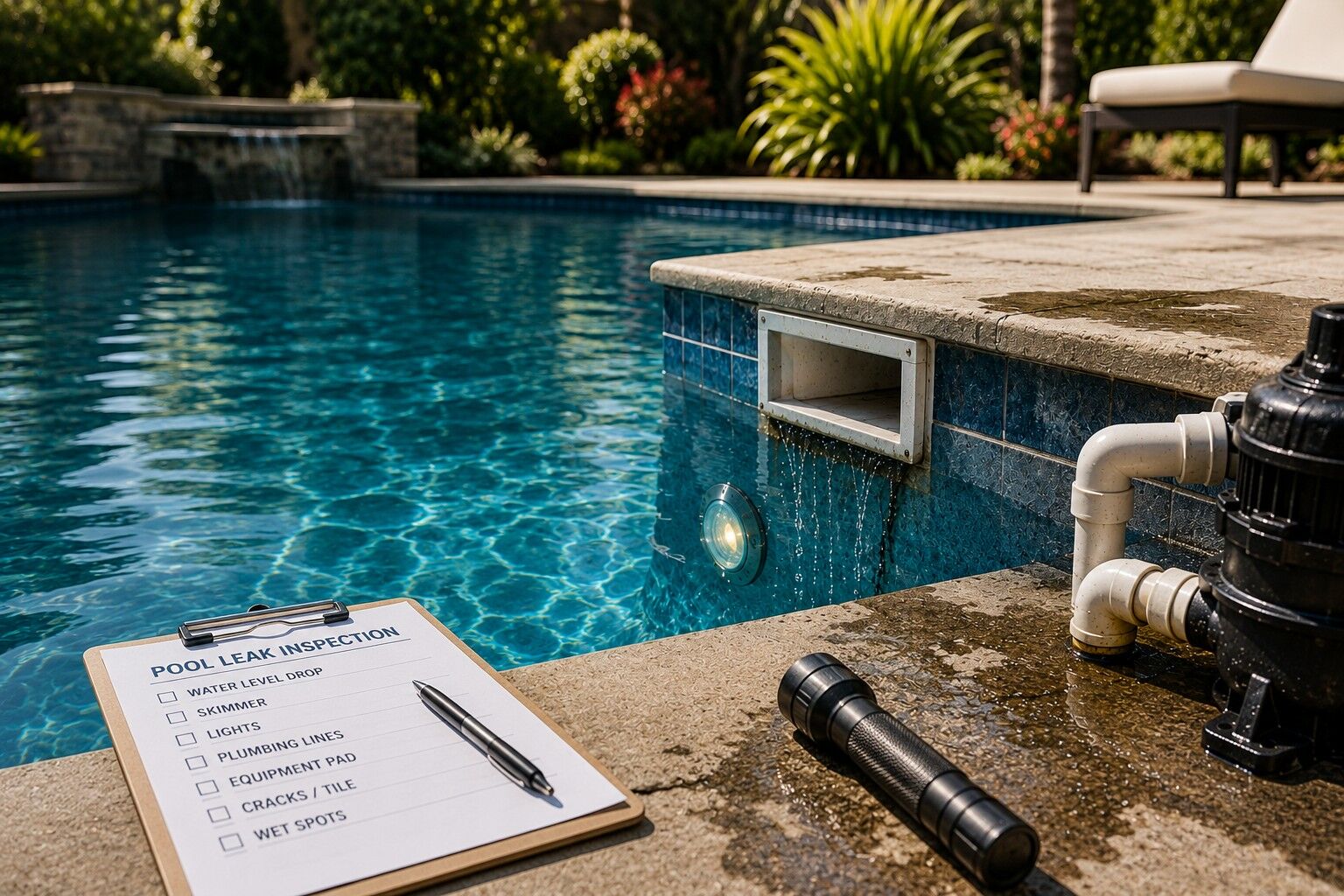
A backyard pool is supposed to lose a little water. Sunshine, wind, heat, splashing, and the occasional cannonball from someone who should know better can all lower the water level. But when the pool starts dropping faster than usual, the ground around it feels damp, or the equipment pad looks suspiciously wet, it may be time to look for a leak.
Pool leak problems are not always dramatic at first. Sometimes they begin as a small crack, a loose fitting, a tired seal, or a hidden plumbing issue underground. Left alone, however, a pool leak can waste water, throw off chemical balance, strain equipment, damage nearby surfaces, and turn a beautiful backyard into a very expensive guessing game.
Start By Knowing What Normal Water Loss Looks Like
Before assuming the pool is leaking, homeowners should understand that some water loss is normal. Outdoor pools lose water through evaporation, especially during hot, dry, or windy weather. Water can also drop after heavy swimming, splashing, backwashing, or draining small amounts during maintenance.
The concern begins when the pool seems to lose water consistently, drops more quickly than neighboring pools, or needs refilling far more often than usual. If the water level keeps falling despite normal weather and regular care, it may be time to look more closely. A pool does not usually whisper when something is wrong. It starts sending clues, and the waterline is often the first one.
Try The Bucket Test Before Panicking
The bucket test is a simple way to compare normal evaporation with possible leakage. Fill a bucket with pool water and place it on a pool step, keeping the water inside the bucket close to the same level as the pool water outside the bucket. Mark both water levels, then wait about 24 hours with the pump running as usual.
If the pool water drops more than the bucket water, there may be a leak. If both levels drop about the same amount, evaporation is likely the main issue. This test does not tell you where the leak is, but it helps answer the first important question: is the pool really losing more water than it should?
Watch For A Waterline That Stops At The Same Place
One of the most useful clues is where the water level stops dropping. If the water falls and then stabilizes at a certain point, the leak may be near that level. For example, if the water repeatedly drops to the lower edge of the skimmer opening and then slows or stops, the skimmer area may deserve a closer look.
This is not a perfect diagnosis, but it helps narrow the search. Pool leaks often reveal themselves through patterns. A one-time low water level could be weather or splashing. A repeated drop to the same exact height is more suspicious. Pools may not talk, but they are surprisingly good at leaving evidence.
Check The Skimmer Area First
The skimmer is one of the most common places for pool leaks because it is where different materials meet. Plastic, concrete, gunite, plaster, tile, and sealant all have to work together, and over time, movement or wear can create gaps.
Look around the skimmer mouth for cracks, separation, missing grout, loose material, or visible gaps between the skimmer and the pool wall. If the pool loses water near the skimmer level, or if air appears in the system, the skimmer may be involved. This is one of the pool leak problems homeowners should not ignore because a small separation can slowly become a larger repair.
Look For Cracks In The Pool Shell
Cracks in the pool shell can range from cosmetic surface marks to more serious structural issues. Not every crack means the pool is leaking, but cracks near steps, corners, fittings, the waterline, or areas where movement has occurred deserve attention.
Plaster, concrete, gunite, fiberglass, and vinyl pools all have different vulnerabilities. A hairline crack may not be urgent, but a crack that widens, stains, leaks, or appears near shifting decking should be inspected. In a luxury backyard, the pool finish is not just decorative. It is part of the system keeping water where it belongs.
Inspect Pool Lights And Light Niches
Pool lights are beautiful at night, but they can also become leak points. In many pools, the light niche sits inside the pool wall, and the conduit behind it creates an area where water can escape if seals, fittings, or connections fail.
If water loss appears to stop around the level of a pool light, or if the light housing looks loose, damaged, or questionable, do not treat it casually. Pool light issues involve both water and electricity, which is not a charming DIY combination. Electrical concerns around pools should be handled by qualified professionals.
Watch The Equipment Pad
The equipment pad can reveal obvious leaks if homeowners know where to look. Pumps, filters, heaters, valves, unions, pipes, and fittings can all develop leaks. Sometimes the signs are subtle: a damp patch, mineral staining, rust, corrosion, dripping when the pump runs, or a small stream of water near a connection.
Equipment leaks may be easier to spot than underground leaks because the components are visible. Check the area when the pump is running and again when it is off. If water appears only during operation, the leak may be pressure-related. If it appears when everything is off, a different fitting or seal may be involved.
Notice Air Bubbles In The System
Air bubbles in the pump basket or return lines can be a sign that air is being pulled into the plumbing. That may happen because of a loose lid, worn O-ring, low water level, clogged skimmer basket, or a suction-side leak.
Some bubbles are not automatically a disaster, but persistent bubbles, gurgling sounds, or equipment that loses prime should be checked. When the circulation system struggles, the pool can become harder to keep clean and balanced. This is where leak detection overlaps with regular pool maintenance tips. A pool that cannot circulate properly is a pool planning future drama.
Check Return Lines And Plumbing Connections
Return fittings, suction lines, and underground plumbing can all become leak sources. These leaks are harder for homeowners to confirm because much of the plumbing is hidden under decking, soil, or landscaping. Still, there are warning signs.
Wet or soft spots around the pool, unusually green patches of grass, sinking soil, shifting pavers, unexplained water loss, air in the system, or dirt coming back through return lines can all suggest a plumbing issue. These are not the kind of pool leak problems to solve by wishful thinking. Underground leaks often require professional testing.
Look Around Tile, Coping, And Decking
The area where the pool shell meets tile, coping, and decking can also show signs of trouble. Loose tiles, cracked grout, lifting coping, gaps, settling deck sections, or damp areas around the pool may point to water movement where it should not be.
This matters because water can slowly damage surrounding surfaces. Natural stone, decorative tile, concrete, and pavers are all part of the backyard’s finished look. A leak does not only affect water level. It can affect the entire pool environment, including the expensive materials that make the backyard feel polished.
Do Not Ignore Autofill Systems
An automatic pool filler can be convenient, but it can also hide a leak by quietly replacing lost water. Homeowners may not notice the pool level dropping because the autofill keeps correcting it. The clue may show up instead as a higher water bill, constantly running fill line, soggy areas, or water chemistry that seems harder to keep stable.
If the pool has an autofill system, turn it off temporarily when checking for leaks, as long as it is safe for the pool equipment and water level. Then monitor the waterline. A pool that has been secretly refilling itself may be losing more water than anyone realized.
Pay Attention To Chemical Changes
A leaking pool often needs more water added, and that new water can affect chemical balance. If chlorine demand changes, pH becomes harder to stabilize, or the water seems more difficult to manage than usual, a leak could be part of the problem.
This is why leaks connect naturally with pool chemicals explained. Water balance does not happen in isolation. If the pool is constantly losing treated water and taking in fresh water, the chemistry may keep shifting no matter how carefully the homeowner tests and adjusts.
Use Tools Carefully, But Know Their Limits
Some homeowners use dye tests around suspected leaks, especially near fittings, lights, skimmers, or cracks. Dye can sometimes show water being pulled toward a leak. However, results can be affected by water movement, pump operation, wind, or poor test placement.
Basic pool maintenance tools can help homeowners notice problems early, but leak detection often requires specialized equipment. Pressure testing, electronic listening devices, underwater inspection, and professional dye testing may be needed to find the real source.
Know When To Call A Leak Detection Professional
Call a professional if the pool fails the bucket test, the water level keeps falling, wet spots appear around the pool, equipment leaks are visible, the pump loses prime, air bubbles continue, tiles shift, or a suspected leak is near lights or underground plumbing.
A professional can test plumbing lines, inspect fittings, check lights and skimmers, evaluate the shell, and narrow the leak without unnecessary guessing. This is also where a trusted swimming pool service company can help determine whether the issue is routine maintenance, equipment wear, or something that needs a specialized leak detection company.
Why Early Leak Detection Matters
Small leaks rarely stay charmingly small forever. Water can move under decking, soften soil, affect landscaping, damage surfaces, strain equipment, waste chemicals, and increase utility costs. Catching a leak early can help prevent a repair from becoming larger and more expensive.
Early detection also protects the pool’s appearance. A clean, balanced, well-lit pool loses some of its luxury when the coping is shifting, the waterline is constantly low, or the equipment pad is turning into a small wetland. Maintenance is not only about keeping the water pretty. It is about protecting the whole backyard investment.
The Bottom Line On Pool Leak Problems
The most common pool leak problems often start around skimmers, pool lights, plumbing lines, return fittings, equipment pads, shell cracks, tile, coping, or hidden underground connections. Warning signs may include unusual water loss, wet spots, cracks, shifting surfaces, air bubbles, equipment leaks, chemical swings, or an autofill system that seems to work a little too hard.
A pool leak is not something to ignore and hope will become shy. Start with simple observation, try the bucket test, look for visible clues, and call a professional when the signs point beyond basic maintenance. The sooner a leak is found, the easier it is to protect the pool, the equipment, and the backyard that is supposed to feel like a luxury, not a mystery with a water bill.


(0) comments
We welcome your comments
Log In
Post a comment as Guest
Keep it Clean. Please avoid obscene, vulgar, lewd, racist or sexually-oriented language.
PLEASE TURN OFF YOUR CAPS LOCK.
Don't Threaten. Threats of harming another person will not be tolerated.
Be Truthful. Don't knowingly lie about anyone or anything.
Be Nice. No racism, sexism or any sort of -ism that is degrading to another person.
Be Proactive. Use the 'Report' link on each comment to let us know of abusive posts.
Share with Us. We'd love to hear eyewitness accounts, the history behind an article.