
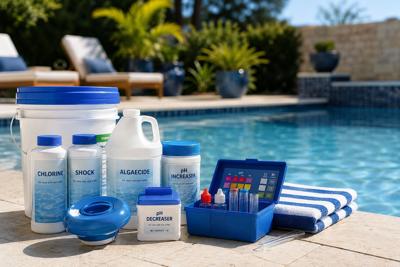
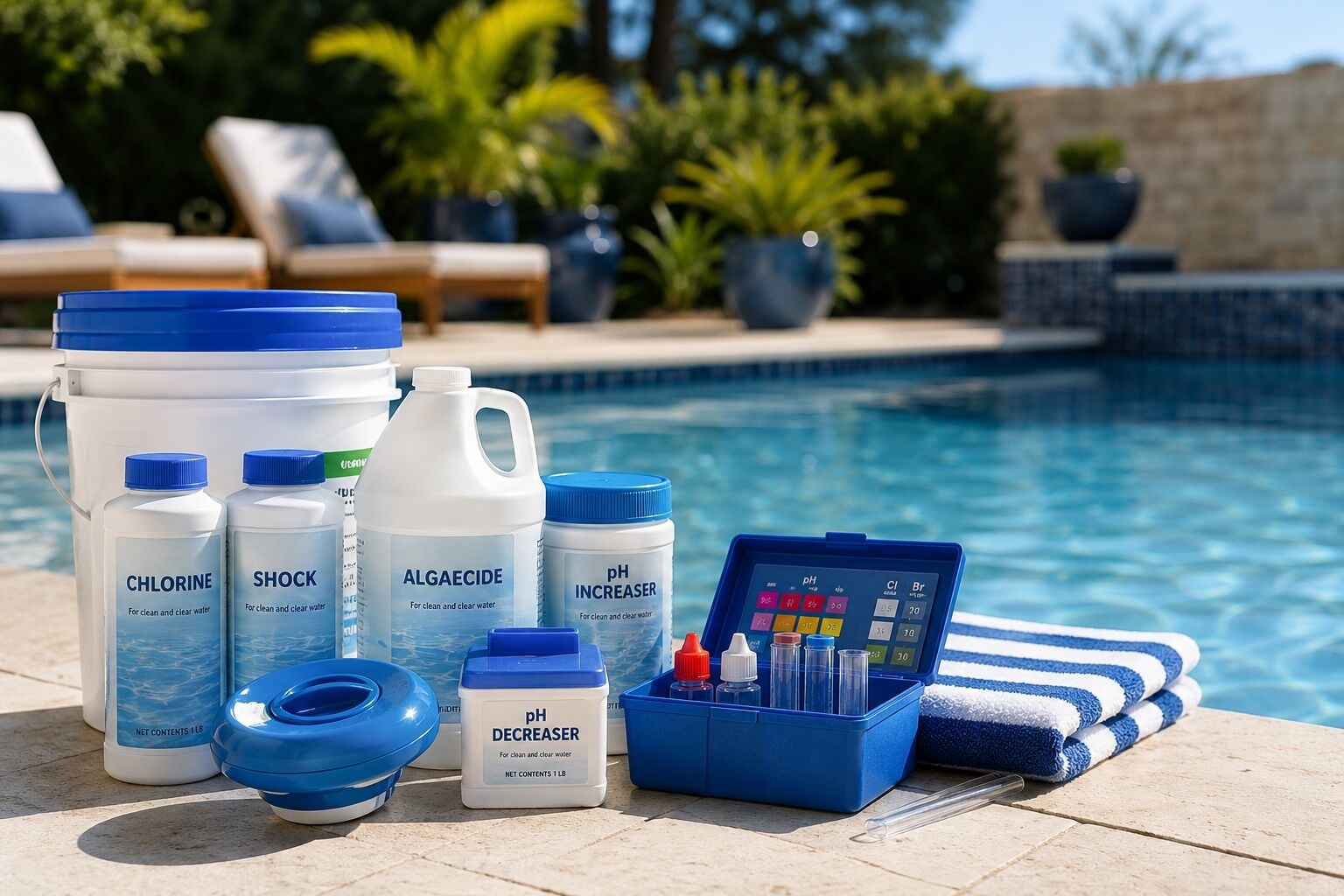
A beautiful pool should feel effortless. Sparkling water, warm stone, a good lounge chair, maybe something cold in a glass that makes Monday feel less aggressive. But behind that easy blue shimmer is a very real maintenance routine, and yes, part of it involves chemicals. Not terrifying chemicals. Not “clear the backyard and call someone in goggles” chemicals. Just the right pool chemicals, used correctly, tested regularly, and stored safely.
For many homeowners, pool care starts to feel confusing the second someone mentions chlorine, pH, alkalinity, stabilizer, calcium hardness, shock, and algaecide in the same sentence. This is where plain-English guidance helps. With pool chemicals explained clearly, it becomes much easier to understand what each product does, why balance matters, and when it is time to stop guessing and call a professional.
Why Pool Chemicals Matter
Pool chemicals are not there to make pool ownership more complicated, although they do occasionally do an excellent impression of that. Their real job is to keep water cleaner, clearer, more comfortable, and safer for swimming. When pool water is properly balanced, sanitizer can work effectively, surfaces are less likely to stain or scale, equipment is better protected, and swimmers are less likely to deal with irritated eyes or uncomfortable water.
When water is out of balance, problems can build quickly. Cloudy water, algae, strong chlorine smells, rough pool surfaces, scale around the tile line, fading swimsuits, itchy skin, and equipment strain can all be signs that something is off. Pool chemistry is not about making water perfect every second of the day. It is about keeping the water consistently within a healthy range so small issues do not become expensive backyard drama.
Start With Testing Before Adding Anything
The most important rule of pool chemicals is simple: test before you treat. Adding chemicals without testing is like seasoning soup with your eyes closed. It may work once, but eventually someone is going to regret it. Pool test strips, liquid test kits, and digital testers can all help homeowners understand what the water needs before anything is added.
The Centers for Disease Control and Prevention recommends keeping pool pH between 7.0 and 7.8 and maintaining proper chlorine levels for pools and hot tubs. For homeowners, that means testing regularly, especially during hot weather, after heavy use, after rain, or when the water starts looking cloudy. This is the foundation of pool chemicals explained properly: the test tells you what the pool needs, not the other way around.
Chlorine Is The Main Sanitizer
Chlorine is the pool chemical most homeowners recognize first. Its main job is to kill germs and help keep the water sanitary. Chlorine comes in several forms, including tablets, granules, liquid chlorine, and shock products. Some pools use saltwater chlorine generators, which still produce chlorine, just through a different system.
Chlorine needs to be kept in the right range to work properly. Too little chlorine can allow bacteria and algae to grow. Too much can make the water uncomfortable and may contribute to irritation. A strong chlorine smell does not always mean there is too much free chlorine. It can sometimes mean the water has combined chlorine or chloramines, which can happen when chlorine reacts with sweat, sunscreen, body oils, and other contaminants. In plain English, the pool is not being dramatic; it is asking for help.
pH Affects Almost Everything
If chlorine is the star of pool chemistry, pH is the quiet manager making sure everyone behaves. pH measures how acidic or basic the water is. When pH is too low, water can become corrosive and uncomfortable. When pH is too high, chlorine may not work as effectively, and scale can form on surfaces and equipment.
Balanced pH helps sanitizer do its job and keeps the water more comfortable for swimmers. This is why pH should never be treated as a side detail. A pool can have chlorine in it and still be poorly balanced if the pH is out of range. For homeowners trying to understand pool chemicals explained without getting buried in formulas, remember this: pH helps determine whether the rest of the pool chemistry is actually working.
Total Alkalinity Helps Stabilize pH
Total alkalinity is closely connected to pH. It acts like a buffer that helps prevent pH from bouncing up and down too quickly. When alkalinity is too low, pH can swing wildly. When alkalinity is too high, pH can become difficult to adjust and the water may become prone to scaling.
This is one of the reasons pool balancing should happen in the right order. If alkalinity is far off, simply adjusting pH may not solve the problem for long. A good pool service technician will usually look at alkalinity and pH together instead of chasing one number at a time. For homeowners, this is where patience matters. Pool water often prefers a calm, measured correction instead of a chemical ambush.
Calcium Hardness Protects Surfaces And Equipment
Calcium hardness measures the amount of dissolved calcium in the water. If calcium hardness is too low, the water can become aggressive and may pull minerals from plaster, grout, stone, and other surfaces. If calcium hardness is too high, scale can form on tile, equipment, heaters, and pool surfaces.
This matters especially for homeowners with plaster pools, stone features, glass tile, or high-end backyard finishes. Beautiful materials need properly balanced water. Calcium hardness may not sound glamorous, but neither does replacing damaged surfaces because the water was ignored. In a luxury backyard, the boring numbers are often the ones quietly protecting the expensive things.
Cyanuric Acid Helps Protect Chlorine From Sunlight
Cyanuric acid, often called stabilizer or conditioner, helps protect chlorine from being broken down too quickly by sunlight. This can be useful in outdoor pools, especially in sunny climates where chlorine can disappear faster than guests when cleanup starts.
But stabilizer needs balance too. Too little can make chlorine less durable in sunlight. Too much can make chlorine less effective, which may lead to cloudy water or algae problems even when chlorine appears to be present. Some chlorine tablets already contain stabilizer, so homeowners should know what they are adding. This is one reason regular testing matters and why a professional swimming pool service company can be helpful when the numbers stop making sense.
Shock Is Not A Weekly Magic Trick
Pool shock is a concentrated oxidizing treatment used to help break down contaminants, restore sanitizer effectiveness, and clear certain water problems. It can be useful after heavy pool use, big storms, algae treatment, or when combined chlorine levels are high. But shock is not a substitute for regular testing and balanced water.
Different shock products work differently, and they may have different instructions for dosage, timing, swimming wait times, and compatibility. Homeowners should always follow the product label and avoid mixing chemicals. Shock can be helpful, but it should not become the only maintenance plan. If the pool constantly needs shock to look clear, something else may be wrong with circulation, filtration, sanitizer levels, stabilizer, or regular cleaning.
Algaecide Can Help, But It Is Not The Whole Answer
Algaecide can be used to help prevent or treat algae, depending on the product and the situation. It may be part of a broader treatment plan, especially when algae has already appeared or when a pool is prone to recurring growth. However, algaecide does not replace proper sanitizer, brushing, filtration, circulation, and regular testing.
Algae usually shows up when conditions allow it. Poor circulation, low chlorine, high stabilizer, debris, warm water, and inconsistent maintenance can all contribute. If algae keeps coming back, the pool may need more than a bottle of algaecide. It may need better brushing, filter cleaning, water balance, or a closer look at the equipment. Algae is stubborn, but it is rarely mysterious.
Clarifiers And Flocculants Are For Cloudy Water Problems
Clarifiers and flocculants are used when pool water is cloudy because fine particles are suspended in the water. Clarifiers help small particles clump together so the filter can capture them more easily. Flocculants help particles settle to the bottom so they can be vacuumed out, often to waste if the pool system allows it.
These products can be useful, but they should not be the first answer to every cloudy pool. Cloudy water can come from poor filtration, unbalanced chemistry, low sanitizer, high calcium, high pH, algae beginning to bloom, or simply too much use. If the cause is not addressed, the pool may clear temporarily and then cloud up again, like a bad habit with better lighting.
Pool Chemicals Must Be Stored Safely
Pool chemicals need to be respected. The U.S. Environmental Protection Agency warns that swimming pool chemicals can create serious risks if they are stored or handled improperly, including fire, toxic vapor release, and injury risks. That does not mean homeowners should panic. It means pool chemicals should be treated like serious household materials, not tossed into a hot shed next to gardening tools and wishful thinking.
Store pool chemicals in a cool, dry, well-ventilated place, away from children, pets, heat, moisture, and incompatible products. The CDC’s pool chemical safety guidance also recommends keeping chemicals dry, storing each chemical separately, and protecting them from mixing with other substances. Keep products in their original containers with labels intact. Safe storage is not glamorous, but neither is explaining why the pool shed suddenly became the main event.
Do Not Mix Pool Chemicals
This deserves its own reminder because it is one of the most important safety rules. Pool chemicals should not be mixed together. Different chlorine products, acids, shock, algaecides, and other treatments can react dangerously if combined. Even residue in a scoop, bucket, feeder, or measuring cup can be a problem if it contacts the wrong chemical.
Use clean, dry tools for each product and follow the label exactly. Add chemicals to the pool according to directions, usually with the pump running and with enough time for circulation. Keep people and pets away from the water until the product instructions say it is safe to swim. Pool care can be simple, but it should never be casual.
Where To Buy Pool Chemicals
The old version of this article focused on where to buy pool chemicals, and that is still worth mentioning. Homeowners can usually find pool chemicals at pool supply stores, home improvement centers, hardware stores, and some online retailers. The best option depends on the pool type, the homeowner’s experience level, and whether they need basic supplies or more specific help interpreting test results.
Pool supply stores can be useful because they often offer water testing and staff guidance. Home improvement stores may work well for common products such as chlorine tablets, shock, pH adjusters, and test strips. Online ordering can be convenient for repeat purchases, but homeowners should be careful about shipping, storage, product age, and whether the item is appropriate for their specific pool. The cheapest bucket is not always the best backyard decision.
Do Not Buy Products You Do Not Understand
Pool aisles can be persuasive. Everything promises clearer water, easier maintenance, fewer problems, and a pool that behaves itself. Before buying multiple specialty products, homeowners should know what issue they are trying to solve. A water test should come first, followed by the right product for the actual problem.
This is especially important with shock, stabilizer, algaecide, phosphate removers, metal removers, clarifiers, and scale-control products. Some may be useful. Some may be unnecessary. Some may create new balance issues if used carelessly. Good pool care is not about owning every product on the shelf. It is about using the right product at the right time.
When To Call A Professional
There is no shame in calling a professional. In fact, sometimes it is the most sensible thing a homeowner can do. If the water stays cloudy after repeated treatment, algae keeps returning, the pool smells strongly of chlorine, pH swings constantly, stains appear, scale builds up, or the equipment is not circulating properly, it may be time for expert help.
A professional can test more accurately, check the equipment, inspect the filter, review chemical history, and help identify the actual cause of the problem. Homeowners who travel often, entertain frequently, rent out a property, or simply do not want to spend weekends playing pool chemist may also benefit from regular service. The goal is not to turn every homeowner into a technician. The goal is to keep the pool clean enough that everyone can enjoy it without needing a spreadsheet.
How Pool Chemicals Fit Into A Complete Maintenance Routine
Chemicals are only one part of pool maintenance. Clear water also depends on circulation, brushing, skimming, vacuuming, filter cleaning, water level, and equipment care. Even perfectly balanced chemicals cannot fix a neglected filter or poor circulation forever. Pool care works best when chemistry and physical maintenance support each other.
That is why this topic fits naturally into a larger pool maintenance plan. After getting pool chemicals explained clearly, homeowners can better understand why testing, cleaning tools, filters, lighting, and professional service all work together. For a broader foundation, start with these pool maintenance tips every homeowner should know, then build a routine that fits the pool, the climate, and how often the backyard actually gets used.
The Bottom Line On Pool Chemicals
Pool chemicals do not need to be intimidating, but they do need to be understood. Chlorine sanitizes. pH affects comfort and performance. Alkalinity helps stabilize pH. Calcium hardness protects surfaces and equipment. Stabilizer helps chlorine survive sunlight. Shock, algaecide, clarifiers, and other specialty products can help when used correctly, but none of them replace testing and regular maintenance.
Once homeowners have pool chemicals explained in plain language, pool care becomes less mysterious. The water tells you what it needs through testing, appearance, and performance. The smartest approach is to test regularly, add only what is needed, store products safely, and call a professional when the pool starts acting like it has secrets. A well-balanced pool is easier to enjoy, easier to maintain, and much better at looking like the backyard luxury it was meant to be.


(0) comments
We welcome your comments
Log In
Post a comment as Guest
Keep it Clean. Please avoid obscene, vulgar, lewd, racist or sexually-oriented language.
PLEASE TURN OFF YOUR CAPS LOCK.
Don't Threaten. Threats of harming another person will not be tolerated.
Be Truthful. Don't knowingly lie about anyone or anything.
Be Nice. No racism, sexism or any sort of -ism that is degrading to another person.
Be Proactive. Use the 'Report' link on each comment to let us know of abusive posts.
Share with Us. We'd love to hear eyewitness accounts, the history behind an article.