
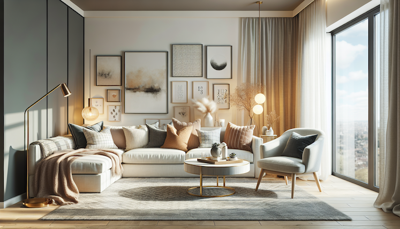
A beautiful interior is rarely the result of one expensive purchase. More often, a room starts to feel noticeably better when the furniture finally relates to the space, the lighting is flattering instead of harsh, the rug is properly scaled, and everyday clutter has somewhere to go.
That is what makes lighting and layout so powerful. Both can transform the way a home looks without requiring a full renovation. The smartest interiors balance appearance with function, creating rooms that feel polished while still working for the people who actually live in them.
Start With How the Room Is Really Used
Before buying another chair, lamp, table, or decorative object, study how the room functions. Notice the paths people naturally take through it, where they stop, where clutter accumulates, which seats are actually used, and where the natural light changes throughout the day.
A living room may need to support conversation, television, reading, entertaining, and family life. A bedroom needs comfortable circulation around the bed as well as accessible storage and useful bedside lighting. Designing around those realities creates a stronger foundation than arranging a room primarily for photographs. Homeowners considering additional practical improvements can also explore FINE's guide to simple home upgrades that add everyday value.
Fix the Layout Before Replacing the Furniture
Good furniture can look surprisingly wrong when its scale or placement is off. Seating positioned too far apart makes conversation awkward, while oversized pieces can make a room feel cramped even when there is technically enough square footage. Furniture should establish relationships between pieces rather than simply occupy available wall space.
In a living room, create a defined conversation area and keep tables close enough to reach comfortably. In a dining room, allow enough clearance to pull chairs back without creating an obstacle course. Bedrooms should have comfortable paths around the bed and unobstructed access to closets and drawers. Sometimes moving what you already own produces a bigger improvement than buying something new.
Build the Room Around Layers of Light
Lighting changes nearly everything we perceive about an interior, including color, texture, proportion, and mood. A room illuminated only by a central ceiling fixture can look flat even when the furnishings are beautiful. Designers typically solve this by using several types of light rather than asking one fixture to do every job.
Ambient lighting provides general illumination, task lighting focuses light where work takes place, and accent lighting draws attention to art, architecture, or decorative details. Floor lamps, table lamps, pendants, sconces, picture lights, recessed fixtures, and dimmers can all contribute to the mix. The U.S. Department of Energy recommends energy-efficient lighting choices such as LEDs and notes the additional flexibility available through dimmable LED products.
Put Task Lighting Where You Actually Need It
Beautiful lighting is most successful when it also solves practical problems. Reading chairs need focused illumination. Bathroom mirrors need light that illuminates the face rather than casting shadows from above. Desks benefit from adjustable task lights, while kitchens need enough illumination to safely prepare food.
Kitchen counters are a particularly good example. Ceiling fixtures can leave work surfaces in shadow because the person standing at the counter blocks the light behind them. Well-positioned under-cabinet lighting can illuminate prep areas directly while adding another layer of light to the room. Used with pendants and general ceiling lighting, it helps the kitchen shift easily from workspace to entertaining space.
Use Rugs to Establish Proportion
Area rugs do much more than add pattern. They visually connect furniture, soften hard surfaces, reduce echo, and help establish distinct zones within open floor plans. Their size is especially important. A rug that is too small can make even expensive furniture look disconnected because every piece appears to be floating independently.
In a living area, a rug should generally be large enough to engage the principal seating rather than sit like an island beneath the coffee table. Dining rugs need enough room for chairs to remain on the rug when pulled back. Texture also matters, from wool and performance fibers to jute and other natural materials. FINE's guide to what rugs contribute to style and texture in modern interiors explores how this single element can change the character of a room.
Create Visual Zones in Open Spaces
Open-concept layouts benefit from visual boundaries even when there are no walls. Without them, a large room can become an undefined collection of sofas, tables, stools, and circulation paths. Rugs, lighting, furniture placement, and architectural details can establish separate areas without sacrificing openness.
A pendant or chandelier can visually anchor a dining table. A sofa can mark the edge of a living area, while a console behind it creates a subtle transition. An area rug provides another boundary. When these elements align, an open-plan home feels deliberate rather than simply large.
Control Daylight Instead of Fighting It
Natural light should be considered part of the lighting plan. A room that looks beautiful at 9 a.m. may feel glaring at 3 p.m. depending on its orientation, window size, and climate. Draperies, Roman shades, woven shades, shutters, and blinds give homeowners more control over glare and privacy while contributing softness and texture to the room.
Window treatments can also influence comfort. The Department of Energy notes that window performance and glazing choices affect heat transfer and energy efficiency, which is another reason to consider windows as part of the overall room design rather than as an afterthought.
Let Texture Do More of the Decorating
Rooms often become cluttered because homeowners keep adding objects in an attempt to make the space feel finished. Texture can accomplish the same goal more quietly. Linen, wood, stone, wool, leather, ceramic, woven fibers, plaster, and metal create depth even within a restrained color palette.
This is particularly effective in neutral rooms. A cream sofa, textured rug, warm wood table, linen draperies, and ceramic lamps can create considerable visual richness without relying on numerous decorative accessories. The result tends to feel calmer and more enduring than a room crowded with trend-driven objects.
Pay Attention to the Smaller Details
Switch plates, cabinet hardware, door handles, curtain rods, vents, and other practical details occupy very little space individually, yet inconsistencies become noticeable when viewed across an entire room. Updating tired hardware or choosing finishes that relate to one another can create a subtle sense of cohesion. I went to Nostalgic Warehouse they have high end products that you can't get everywhere.
The goal is not to make every metal finish identical. Polished nickel, brass, bronze, chrome, and black can coexist successfully when the combination appears intentional. Repetition matters more than perfect matching. A finish used once may look accidental; repeated thoughtfully, it becomes part of the design language.
Use Art and Lighting Together
Art gives a room personality, but placement and illumination affect how successfully it works. Pieces hung too high can feel disconnected from the furniture beneath them, while undersized artwork can disappear on a large wall. In many spaces, one appropriately scaled piece makes a stronger statement than a collection of smaller works scattered without a clear relationship.
Lighting can make art more effective after sunset. Picture lights, directional fixtures, and carefully positioned lamps can draw the eye toward artwork without turning the room into a gallery. This is another example of lighting doing more than providing brightness. It determines what receives attention.
Transform the Room Before You Renovate It
Interior design does not always require demolition. Before replacing major furniture or committing to construction, reconsider the room's layout, lighting, rugs, window treatments, storage, and smaller architectural details. These elements influence how a space feels every day and can correct problems that initially appear to require a much larger renovation.
The most successful rooms are not simply attractive. They have comfortable circulation, useful light, appropriate scale, enough storage, and a clear sense of purpose. When those fundamentals are right, the furnishings and decorative details have a much easier job. That is when a home begins to feel designed rather than merely decorated.

(0) comments
We welcome your comments
Log In
Post a comment as Guest
Keep it Clean. Please avoid obscene, vulgar, lewd, racist or sexually-oriented language.
PLEASE TURN OFF YOUR CAPS LOCK.
Don't Threaten. Threats of harming another person will not be tolerated.
Be Truthful. Don't knowingly lie about anyone or anything.
Be Nice. No racism, sexism or any sort of -ism that is degrading to another person.
Be Proactive. Use the 'Report' link on each comment to let us know of abusive posts.
Share with Us. We'd love to hear eyewitness accounts, the history behind an article.