
London property remains one of the world's most sought after assets, yet many overseas buyers hesitate, unsure whether 2026 is the right moment to commit. The market has cooled rather than collapsed.
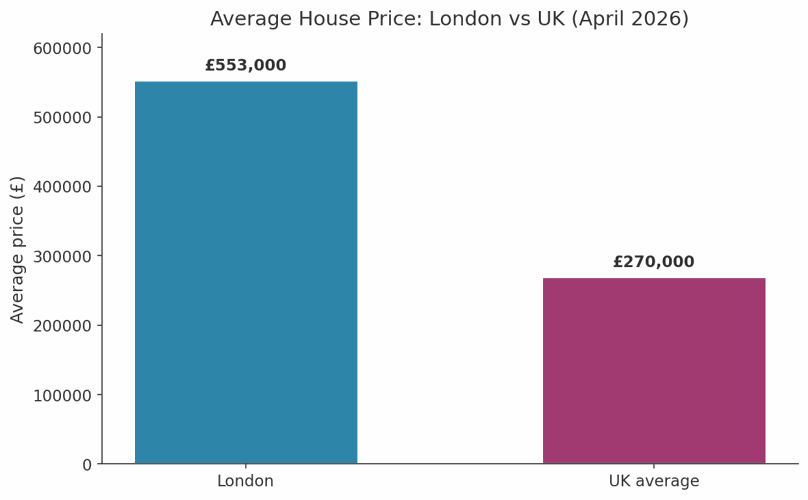
The average London home was worth around £553,000 in April 2026, down 2.1% over the year according to official figures. That softer pricing, paired with a base rate held at 3.75%, has quietly reopened the door for international investors chasing stability and lasting value. Buying from abroad carries its own rules, costs and tax surcharges that surprise newcomers. This guide explains what you can buy, what it truly costs, and how to make the numbers work once you own.
Key Takeaways
- London's average price sits near £553,000 in 2026, giving overseas buyers a softer entry point.
- No visa is needed to buy, though solicitors run strict source of funds checks.
- International buyers pay a 2% non-resident surcharge, plus 5% on any additional home.
- Non-resident mortgages usually need a deposit of 25% to 30% from specialist lenders.
- Prime areas favour capital growth, while outer boroughs deliver stronger rental yields.
Why London Property Endures as a Global Asset
London property continues to draw international capital because the city pairs global prestige with legal transparency and long term resilience. Values have survived recessions, Brexit and a pandemic, then recovered each time.
The recent dip works in a purchaser's favour. Prices across Greater London slipped for several consecutive months, even as the wider UK market rose 3.8% in the year to April 2026. Many buyers begin by partnering with a knowledgeable London firm such as Goldwyn Knight Estate & Letting agents, whose local team handles residential sales and lettings under one roof.
Key stat: At roughly £553,000 as of April 2026, London's typical home recorded a 2.1% drop over twelve months, the weakest annual reading of any English region. |
|---|

Average house price: London compared with the UK average, April 2026.
Currency adds another layer. Buyers holding dollars have watched their budgets stretch further against a softer pound, turning a market correction into a real opening. If the mechanics feel unfamiliar, this guide to the home buying journey covers the fundamentals before you cross a single border.
What Overseas Buyers Can Legally Buy in London
Foreign nationals can legally buy almost any residential property in London, and no special visa is required to complete a purchase. Even a tourist can sign contracts and take ownership. The bigger question is not nationality but tenure, meaning whether the home is freehold or leasehold.
Freehold means you own both the building and the land beneath it, with no time limit. Leasehold means you own the right to occupy a unit for a fixed number of years while a freeholder retains the land. Most London houses are freehold, whereas flats are usually leasehold, so remaining lease length and service charges deserve close scrutiny.
Freehold | Leasehold |
|---|---|
Outright ownership of both home and land | A time limited right to occupy the unit |
No time limit on ownership | Lease length and renewal cost matter |
Common for London houses | Common for London flats |
No ground rent or service charge to a freeholder | Service charges and ground rent may apply |
Freehold versus leasehold: the core difference every overseas buyer should weigh.
Pro Tip: Line up your paperwork early. Agents, solicitors and lenders all run source of funds and anti money laundering checks, so a passport, proof of address, bank statements and clear evidence of where your deposit came from will keep the deal moving. |
|---|
The capital's housing stock spans Georgian, Victorian and Edwardian homes alongside sleek new build apartments, letting investors target very different tenants. Prime central postcodes such as Mayfair, Knightsbridge and Belgravia suit capital preservation, while accessible boroughs reward income seekers. Because prime deals are often handled privately, our look at off market or secret listings shows how discreet sales work.
The Real Cost of Buying: Stamp Duty and Surcharges
Stamp Duty Land Tax is the single largest tax an overseas buyer faces, and the surcharges stack quickly. In England and Northern Ireland, standard residential rates apply in bands, starting at nothing below £125,000 and climbing to 12% on any value above £1.5 million.
Portion of purchase price | Standard SDLT rate |
|---|---|
Up to £125,000 | 0% |
£125,001 to £250,000 | 2% |
£250,001 to £925,000 | 5% |
£925,001 to £1,500,000 | 10% |
Above £1,500,000 | 12% |
Standard residential stamp duty bands that apply from April 2025.
Two extra charges hit international purchasers. Anyone buying an additional residential property pays a 5% surcharge on the whole price, raised from 3% in October 2024. On top of that, non-UK residents pay a further 2% surcharge introduced in April 2021, which sits above every other rate. You can confirm the current figures through the government's stamp duty guidance before you budget.
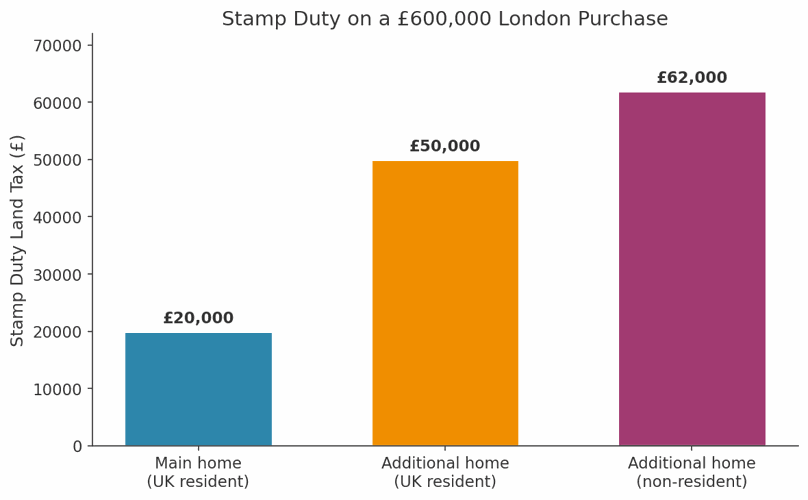
Consider a £600,000 flat. A UK resident buying it as a main home pays £20,000 in stamp duty. An overseas buyer purchasing the same flat as an additional property pays £62,000 once both surcharges apply, more than triple the bill.

How the surcharges reshape the tax bill on a single £600,000 London purchase.
Warning: The 5% additional property surcharge and the non-resident charge of 2% are cumulative. On a second home bought from abroad they add 7% to the entire purchase price, not merely the top slice. |
|---|
Prime London pricing is sometimes quoted discreetly rather than published. Our explainer on price on application in real estate unpacks what that convention means when you prepare an offer.
Financing a London Purchase From Abroad
Financing a London home from overseas is manageable once you understand lender expectations. Specialist and international banks lend to non-residents, though they usually ask for a larger deposit than a domestic buyer would provide, commonly around 25% to 30% of the price.
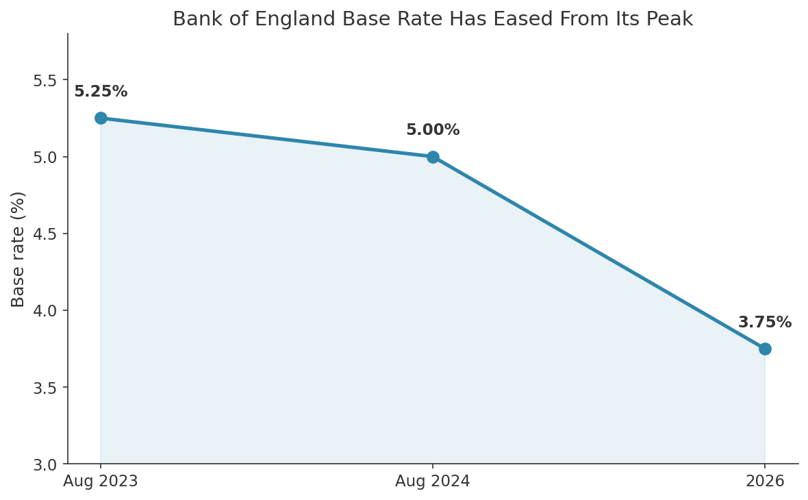
Borrowing costs have eased from their recent high. The Bank of England base rate sat at 3.75% through the first half of 2026, down from a 5.25% peak in 2023, and average mortgage rates have slipped alongside it. Cheaper finance improves the arithmetic on both a home purchase and a buy-to-let investment.

The base rate has fallen from its 2023 peak, easing pressure on buyers in 2026.
Conveyancing on a London home usually runs six to twelve weeks, so plan your funds transfer well ahead of completion day.
Timing is the other variable. That legal transfer, managed by your solicitor, sits between offer and ownership. The short film below walks international buyers through each stage of the process.
[Video: "Full Guide To Buying Property In London As An International Buyer" at https://www.youtube.com/watch?v=UmCip49vUfA]
Currency swings can move your total outlay by tens of thousands, so many buyers fix an exchange rate early through a specialist broker rather than gambling on the spot price at completion.
Rental Yields and Letting Your London Property
Rental yield is where London demands realistic expectations. High capital values mean gross yields across the capital often sit below 4%, beneath what northern cities offer, so investors here trade immediate income for stronger long term price growth.
Returns vary sharply by area. Prime central boroughs reward capital preservation over cash flow, while outer boroughs such as Greenwich, Croydon and Lambeth balance solid tenant demand with healthier income, with gross figures near 5% achievable in certain zones. Fringe locations valued below their better known neighbours often produce the best returns.
Letting also means keeping pace with regulation. The Renters' Rights Act 2025 took effect on 1 May 2026, abolishing Section 21 no fault evictions and moving tenancies onto a rolling periodic basis. An overseas landlord benefits from a managing agent who tracks such changes and handles compliance. To judge how fast homes are selling, see our piece on days on market.
One landlord review on the Goldwyn Knight site praises a dashboard that let them view landlord statements and current property information at any hour, day or night.
That kind of visibility matters most for a distant owner. A hands on managing agent turns a property thousands of miles away into an asset you can actually oversee. For hard numbers, the official UK House Price Index tracks values and rents across every London borough, giving you a reliable baseline before you commit capital.
Frequently Asked Questions
Can foreigners buy property in London?
Yes. Nationality is not a barrier and completing needs no visa. The real requirement is proving where your money comes from, since agents, lenders and solicitors must satisfy money laundering rules before any sale can proceed.
How much stamp duty do overseas buyers pay?
Expect the standard banded rates, then a 2% charge for non-residents on top. A second property adds another 5%. Together those two levies lift the tax bill by 7% of the whole price, as the worked example shows.
What deposit do non-residents need for a London mortgage?
Plan for 25% to 30% down. Specialist and international lenders serve buyers based abroad but want a bigger cushion than local borrowers, plus proof of foreign income and a clean credit history.
Is London property still a good investment in 2026?
London leans toward capital growth and resilience rather than quick rental profit. With values below their peak and cheaper borrowing, this year suits a patient buyer with a long horizon more than a fast trader.
What is the difference between freehold and leasehold?
With freehold, the home and its land are yours permanently. With leasehold, you hold a long lease for a fixed term while someone else owns the ground. London flats tend to be leasehold, houses freehold.
Making London Property Work for You
London's 2026 market rewards patience over haste. Softer prices and a base rate of 3.75% have created a measured entry point, yet the surcharges, deposit demands and letting rules mean every figure deserves attention before you sign. Decide early whether you are buying for capital preservation in a prime postcode or for rental income further out, then build your budget around the full tax bill. A knowledgeable local team that manages both the purchase and any later letting will save an overseas owner far more than it ever costs.
References
HM Land Registry and ONS, UK House Price Index Summary: April 2026, 2026. https://www.gov.uk/government/statistics/uk-house-price-index-for-april-2026/uk-house-price-index-summary-april-2026
GOV.UK, Higher Rates of Stamp Duty Land Tax, 2026. https://www.gov.uk/guidance/stamp-duty-land-tax-buying-an-additional-residential-property
Bank of England, Bank Rate, 2026. https://www.bankofengland.co.uk/monetary-policy/the-interest-rate-bank-rate
Office for National Statistics, Private Rent and House Prices UK: June 2026, 2026. https://www.ons.gov.uk/economy/inflationandpriceindices/bulletins/privaterentandhousepricesuk/june2026
GOV.UK, Guide to the Renters' Rights Act, 2025. https://www.gov.uk/government/publications/guide-to-the-renters-rights-act/guide-to-the-renters-rights-act
Fact Check: All statistics and data points in this article were verified against original sources as of 17 July 2026. Sources are listed in the References section.


(0) comments
We welcome your comments
Log In
Post a comment as Guest
Keep it Clean. Please avoid obscene, vulgar, lewd, racist or sexually-oriented language.
PLEASE TURN OFF YOUR CAPS LOCK.
Don't Threaten. Threats of harming another person will not be tolerated.
Be Truthful. Don't knowingly lie about anyone or anything.
Be Nice. No racism, sexism or any sort of -ism that is degrading to another person.
Be Proactive. Use the 'Report' link on each comment to let us know of abusive posts.
Share with Us. We'd love to hear eyewitness accounts, the history behind an article.