
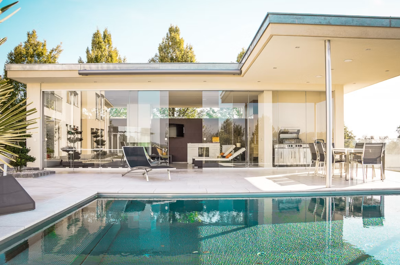

Luxury can be seen before it can be felt, right? One of the most cliché ways to describe a luxury property is expansive windows, generous rooms flooded with natural light, and super sophisticated furnishings that scream for attention.
At some point, that first impression will fade. Then, what will define luxury is how the space feels, and what it is in the details. Realtor.com recently reported that 45% of elite homebuyers insist on wellness features, with preferences ranging from pollutant filters and natural-light cycles to dedicated spaces for relaxation.
According to Lourdes Alatriste, a real estate broker with Douglas Elliman, the hottest wellness feature is the cold plunge pool. He said, “You’d be surprised how many people are putting these in their homes. I sold Elle Macpherson’s home last year. She took her cold plunge pool with her when she moved.”
Again, aesthetics are not getting the lead, as we see. So, what are the details defining a luxury home’s comfort, and how can they shape the living experience? This article will explore the top four in depth.
The Thermal Details That Keep Indoor Temperatures Balanced
No matter the size of a luxury home, you should never feel a sharp change in temperature between rooms or even from one floor to another. That consistency is not merely a matter of personal preference. In 2025, US residential customers used about 1.51 trillion kilowatt-hours of electricity.
That accounted for 37.3% of all US retail electricity sales. The US Energy Information Administration also identifies heating and cooling as the largest annual uses of electricity. That makes the thermal details of a luxury property stand out.
The thermal envelope, comprising walls, ceilings, floors, windows, and doors, should all influence the controlled movement of heat from indoor to outdoor and vice versa. In older luxury properties, this becomes especially important during renovation.
Before adding new materials, homeowners may need to understand what is already in place and whether it still performs as intended. This may include considering the cost of insulation removal if the existing coverage is damaged or compressed.
There can be many reasons that warrant insulation removal. Seedsheets noted in an article that age is the most common one, followed by moisture damage and pest infestations. Even then, insulation forms one part of the picture. The following details also come under thermal comfort:
- Sun exposure: A room with afternoon sun behaves differently from one that remains shaded
- Windows and doors: Large glazed areas can provide beautiful views and abundant daylight while also affecting heat gain and loss.
- Room height and layout: High ceilings and expansive spaces affect the way warm and cool air move through a room.
- Air leakage: Small gaps around openings or other parts of the building envelope may allow conditioned air to escape.
- HVAC distribution: A sophisticated heating and cooling system must still deliver conditioned air effectively through the property.
The Surface Details That Add Warmth to a Home
Comfort is not something we only experience through the air around us. It is equally something we experience through our feet, hands, and skin. A room can have beautiful stone flooring, polished wood, and soft furnishings, yet it's the quality of those materials that truly makes a space inviting.
On that note, there is a field of research called haptic aesthetics, which looks into the connection between sensory qualities of materials and people’s aesthetic responses. In a 2024 study, researchers found that perceived smoothness, warmth, and lightness were associated with high comfort ratings.
At the same time, perceived dryness had a negative association. That finding helps explain why some materials can make a room feel naturally welcoming, while others give a harder or austere impression. Consider the following important details that matter in this area:
- Flooring, where stone and tile create a refined look, whereas wood provides a warmer visual
- Textiles, such as rugs and curtains, that can give a softened feel to a space
- Furniture materials like leather, wood, metal, or fabric, each creating a different experience as you sit, lean, or rest
- Material familiarity, as those that feel more natural can contribute to a sense of ease
While a luxury home can be full of plush fabrics and soft surfaces, that's not the aim here. In fact, contrast may impart a more interesting vibe as it creates a harmonious balance.
The Airflow Details That Give a Fresh Feel
The last thing you want is a large, well-planned, luxury home that looks top-notch but smells stale or musty. Freshness is one of the comforts that is so easy to neglect precisely because when it is done well, nobody thinks about it.
Now, good airflow is not simply about having more air moving through the house. It is about bringing in fresh outdoor air, removing stale air, and managing moisture without creating drafts. Proper ventilation helps remove or dilute stale indoor air. It also controls indoor pollutants, another important aspect of maintaining good indoor air quality.
On that note, several details help maintain the balance, some of which are not easily visible. These include:
- The areas that fresh air can reach and escape to
- Moisture control, as daily activities like cooking and bathing add moisture to the air, thereby leading to humidity
- Air sealing, since unnecessary gaps and openings can allow outdoor air, dust, and moisture to enter in ways that are difficult to control
- The upper parts of the home because attics and roof assemblies can affect the space’s overall air and moisture behavior
Since we are at it, how can we forget the choice of materials? Particularly for homeowners renovating an older luxury property, a comparison of attic insulation materials can be useful.
That’s because different options can vary in how they suit a home’s construction, climate, and more. According to Atticrawl, the best attic insulation depends on the attic assembly, available budget, and performance goal.
This is important because insulation cannot be viewed in isolation from ventilation, especially when it comes to attic performance. For a luxury home, it’s the coordination that matters. The ideal is to have rooms feel fresh, humidity levels under control, and the air being neither stagnant nor drafty.
The Lighting Details That Enhance Relaxation
Lighting can change the character of a room without changing a single piece of furniture. A well-designed space may feel bright and energizing in the morning, welcoming through the afternoon, and intimate in the evening due to the quality of lighting.
This is why lighting deserves a place above a decorative feature. The right balance of natural and artificial light can help a space feel appropriate to the moment. That holds for every hour of the day.
House Beautiful reported in March 2026 that designers are now combining artificial lighting with natural light to better reflect the changing rhythm of daylight. Brighter lights are being used earlier in the day and warmer lights as evening draws near.
The idea behind this detail is that a comfortable home does not need the same lighting at every hour. It should respond to how the space is being used along with how the day is unfolding. What makes this happen includes the following:
- Natural light: The direction, size, and placement of windows impact the way daylight enters a room.
- Glare control: Beautiful views and abundant sunlight can become uncomfortable when light reflects off floors, screens, or polished surfaces.
- Layered lighting: Ambient, task, and accent lighting allow a room to serve different purposes without depending on one overpowering fixture.
- Color temperature: Warmer light can make living areas feel more intimate in the evening, while brighter light can help create a more alert atmosphere earlier in the day.
All of this holds special value for luxury homes, where large windows and statement fixtures may already be central to design. The most sophisticated lighting schemes do not demand attention. True lighting comfort comes from knowing when to let a fixture make a statement, and when softer light should support the room.
FAQs
What makes a luxury home genuinely comfortable?
A luxury home feels comfortable when its thermal performance, surfaces, airflow, and lighting work together. Consistent temperatures, pleasant materials, fresh air, and adaptable lighting can make a space feel welcoming and easy to live in.
Why can a well-designed luxury home still feel uncomfortable?
Aesthetics do not always translate into comfort. Large windows can create glare or heat, hard surfaces may feel cold or austere, and poor airflow can make rooms feel stale. Thoughtful design considers how every element will be experienced.
How can homeowners improve comfort without compromising luxury design?
Focus on details that complement the existing design rather than competing with it. Balance natural and artificial light, choose materials for both appearance and feel, and coordinate the home’s systems so comfort remains subtle, not visually jarring.
The Comfort Details Worth Getting Right
Comfort Detail | The Role it Plays |
|---|---|
Thermal performance | Keeps rooms comfortable from floor to floor and season to season |
Tactile materials | Adds warmth, softness, and a more inviting feel |
Fresh airflow | Reduces stale air, excess moisture, and unwanted drafts |
Adaptive lighting | Creates the right atmosphere as the day changes |
In traditional terms, luxury has been easy to recognize. However, today’s idea of luxury is becoming more personal.
Recent research describes wellness as moving from a luxury upgrade toward a broader expectation. It highlights light, air quality, and acoustics as important parts of the wellness-focused home.
These include details that remain largely invisible once the home is finished. Isn’t that the whole essence of quiet luxury: not having to think about it all the time?

(0) comments
We welcome your comments
Log In
Post a comment as Guest
Keep it Clean. Please avoid obscene, vulgar, lewd, racist or sexually-oriented language.
PLEASE TURN OFF YOUR CAPS LOCK.
Don't Threaten. Threats of harming another person will not be tolerated.
Be Truthful. Don't knowingly lie about anyone or anything.
Be Nice. No racism, sexism or any sort of -ism that is degrading to another person.
Be Proactive. Use the 'Report' link on each comment to let us know of abusive posts.
Share with Us. We'd love to hear eyewitness accounts, the history behind an article.