
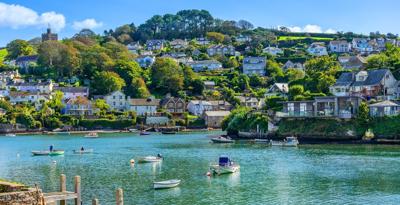

For a long time the smart money in English country property looked west and south. The Cotswolds, the Chilterns and the coast of Dorset drew the buyers with the biggest budgets, and prices followed. Quietly, though, a different kind of buyer has been looking east, towards the wide skies, long coastlines and unhurried market towns of Lincolnshire and its neighbours.
The appeal is easy to understand once you have driven through it. There is space here in a way that much of southern England no longer offers, and the money goes further. This article looks at what discerning buyers are looking for in the east, what the homes are like, and what to check before you fall for the view.
The appeal of space and sky
Lincolnshire is one of England's largest counties and one of its least crowded. The land rolls gently through the Wolds, a protected area of chalk hills and hidden valleys, then flattens out towards the coast and the fens. The sky is the dominant feature almost everywhere. Sunsets are enormous. On a clear night you can see stars that are invisible from most of the country.
For buyers used to the crowded lanes of the home counties, the sense of room to breathe is the first thing they notice. Gardens are bigger. Plots are bigger. Neighbours are further away. A drive to the nearest town is a drive through farmland rather than through a string of villages that have merged into one.
The city of Lincoln, with its cathedral on the hill and its steep medieval streets, gives the county a cultural centre. Market towns such as Stamford, Louth and Horncastle provide independent shops, good restaurants and a strong sense of place. The coast offers long sandy beaches and nature reserves that are known far beyond the county.
What the homes are like
The county's building history is written in its houses. Georgian townhouses in honey coloured stone line the streets of Stamford. Red brick farmhouses and former rectories sit in their own grounds outside the villages. Converted barns, some of them enormous, offer open plan living under old timber roofs. Along the coast and in the Wolds there are older cottages and grander country houses alike.
Alongside all of that there is a growing supply of newly built homes. Homes in Lincolnshire built in the last few years often take their cues from the local vernacular, with brick, pantile roofs and generous proportions, but with the insulation, glazing and open living spaces that a period house rarely offers without a costly renovation. For buyers who want the countryside without the maintenance, a well designed new home on the edge of a good village is often the answer.
The honest choice is between character and convenience. A period house gives you history, thick walls and a story to tell, along with the upkeep that goes with it. A new build gives you warmth, efficiency and a warranty, with a garden that will take a few years to mature. Neither is wrong, but be clear with yourself which one you actually want to live in.
What discerning buyers ask for
Talk to agents in the county and the same wish list comes up again and again.
Privacy without isolation. Buyers want a home that cannot be seen from the road, but they also want a pub, a shop and a school within a short drive. The best villages manage both.
Outbuildings and land. A separate studio, a stable block or simply a paddock gives a country home flexibility that a suburban house cannot match. Many buyers plan to work from home, and a converted outbuilding is the office of choice.
Light and views. A south facing garden and a view across open country matter more than an extra bedroom. Big windows in the principal rooms are close to essential.
Connectivity. Fast broadband and a reliable phone signal are no longer optional. Check both on the actual property, not the postcode, before you commit.
Access to the wider world. Rail links to London from the southern part of the county and good roads north to the Humber and beyond mean the east is less remote than its reputation suggests.
Practical checks before you buy
Country property rewards careful buyers, and the east has a few particular things to look for.
Drainage and flood risk. Parts of the county are low lying and the water table is high. Check the flood maps and ask about drainage for any property near the fens or the coast. A house that has stood dry for a century is a good sign, but ask anyway.
Services. Many rural homes are off the mains gas grid and rely on oil, bottled gas or a heat pump. Some have private drainage. None of this is a problem, but it changes running costs and maintenance, so know what you are buying.
Rights of way and farming. A footpath across the garden or a working farm next door is part of country life. Make sure you are comfortable with it.
Planning. If you have ambitions to extend or convert, check the local planning position early. Listed buildings and protected countryside come with restrictions that are entirely reasonable but can surprise the unprepared.
Making the move
Buyers who do best in the east are the ones who spend time there first. Rent for a season if you can. Visit in February as well as June, because the wind off the North Sea in winter is a different experience from a summer evening in the Wolds.
Get to know a couple of good local agents and tell them exactly what you are after. The best properties often change hands quietly, and an agent who knows you are serious will call before a house reaches the open market.
And give yourself permission to be surprised. Many people arrive intending to buy a period house and leave having bought a new one, or the other way round, because the property that felt right was not the one they had in mind.
Eastern England offers something increasingly rare in the English countryside: genuine space, at a price that leaves room for the life you want to live in it. The homes range from grand Georgian stone to thoughtful new builds, the towns are lively and the coast is long. Do the practical checks, spend time in the county before you commit, and you may find that the smart money has been looking in the wrong direction for years.


(0) comments
We welcome your comments
Log In
Post a comment as Guest
Keep it Clean. Please avoid obscene, vulgar, lewd, racist or sexually-oriented language.
PLEASE TURN OFF YOUR CAPS LOCK.
Don't Threaten. Threats of harming another person will not be tolerated.
Be Truthful. Don't knowingly lie about anyone or anything.
Be Nice. No racism, sexism or any sort of -ism that is degrading to another person.
Be Proactive. Use the 'Report' link on each comment to let us know of abusive posts.
Share with Us. We'd love to hear eyewitness accounts, the history behind an article.