
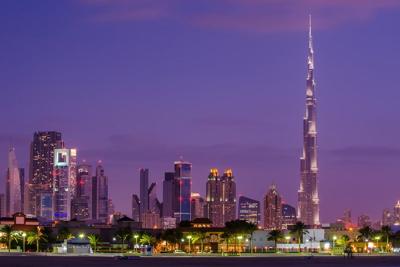
Dubai’s transformation is difficult to miss. In just a few decades, the city has evolved from a regional trading center into one of the world’s most recognizable destinations for luxury travel, international business, high-end real estate, and ambitious development.
The skyscrapers and supercars tend to get most of the attention, but Dubai’s success is about considerably more than spectacle. Its rise has been driven by a deliberate effort to diversify its economy, attract international investment, build world-class infrastructure, and turn luxury itself into part of the city’s identity.
Dubai Built an Economy Beyond Oil
Oil played an important role in Dubai’s early development, but the modern city was not built on petroleum alone. Dubai had fewer oil reserves than some neighboring emirates, which made economic diversification increasingly important.
Over time, the city invested heavily in trade, aviation, tourism, finance, real estate, hospitality, logistics, and professional services. That strategy helped create an economy capable of attracting businesses and visitors from across the globe rather than depending on a single natural resource.
Today, some of Dubai’s most visible industries have little to do with oil at all. Hotels, airlines, restaurants, residential developments, shopping destinations, and major international companies have become central parts of the city’s economic identity.
Location Became One of Dubai’s Greatest Advantages
Dubai occupies an unusually strategic position between Europe, Asia, and Africa. That geography has helped make the city an important transportation and business hub, particularly for companies and travelers moving between those regions.
Its aviation network has been especially influential. Dubai International Airport has turned what could have been a simple stopover city into a destination in its own right, while also making Dubai practical for international businesses that need relatively easy access to multiple global markets.
For travelers, the location works much the same way. A vacation in Dubai can easily be combined with trips elsewhere in the Middle East, Asia, Africa, or Europe, giving the city another advantage in the increasingly competitive luxury travel market.
Luxury Became Part of the City’s Personality
Dubai has never been particularly interested in understatement. The Burj Khalifa, Palm Jumeirah, extravagant beach resorts, enormous shopping destinations, and dramatic skyline all contribute to a city that seems designed to be noticed.
That willingness to go big became part of Dubai’s international appeal. Luxury is not simply available there; it has become part of the experience visitors expect.
The result is a destination where hotels, restaurants, residential developments, and even shopping centers continually compete to offer something newer, larger, more exclusive, or more memorable. Subtle is not necessarily the objective. Creating an experience people talk about long after they leave often is.
Hotels Helped Build the Dubai Fantasy
Luxury hospitality has played an enormous role in shaping the way the world sees Dubai. The city is home to internationally recognized hotels and resorts, many of which function as destinations themselves.
Private beaches, elaborate pools, destination spas, celebrity-chef restaurants, sprawling suites, and highly personalized service have become common features at the upper end of Dubai’s hotel market. With so many properties competing for the same affluent traveler, simply offering an attractive room is no longer enough.
That competition has benefited visitors. Hotels increasingly distinguish themselves through architecture, wellness programs, dining, beach clubs, design, and service rather than relying on traditional definitions of luxury alone.
For FINE travelers, that is one of Dubai’s most interesting qualities. The city offers plenty of extravagance, but the best properties increasingly understand that modern luxury is also about ease, privacy, service, and memorable experiences.
Real Estate Became Part of the Attraction
Dubai’s real estate market has also become central to its global reputation. Waterfront apartments, branded residences, penthouses, contemporary villas, and master-planned communities continue to attract buyers from outside the United Arab Emirates.
The appeal goes beyond dramatic architecture. Dubai has deliberately positioned itself as an international city where people can live, work, invest, and spend significant portions of the year.
That has helped make property an important part of Dubai’s broader luxury economy. Real estate is no longer simply about providing housing for a growing population. It has become another way the city attracts international capital, affluent residents, and global attention.
Branded residences have been particularly visible in recent years, bringing hospitality names, designers, and luxury brands into residential development. For buyers interested in amenities, service, and recognizable names, Dubai has become one of the most active markets for this type of property.
Global Wealth Has Increasingly Taken Notice
Dubai has also benefited from a wider movement of internationally mobile wealth. Entrepreneurs, investors, executives, and affluent families from numerous countries have established homes, businesses, or financial interests in the UAE.
Tax policy is certainly part of the attraction, but it is not the only factor. Dubai also offers international schools, modern residential communities, luxury shopping, restaurants, beaches, infrastructure, and extensive air connections.
That combination makes the city appealing to people who want more than a favorable business environment. They also want a place where day-to-day life feels comfortable and convenient.
In that sense, Dubai has been remarkably successful at selling both an economic proposition and a lifestyle.
Convenience May Be Dubai’s Most Underrated Luxury
Luxury is often associated with penthouses, private pools, designer boutiques, and expensive restaurants. Increasingly, however, one of the greatest luxuries is simply having things work efficiently.
Dubai understands that well.
Modern infrastructure, international transportation, residential services, restaurants, shopping, hospitality, and an enormous variety of conveniences are concentrated within a relatively accessible city. For residents and visitors, that can make everyday life surprisingly easy.
A traveler might spend the morning at a meeting, the afternoon beside a hotel pool, shop in the early evening, and have dinner overlooking the skyline without feeling as though the entire day was spent in transit.
It may not be Dubai’s flashiest selling point, but convenience has become an important part of the experience.
Ambition Became Part of the Brand
Dubai continually gives the impression that it is still under construction — not because it is unfinished, but because there always seems to be another major project on the horizon.
New hotels open. Residential communities expand. Restaurants arrive. Cultural attractions are developed. Architects keep reshaping the skyline.
That constant reinvention has become part of the city’s personality. Visitors rarely encounter a Dubai that feels complete. Instead, they see what exists now alongside what the city intends to become next.
Not every ambitious development is guaranteed to succeed, and Dubai is no more immune to real estate cycles or economic changes than any other major city. Still, its willingness to keep investing in the future has helped maintain international interest.
Dubai Is More Than the Spectacle
It is easy to reduce Dubai to images of supercars, luxury malls, skyscrapers, and extravagant hotels. Those things are certainly part of the story, but they do not fully explain why the city became so influential.
Behind the spectacle is a carefully developed combination of transportation, international trade, tourism, real estate, hospitality, infrastructure, and business-friendly policies.
Dubai managed to use those elements together rather than treating them as separate industries. Better air connections brought more travelers. More travelers supported hotels and restaurants. Growing international interest encouraged development. Development attracted businesses, residents, and investment.
The individual pieces strengthened one another.
Dubai Is No Longer Simply a Stopover
Perhaps the clearest sign of Dubai’s transformation is that people no longer need much explanation as to why they might visit.
Travelers now choose Dubai specifically for vacations. Luxury hotel brands consider it an essential market. International restaurant groups open locations there. Global companies establish regional operations, and developers continue competing to create increasingly elaborate residential projects.
Dubai’s rise was never particularly quiet. A city that built the world’s tallest tower and constructed artificial islands off its coastline clearly had no intention of disappearing into the background.
What was easier to overlook was the strategy underneath all of that spectacle.
Dubai transformed location, infrastructure, tourism, international business, real estate, and an unapologetic appetite for luxury into a global identity. That combination — rather than any single skyscraper or development — is what ultimately made the city matter.
(0) comments
We welcome your comments
Log In
Post a comment as Guest
Keep it Clean. Please avoid obscene, vulgar, lewd, racist or sexually-oriented language.
PLEASE TURN OFF YOUR CAPS LOCK.
Don't Threaten. Threats of harming another person will not be tolerated.
Be Truthful. Don't knowingly lie about anyone or anything.
Be Nice. No racism, sexism or any sort of -ism that is degrading to another person.
Be Proactive. Use the 'Report' link on each comment to let us know of abusive posts.
Share with Us. We'd love to hear eyewitness accounts, the history behind an article.